Saudi-Houthi conflict: 7 things UAE residents need to know
Kingdom faces fresh missile and drone attacks as Riyadh airport remains closed
Dubai: Houthi missile and drone attacks on Saudi Arabia continued on Tuesday, with Saudi air defences intercepting two ballistic missiles, as Britain stepped up military support to the kingdom amid mounting disruption to flights and daily life.
Nearly half of Saudi Arabia’s scheduled flight departures have been affected since October 8, while some government employees in Riyadh have been instructed to work from home.
The continuing conflict has also taken a heavy toll in Yemen, where a Houthi missile strike on a Yemeni military training camp killed 73 recruits and wounded more than 200 others.
Here are seven key questions about the conflict and its implications.
What is happening between Saudi Arabia and the Houthis?
Saudi Arabia and the Iran-backed Houthi militia are facing a renewed military confrontation, with repeated missile and drone attacks targeting Saudi territory.
Saudi air defence systems have intercepted incoming threats, including ballistic missiles directed towards Riyadh and other locations.
The Saudi-led coalition has also intensified military operations against Houthi positions in Yemen.
The latest escalation has raised concerns about the security of civilian infrastructure, particularly airports, and the possibility of a wider regional confrontation.
How many missiles and drones have Saudi forces intercepted?
Saudi air defences intercepted and destroyed a Houthi ballistic missile targeting Riyadh on Tuesday, the Saudi-led military coalition said.
Coalition spokesman Turki Al Malki confirmed the interception after authorities issued an emergency warning across the capital. AFP journalists reported hearing two blasts before Saudi Civil Defence announced that the danger had passed.
Later in the evening, Al Malki reported that a Houthi drone had also been intercepted in the Riyadh area.
The latest incidents follow repeated Houthi missile and drone attacks on Saudi territory, including strikes that have disrupted operations at Riyadh’s international airport.
Saudi forces have carried out retaliatory airstrikes against Houthi positions in Yemen as the conflict continues.
Why is Britain sending fighter jets to Saudi Arabia?
Britain has announced the deployment of Royal Air Force Typhoon fighter jets to help defend Saudi airspace against Houthi missiles and drones.
The aircraft will conduct defensive patrols and may intercept incoming threats.
London is also providing military advisers and an A400M transport aircraft, while extending aerial refuelling support for another 90 days.
British officials have stressed that the deployment is defensive and does not include offensive airstrikes against Houthi positions in Yemen.
The UK says it continues to support a UN-led political settlement to the conflict.
What happened at the military training camp in Yemen?
A Houthi ballistic missile attack on the Al Alam military training camp in Yemen’s Shabwa province killed 73 recruits and wounded more than 200 others, according to an Associated Press report.
The victims included young recruits undergoing military training.
The Houthis claimed responsibility for the strike, which involved three ballistic missiles.
The attack was among the deadliest incidents in the latest escalation and highlighted the continuing vulnerability of military installations inside Yemen.
How badly have flights to Saudi Arabia been disrupted?
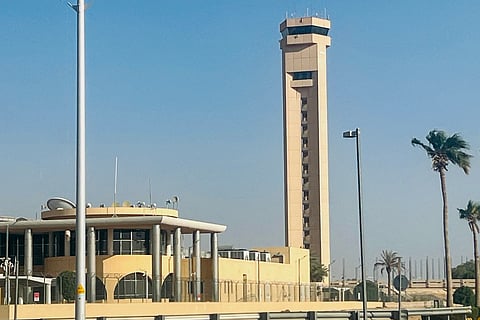
Riyadh's King Khalid International Airport has remained closed since a deadly Houthi attack on October 10 killed 13 people and injured more than 300, AFP said.
According to aviation analytics company Cirium, 5,547 of 12,195 scheduled departures between October 8 and 19 were cancelled or classified as no-fly, representing 45.49% of monitored flights.
On Monday, October 19, Saudi Arabia recorded 322 cancelled or no-fly departures out of 941 scheduled services.
Riyadh airport recorded the highest disruption rate among the country’s major airports that day, with 181 of 274 departures affected — equivalent to 66.06%.
The figures include both cancellations and no-fly designations and should not be interpreted as cancellations alone.
Passengers travelling from the UAE to Saudi Arabia should confirm their flight status directly with their airline before leaving for the airport.
Have Saudi government employees been told to work from home?
Some government agencies in Riyadh have instructed employees to work remotely as a precaution amid the security situation.
According to AFP, remote-working arrangements were introduced for some employees from Monday to Thursday this week.
Precautionary measures have also been reported in offices in prominent commercial towers and financial districts.
However, the measures should not be interpreted as a nationwide work-from-home order covering all Saudi government employees.
The arrangements reflect concerns about security and the need to maintain essential operations during the escalation.
Could the conflict escalate further?
The continuing exchange of attacks has increased concerns about a broader military confrontation.
Saudi Arabia has stepped up its response to Houthi attacks, while Britain is expanding defensive support. The United States has also considered additional military action against the Houthis.
At the same time, diplomatic efforts remain focused on preventing a wider conflict and finding a political solution to the war in Yemen.
For UAE residents, the most immediate concern is the impact on regional air travel. Passengers should monitor airline announcements, airport advisories and official travel guidance as the situation develops.


