US tests Minuteman III ‘doomsday’ missile amid Iran war — What is it?
13,000km-range nuclear-capable missile test conducted from California base
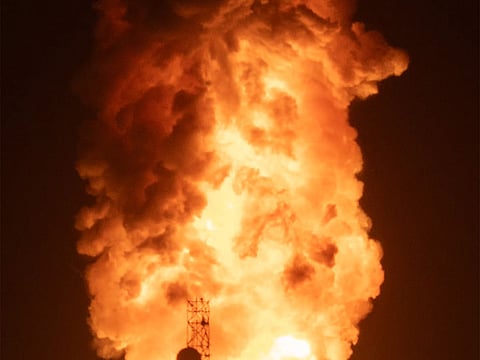
Dubai: The United States has test-fired an unarmed LGM 30G Minuteman III intercontinental ballistic missile — often dubbed the “doomsday missile” — during a week of escalating conflict with Iran, though officials insist the launch was part of a long-planned routine test.
The missile was launched on the intervening night of Tuesday-Wednesday from Vandenberg Space Force Base in California and flew thousands of miles across the Pacific before its test re-entry vehicles struck a target at the Kwajalein Atoll in the Marshall Islands, according to the US Air Force Global Strike Command.
The test missile carried two non-nuclear test re-entry vehicles designed to gather data on the weapon system’s performance, reliability and accuracy.
Officials stressed that the launch had been scheduled years in advance and was not linked to the ongoing war in the Middle East.
“This test launch is part of a routine and periodic activity designed to demonstrate that the United States’ nuclear deterrent remains safe, secure and effective,” the command said in a statement, according to multiple media reports.
The launch was conducted by engineers and weapons specialists from the 377th Test and Evaluation Group, who monitored the missile’s flight and collected data on each phase of the system’s performance.
More than 300 similar tests have been conducted over the decades as part of a long-running programme aimed at validating the reliability of the United States’ land-based nuclear arsenal.
What is the Minuteman III “Doomsday” missile?
America’s land-based nuclear missile: The Minuteman III is the United States’ only silo-based intercontinental ballistic missile deployed on land.
Intercontinental range: It can travel about 13,000km, allowing it to strike targets anywhere across continents.
Extremely fast: During flight it reaches speeds of around Mach 23, delivering its payload in roughly 30 minutes.
Nuclear-capable warhead: The missile can carry a W-87 nuclear warhead, many times more powerful than the atomic bomb dropped on Nagasaki.
Part of the nuclear triad: Minuteman III forms one leg of the US nuclear deterrent alongside Ohio class ballistic missile submarine armed with Trident II D5 missile and strategic bombers such as the B 52H Stratofortress and B 2 Spirit.
Routine test — but tense timing
Even so, the timing of the launch has drawn attention as the United States and Israel continue military operations against Iran.
The conflict erupted after US-Israeli strikes on Iranian targets reportedly killed Supreme Leader Ali Khamenei, triggering Iranian missile and drone attacks on Israeli territory and US military bases in the Gulf.
The widening confrontation has raised fears of a broader regional war, making any demonstration of strategic nuclear capability particularly sensitive.
US defence officials maintain that the Minuteman test should not be interpreted as a signal to Iran or other adversaries.
Routine tests of strategic missiles are intended to ensure that the United States’ nuclear forces remain ready as part of its deterrence strategy.
The Minuteman III forms the land-based leg of the US nuclear “triad”, which also includes nuclear-armed ballistic missile submarines and long-range strategic bombers.
The US military currently maintains around 400 Minuteman III missiles deployed in underground silos across Montana, North Dakota and Wyoming.
The missiles have been in service since the early 1970s and are expected to remain operational until they are replaced by the next-generation Sentinel ICBM later this decade.
The United States last conducted a Minuteman III test in November last year.
A key pillar of nuclear deterrence
Despite its age, the Minuteman III remains one of the most powerful weapons in the US arsenal.
The missile can travel at speeds exceeding Mach 23 and has a range of roughly 13,000 kilometres, enabling it to strike targets almost anywhere on Earth within about half an hour.
Originally designed to carry multiple independently targetable nuclear warheads, the missile is now configured with a single warhead in accordance with arms-reduction treaties between Washington and Moscow.
The system is designed to ensure that the United States retains the ability to respond rapidly to any nuclear attack — a central element of the country’s deterrence strategy.
Experts say regular testing is essential to maintain confidence in ageing missile systems and ensure the reliability of the broader nuclear arsenal.
Still, in the midst of a major international crisis, the launch of a missile capable of delivering nuclear warheads across continents inevitably draws global attention.
Why it’s called the “doomsday” missile
The LGM 30G Minuteman III is often labelled a “doomsday missile” because it can carry nuclear warheads powerful enough to destroy entire cities and is part of the US nuclear deterrent designed for retaliatory strikes in a nuclear war.
It has an intercontinental range of roughly 13,000km, allowing it to strike targets across continents within minutes.


