Trump wanted to stop Iran's bomb — but left uranium behind
US President downplays uranium threat, raising questions over war’s core objective
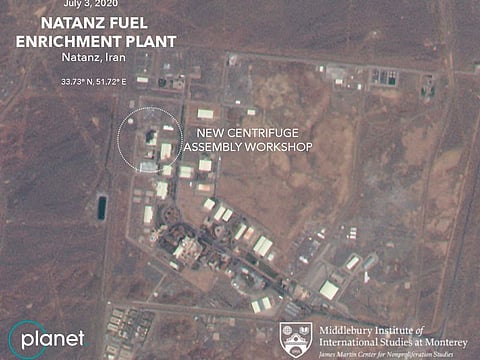
Dubai: US President Donald Trump’s claim that he no longer “cares” about Iran’s highly enriched uranium stockpile is raising fresh doubts about why the war was launched at all.
For weeks, Trump had framed the conflict as an urgent bid to stop Tehran from building a nuclear bomb, warning Iran was just “two to four weeks” away from weaponisation. But asked by Reuters on Wednesday ahead of his address to the nation about the stockpile, he dismissed it outright.
“That’s so far underground, I don’t care about that,” Trump said. “We’ll always be watching it by satellite.”
The remarks mark a striking shift from a position he has held for more than a decade — that denying Iran access to nuclear fuel is central to preventing it from developing a weapon.
'We are less secure now'
According to the International Atomic Energy Agency, Iran possesses roughly 400–440 kilos of highly enriched uranium (HEU), including about 200kg enriched to 60% purity — close to weapons-grade levels. Experts say that amount could theoretically be sufficient for around a dozen nuclear warheads if further enriched.
Despite US and Israeli strikes on nuclear facilities, that stockpile remains largely intact and, crucially, under Iranian control.
Nuclear analysts warn that leaving the material in place — without enhanced monitoring or restrictions — could leave Iran closer to developing a bomb than before the war began.
“We are actually less secure now from the nuclear threat than we were before,” said Emma Belcher, president of Ploughshares, a non-proliferation foundation, pointing to reduced visibility over the material and its potential use.
What it means
War aim in doubt: Nuclear threat cited, but uranium remains
Material intact: Enough for multiple warheads if enriched further
Deal abandoned: Pre-war talks could have limited stockpile
Monitoring weaker: Less oversight than before the conflict
Exit risk: US may leave without securing key objective
Address and warning
In a primetime address to the nation from the White House later that night, Trump doubled down, insisting the threat had been contained while warning of swift retaliation if Iran resumed activity.
“If we see them make a move, even a move for it, we will hit them with missiles very hard again,” he said.
Unless intended as a ruse to mislead Tehran, the remarks suggest Washington is ruling out a risky ground mission to seize or destroy the stockpile — an operation that would require deploying large numbers of troops deep inside Iran.
From deal to war
The current reality stands in contrast to a diplomatic path that was still open just days before the conflict began.
In talks in Geneva on February 26, Iranian officials had proposed diluting their enriched uranium stockpile, limiting what remained inside the country and restoring intrusive monitoring by the IAEA. Omani mediators and Western officials involved in the negotiations had signalled progress, with a follow-up technical round scheduled in Vienna.
That meeting never happened.
Instead, US and Israeli strikes began on February 28, collapsing a process that could have constrained Iran’s nuclear programme through inspections and verification.
A harder reality
Behind Trump’s shifting tone lies a difficult military calculation.
Pentagon proposals to secure or remove the uranium stockpile would have required seizing fortified sites in mountainous terrain, flying in heavy equipment and maintaining a sustained presence under high risk of attack — potentially involving hundreds or even thousands of troops.
While airstrikes could damage facilities, physically securing the nuclear material would have meant a far deeper and more dangerous ground intervention — one Washington now appears unwilling to undertake.
A more dangerous outcome?
Analysts warn the war may have produced the opposite of its intended effect.
Rather than eliminating the nuclear threat, the conflict could strengthen arguments within Tehran for pursuing a weapon as a deterrent — especially as monitoring has weakened and uncertainty over the stockpile has grown.
At the same time, Trump has signalled he may wind down US involvement, saying the “hard part is done” and suggesting Washington could leave while retaining the option of future “spot hits” if Iran resumes nuclear activity.
Iran, however, has rejected US timelines and insists it will decide when the war ends, raising the prospect of a prolonged and uncertain standoff.


