Where to see the Pink Full Moon in the UAE: Top desert spots and observation points
From deserts to beaches, here is where to catch the Pink Full Moon across the UAE
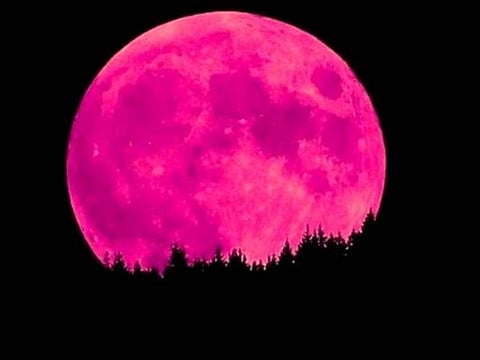
Dubai: One of the most striking celestial events of the spring season is just a few hours away. The April Pink Full Moon will light up the skies above the UAE on the night of 1 and 2 April, and it is set to look more dramatic than your average full moon. Here is what it actually is, why it looks the way it does, and where to catch the best view.
What is the Pink Moon?
Despite the name, the moon will not actually turn pink.
It typically keeps its usual white, golden or silvery appearance. The one exception is when it sits low on the horizon, where it can take on a slightly orange or copper tone. This is caused by a process called atmospheric scattering, where the Earth's atmosphere filters out cooler blue light and lets the warmer tones come through instead.
The Pink Moon gets its name from the Algonquin-speaking peoples of Native America and was later popularised by The Old Farmer's Almanac. It is named after Phlox subulata, a vibrant pink wildflower commonly known as moss pink or creeping phlox, which blooms across eastern North America every early spring.
Like other full moon names, such as the Strawberry Moon or the Snow Moon, it works as a seasonal marker rather than a description of what the moon actually looks like. It was a way for people to track changes in the natural world long before calendars existed.
April's moon also goes by a few other names, including the Sprouting Grass Moon and the Egg Moon. All of them point to the same idea: winter is over, and everything is coming back to life.
When will it rise in the UAE?
The Pink Full Moon reaches its peak illumination on 2 April 2026 at 6.11am GST, but the best time to actually see it is on the evenings of 1 and 2 April, when it will appear full, bright and low on the horizon shortly after sunset. That is when the viewing experience is at its most impressive, and for good reason.
Why will it look bigger than usual?
If the moon looks unusually large this week, you are not imagining it. This is a well-known phenomenon called the moon illusion, where the moon appears significantly bigger when it sits close to the horizon than when it is higher in the sky.
It is not actually larger, but something about the way our brains process it against the surrounding landscape makes it feel like a giant glowing disc hanging just above the skyline. Pair that with the warm orange and gold tones the atmosphere gives it near the horizon, filtering out the cooler light, and you have one of the more cinematic sights the night sky has to offer.
What does this moon have to do with Easter?
More than you might expect. The April full moon is considered the first full moon after the spring equinox, and Easter Sunday is observed on the first Sunday that follows it. In 2026, that places Easter on 5 April, just days after the Pink Moon rises. It has been functioning as a calendar marker for centuries.
What is the weather looking like?
A low-pressure system may bring some cloud cover and unsettled weather through Wednesday 1 April, but conditions are expected to clear up by Thursday 2 April, leaving fair to partly cloudy skies across the UAE. If clouds do linger, do not give up. Partly cloudy means the moon will likely appear and disappear between clouds, which can actually make for a dramatic and atmospheric viewing experience in its own right.
Where to watch it across the UAE
For the best views, look for spots with a clear line of sight to the eastern horizon, open desert areas, beaches and elevated locations all work well. Here are the top picks by emirate:
Abu Dhabi:
Al Quaa Milky Way Spot, considered the darkest location in the UAE with virtually zero light pollution, making it the gold standard for any stargazing event
Dubai:
Al Qudra Desert, open skies and a regular venue for Dubai Astronomy Group events, including moonrise sessions with lectures and astrophotography tips
Sharjah:
Mleiha Archaeological Centre, which offers guided stargazing sessions from 7pm to 8pm daily and overnight desert safari packages with telescope observations and a traditional BBQ dinner
Ras Al Khaimah:
Jebel Jais, the UAE's highest peak, where the elevation often puts you above any low-lying cloud cover entirely
Fujairah:
Wadi Shawka, rugged mountain terrain with clear, unpolluted skies
Ajman:
Al Zorah Nature Reserve, open coastal views away from the brightest city lights
Umm Al Quwain:
Umm Al Quwain Beach, with unobstructed views directly over the Arabian Gulf for the moonrise
Check with the official authorities for latest updates and follow official guidelines wherever you go.
If it is cloudy, try this
Head inland rather than staying on the coast, as cloud cover in the UAE tends to cluster near coastal areas. Mountainous spots like Jebel Jais or Jebel Hafeet are often above the cloud line entirely.
Areeba Hashmi is a trainee at Gulf News.