Dubai fast-tracks traffic fixes with progress on Oud Maitha corridor
Major road project under Sheikh Rashid Corridor aims to cut travel times by 75%
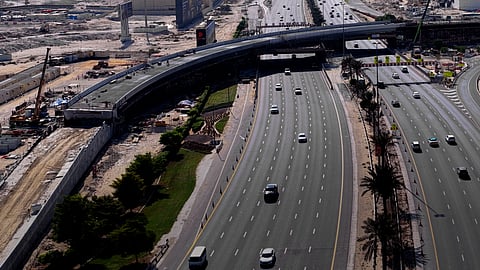
Dubai: Dubai’s Roads and Transport Authority (RTA) has completed 60 per cent of the Oud Maitha Road and Al Asayel Street development project, a key infrastructure upgrade designed to ease traffic congestion and improve connectivity between major corridors across the city.
Part of the Sheikh Rashid Corridor Development Project, the scheme includes the upgrade of four major intersections, the construction of bridges spanning 4.3km, and 14km of new and expanded roads. Once completed, the project is expected to serve more than 420,000 residents by 2030 while significantly reducing journey times and increasing road capacity.
Project update
Construction progress has reached 70 per cent on bridges serving traffic from Al Asayel Street to Al Khail Road northbound towards Business Bay Crossing, with preparations under way for opening in the first quarter of the year. Work is also advancing on the tunnel linking Dubai—Al Ain Road to Al Wasl Club Street, alongside road widening and associated bridge works scheduled for completion later this year.
Mattar Al Tayer, Director General, Chairman of the Board of Executive Directors of Dubai’s Roads and Transport Authority (RTA) said: “Oud Maitha Road and Al Asayel Street development project is being undertaken in line with leadership directives to complete the development of the Sheikh Rashid Corridor to accommodate urban expansion and population growth. The project is among key road infrastructure developments, encompassing the upgrade of four major intersections, including the construction of bridges spanning 4.3km and roads extending 14km.
Key service areas
“The project supports a host of key service, residential, and development areas, most notably Zabeel, Al Jaddaf, Oud Maitha, Umm Hurair, Latifa Hospital, and Al Wasl Club. The population of areas served by the project is expected to exceed 420,000 residents by 2030. The project will also increase the capacity of Oud Maitha Road from 10,400 vehicles per hour in both directions to 15,600 vehicles per hour, representing a 50% increase, while reducing journey time from 20 minutes to just 5 minutes, achieving an improvement of 75%.”
Four intersections upgraded
The project covers four major intersections, beginning with Oud Maitha Road—Sheikh Rashid Road, where a new left-turn slip ramp will increase capacity to 1,800 vehicles per hour. Improvements to service roads and additional turning lanes are also aimed at reducing traffic overlap and enhancing safety.
At the Oud Maitha Road junction with Al Asayel Street and Al Wasl Club Street, two new bridges and an additional left-turn bridge will streamline traffic movements between Al Khail Road, Al Asayel Street and Oud Maitha Road, easing congestion along the main corridor.
New bridges
Further upgrades at the Al Wasl Club Street—Al Khail Road intersection include a new two-lane bridge, expanded exits and service roads to improve flow towards Business Bay Crossing. The fourth intersection, at Zabeel Palace Street with Al Khail and Oud Maitha Roads, will see additional slip lanes, a new tunnel and expanded bridge capacity to resolve existing bottlenecks.
Together, the works form part of Dubai’s wider push to future-proof its road network, reduce congestion and support growing residential and service districts across the city.


