Ramadan explained: 30 essential terms to understand the holy month
A simple guide to Ramadan: Meaning, traditions, and key terms
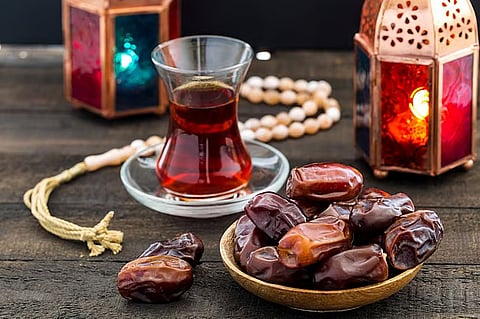
Dubai: With just one week remaining until Ramadan begins, millions of Muslims around the world are preparing their hearts, homes, and routines for one of the most sacred months of the year. Ramadan, the ninth month of the Islamic lunar calendar, is a time of spiritual reflection, self-discipline, prayer, and generosity.
From dawn until sunset, observing Muslims fast, abstaining from food, drink, and negative behavior. Instead, they turn their focus toward gratitude, worship, and compassion.
Yet Ramadan is so much more than fasting alone. It is the sound of the Qur'an being recited late into the night, its verses filling homes and hearts. It is families gathering around the table as the sun sets, breaking bread together after a long day. It is acts of charity given quietly and sincerely, without expectation of recognition. At its core, Ramadan is about community, kindness, and the renewal of faith.
If you're new to Ramadan or unfamiliar with Islamic traditions, you'll likely encounter certain words and phrases throughout this special month. Below is a glossary of essential terms to help you understand and appreciate the beauty of this sacred time.
Ramadan glossary-key terms explained
Ramadan
The ninth month of the Islamic lunar calendar and the month of fasting.
Hilal
The crescent moon that marks the beginning and end of Ramadan.
Ramadan Mubarak
A greeting meaning “Blessed Ramadan.”
Ramadan Kareem
A greeting meaning “Generous Ramadan,” referring to the blessings of the month.
Sawm (or Siyam)
The Arabic word for fasting, one of the Five Pillars of Islam.
Suhoor
The pre-dawn meal eaten before the fast begins each day.
Iftar
The sunset meal when Muslims break their fast.
Tamr
Dates,traditionally the first food eaten at Iftar, following the practice of Prophet Muhammad (peace be upon him).
Salah
The five daily prayers observed by Muslims.
Taraweeh
Special nightly congregational prayers performed during Ramadan after the Isha prayer.
Qiyam (Qiyam Al Layl)
Voluntary late-night prayers, especially during the last ten nights of Ramadan.
Laylat Al Qadr
The Night of Power,” believed to be when the Qur’an was first revealed. Worship on this night is considered better than a thousand months.
Zakat
Obligatory charity (2.5 per cent of wealth), one of the Five Pillars of Islam.
Zakat Al Fitr
A special charity given before the end of Ramadan to ensure everyone can celebrate Eid.
Eid Al Fitr
The celebration marking the end of Ramadan, known as the “Festival of Breaking the Fast.”
Imsak
The moment just before dawn when Muslims stop eating and prepare to begin the fast.
Fajr
The dawn prayer, the first of the five daily prayers and the official start of the fast.
Maghrib
The sunset prayer, when the fast is broken at Iftar.
Isha
The night prayer, after which Taraweeh is performed in Ramadan.
Witr
An odd-numbered voluntary prayer performed at the end of the night prayers.
I’tikaf
Spiritual retreat during the last ten days of Ramadan, usually spent in a mosque in worship and reflection.
Sadaqah
Voluntary charity (different from Zakat). It can be given at any time and in any amount.
Kaffarah
An expiation or penalty required for deliberately breaking a fast.
Fidya
Compensation given if someone cannot fast due to illness or other valid reasons.
Taqwa
God-consciousness or spiritual awareness, one of the fundamental goals of Ramadan.
Dhikr
Remembrance of God through repeated phrases or supplications.
Sunnah
The traditions and practices of Prophet Muhammad (peace be upon him), which Muslims seek to follow.
Niyyah
The intention made in the heart before beginning the fast or any act of worship. In Ramadan, intention is essential for fasting.
Tahajjud
A late-night voluntary prayer, especially observed during the last ten nights.
Qada
Making up missed fasts after Ramadan due to illness or travel.


