Abu Dhabi launches first mangrove monitoring guide for GCC
The guide establishes a new benchmark for monitoring mangroves in arid & semi-arid regions
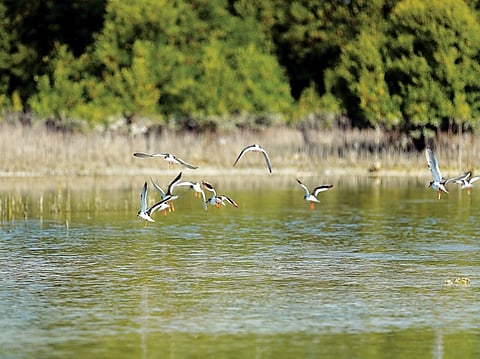
The Environment Agency – Abu Dhabi, in collaboration with the IUCN Mangrove Specialist Group, has launched a monitoring guide for mangrove ecosystems in the Arabian Gulf region—marking the first initiative of its kind in the region to advance scientific knowledge and conservation practices for mangroves.
The guide—one of the first designed specifically for the environments of Gulf Cooperation Council countries—is the result of joint efforts under the umbrella of the Abu Dhabi Mangrove Initiative, with support from ADNOC, the British Embassy in the United Arab Emirates, and the Zoological Society of London. It provides practical, science-based methodologies for monitoring mangroves and their associated biodiversity, combining advanced techniques—such as environmental DNA analysis—with simplified approaches that can be easily implemented by individuals, specialists, government entities, and non-governmental organizations.
By standardizing methodologies and offering clear, user-friendly guidance, the guide enables more accurate assessments of ecosystem health, empowering decision-makers and conservation practitioners to develop plans, adapt to environmental changes, and scale up restoration efforts effectively and sustainably.
The guide represents the outcome of collaboration between the Environment Agency – Abu Dhabi, members of the IUCN Mangrove Specialist Group, and several leading global experts in the field, notably Professor Norman Duke, Dr. Stefano Cannicci, and Dr. Sara Fratini from the University of Florence.
Maytha Mohammed Al Hameli, Director of the Marine Biodiversity Division at the Environment Agency – Abu Dhabi, said:
“This guide represents a real turning point for the region. Success was previously measured by the number of mangrove seedlings planted, but today we have a scientific and practical reference that ensures those seedlings—and the ecosystems associated with them—are effectively monitored, protected, and restored. By equipping specialists and local communities with reliable tools—from advanced technologies such as environmental DNA analysis to simple citizen-science methods—we are transforming scientific evidence into tangible action.”
Knowledge transfer
Professor Joe Lee, Chair of the IUCN Mangrove Specialist Group, said:
“Knowledge transfer is a core pillar of the Mangrove Specialist Group’s work, and we are pleased to have contributed to developing these tools, which represent a valuable addition to global mangrove conservation and management efforts, as well as the protection of associated habitats. Despite their immense ecological importance, mangroves remain among the least studied ecosystems in the world. This initiative helps bridge a critical knowledge gap by strengthening regional expertise and engaging both professional scientists and members of the public in research and monitoring.”
A new standard
The launch of the GCC Mangrove Monitoring Guide establishes a new benchmark for monitoring mangroves in arid and semi-arid regions. It supports governments and environmental professionals while also enhancing community participation in protecting one of the most vital ecosystems for biodiversity, coastal protection, and climate change adaptation.
IUCN red list assessment of 70 mangrove plant species
The IUCN Red List remains the world’s most important global assessment of more than 70 mangrove plant species. This update represents the first comprehensive review since 2007 and plays a pivotal role in advancing mangrove conservation efforts.
Over the past period, the Environment Agency conducted a series of regional training workshops on mangrove monitoring, with the participation of local and regional experts, to strengthen technical capacities and support the long-term health of ecosystems across the Gulf region.
The Environment Agency – Abu Dhabi continues its collaborative efforts with the Zoological Society of London, in cooperation with the IUCN Mangrove Specialist Group, to build regional capacity through the development of the first regional mangrove monitoring guide for the Arabian Gulf.


