Back to school UAE: Is your child’s lunchbox safe in the heat? From ice packs to hygiene, what matters most
How to balance nutrition and food safety in children’s lunchboxes during UAE heat
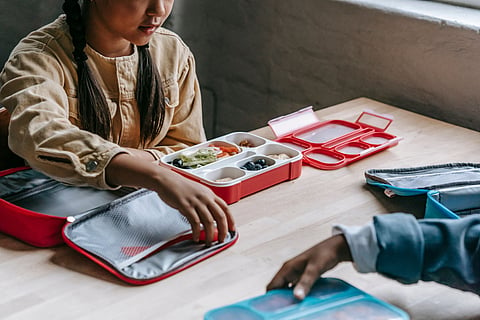
Cheese sandwich. Boiled egg. Yoghurt pot. Perfectly healthy at 6am, and, if packed wrong, perfectly risky by noon.
With the school run back in full swing, so is the daily lunchbox routine, and with it, a risk most parents might forget to factor in: Heat.
In the UAE, where temperatures can soar beyond 40°C, a lunchbox spends hours moving through conditions far warmer than a refrigerator. A sandwich packed cold before sunrise can be a very different food by the time the lunch bell rings, especially if it has spent the morning on a bus, in a car or in a non-air-conditioned corner of a classroom.
As a result, it becomes more a question of what happens to it, rather than what is inside it. Nutritionists, dietitians and paediatricians agree: This back-to-school season, let's go through the everyday habits that decide whether a healthy lunch stays that way until it's eaten.
When 'fresh' turns risky
The clock starts ticking the moment perishable food leaves the fridge.
Ruba Elhourani, Clinical Dietician and Head of Nutrition Department at RAK Hospital, says perishable foods can enter the food safety 'danger zone' quickly in hot conditions. Food safety guidelines recommend that perishable foods should not remain above 5°C and below 60°C for more than two hours, while when ambient temperatures exceed 32°C, that limit drops to one hour.
“In a schoolbag, especially if left in a bus, car, playground, or non-air-conditioned area, food can become unsafe well before lunchtime,” she says.
That's particularly relevant for foods many parents consider perfectly ordinary lunchbox staples. Cooked chicken, turkey and other meats, eggs, dairy products such as yoghurt, labneh, cheese and milk, tuna and other seafood, mayonnaise-containing sandwiches, and cooked rice and pasta salads all require careful temperature control. Cut fruit and vegetables can also become less safe if they remain warm for an extended period.
The reason isn't that these foods are inherently dangerous, rather, many contain the moisture and nutrients that allow bacteria such as Salmonella, Staphylococcus aureus and Bacillus cereus to multiply when temperature control is inadequate.
Paediatrician Dr Shruthi Punnapu, Specialist Paediatrician at Medcare Women & Children Hospital, says parents often underestimate how quickly this can happen.
Ice packs are strongly recommended. An insulated lunch bag alone slows temperature changes but does not actively keep food cold. For UAE conditions, parents should use at least one or two frozen ice packs, or frozen water bottles, alongside an insulated lunch bag. This combination helps keep food below 5 C until lunchtime and significantly reduces food safety risks.

“In hot weather, food can become unsafe much faster than many parents realise. Bacteria multiply rapidly when food is kept at warm temperatures, particularly in the UAE’s summer conditions,” she says.
She explains further: Foods that normally need refrigeration should not be left at room temperature, for a long time. As a general food-safety principle, perishable foods should ideally be kept below 5°C and should not be allowed to sit in the temperature danger zone for long periods. The hotter the environment, the greater the risk, so a lunchbox left in a warm classroom, schoolbag or car can become a concern surprisingly quickly.
The answer, however, isn't to strip a child's lunchbox of chicken, eggs, cheese or yoghurt. It's to change how those foods are packed.
Why an insulated bag alone won't cut it
An insulated lunch bag may look like a sensible solution, but insulation alone doesn't actually cool food. It slows the rate at which food warms up. To keep food genuinely cold, it needs an active source of chill alongside it.
Elhourani recommends ice packs. "For UAE conditions, parents should use at least one or two frozen ice packs, or frozen water bottles, alongside an insulated lunch bag.” This combination helps keep food below 5°C for longer and reduces the risk associated with perishable foods.
Punnapu similarly recommends a good-quality insulated lunch bag together with at least one frozen ice pack when chilled food is being packed. “An insulated bag helps slow down temperature changes, but it does not actively keep food cold for several hours on its own,” she says. “In the UAE climate, relying solely on insulation may not be sufficient, particularly if the lunch is packed early in the morning and eaten much later.”
Where possible, she also advises keeping lunch bags away from direct sunlight and other heat sources.
For parents, this changes the morning routine slightly. Rather than just putting a freshly prepared sandwich into a lunchbox, the question becomes: Was the food properly chilled, and will it stay chilled until it's eaten?
Assuming lunch is packed fresh in the morning and eaten by around noon, and children are spending the school day in air-conditioning, parents don't need to avoid nutritious foods simply because of the UAE heat. For highly perishable foods such as fish, meat, chicken, eggs and dairy, however, an insulated lunch bag with an ice pack or, if preferred, an insulated food container, is an option...

The two-hour rule isn't a licence to wait
For foods such as cooked chicken, eggs, dairy, sandwiches and cooked rice, Elhourani gives a straightforward benchmark: If these foods are packed without adequate cooling, they should remain in normal indoor conditions for no more than two hours. When temperatures exceed 32°C, the limit drops to one hour.
But she stresses that UAE parents shouldn't interpret that as a target rather than a limit.
“In the UAE climate, parents should not rely on unrefrigerated storage for the entire school morning. Perishable foods should be packed cold from the refrigerator and accompanied by ice packs. If cooling cannot be assured, shelf-stable alternatives are preferable.”
Punnapu adds another important point: food can be unsafe even when it looks perfectly normal.
Moreover, if the food has been sitting warm for several hours, it is safer to discard it rather than rely on its appearance or smell. When in doubt, it is better not to take the risk, she says, noting that this is one of the more common misconceptions parents hold. “The third is assuming that food is safe because it looks or smells normal. Harmful bacteria do not always change the taste, smell or appearance of food.”
Why children carry more risk
Food safety becomes even more important when the person eating the food is a child. Elhourani notes that children are more susceptible to complications from foodborne illness, while children under five are considered a high-risk group. Punnapu adds that dehydration can develop more quickly in children, particularly younger ones.
The symptoms of foodborne illness can include nausea, vomiting, diarrhoea, abdominal cramps, fever and loss of appetite. Parents should be particularly alert for reduced urination, dry mouth, unusual tiredness, dizziness or lethargy, which can indicate dehydration. Persistent vomiting or diarrhoea, blood in the stool, severe abdominal pain, high fever or worsening symptoms warrant prompt medical attention.
None of this means parents should panic over every unfinished sandwich. It simply means that in the UAE's heat, prevention is far easier than dealing with the consequences later.
Foods that normally need refrigeration should not be left at room temperature for extended periods. As a general food-safety principle, perishable foods should ideally be kept below 5°C and should not be allowed to sit in the temperature danger zone for long periods. The hotter the environment, the greater the risk, so a lunchbox left in a warm classroom, schoolbag or car can become a concern surprisingly quickly...

So what should actually go in the lunchbox?
This is where food safety and nutrition need to work together. Oz Erbas Soydaner, Child Nutritionist and Organic Foods & Cafe Ambassador, says a safe lunchbox can still be a varied and nutritious one.
“Children need a good amount of carbohydrate for energy, particularly when they are active, so carbohydrates shouldn't be restricted. The key though is to make whole or minimally processed carbs the default, like sweet potato, wholegrain bread or pasta, brown rice and even corn, which is a whole grain.”
Her framework is roughly 35 per cent carbohydrate, 20 per cent protein, 40 per cent fruit and vegetables and 5 per cent healthy fats, with room for a small treat. In practice, that could mean wholegrain bread with cheese or labneh, fruit and vegetables, plus a protein source, though parents don't necessarily need to rely on meat and dairy every day.
Legumes such as chickpeas, beans and lentils can provide protein, fibre and micronutrients while being somewhat more resilient than many animal-based proteins. Tofu and seeds such as pumpkin or sunflower seeds are other possibilities. “Even something as simple as wholegrain toast with labneh or cheese can provide a nutritious combination of protein, carbohydrates and healthy fats,” says Soydaner.
The caveat is that foods that need refrigeration still need refrigeration. A nutritious lunch is not automatically a safe lunch.
The heat doesn't mean banning fresh food
Parents may understandably wonder whether the easiest solution is simply to avoid foods such as eggs, chicken and yoghurt altogether. However, the experts maintain that there is no reason to avoid protein-rich foods such as eggs, chicken, cheese or yoghurt in a school lunchbox.
The important thing is to pack them fresh in the morning and keep them appropriately chilled, ideally in an insulated lunch bag with an ice pack, explains Soydaner. An insulated food container can also be used for foods that need to be kept hot.
For families who can't guarantee adequate cooling, though, less perishable options can make life easier. Chickpeas, lentils, beans, seeds and some wholegrain foods can help parents build a nutritious lunch without relying entirely on highly perishable ingredients.
Soydaner also points out that variety doesn't have to mean creating an elaborate Pinterest-worthy lunchbox every morning. “Variety is important, but so is familiarity and routine, especially for kids that are not-so-adventurous eaters). Parents don't need to create a completely different lunchbox every day.”
Rotating fruits and vegetables across different colours and switching between animal and plant-based proteins can provide variety without making lunch preparation unnecessarily complicated.
Don't let 'kids' snacks' do the nutritional heavy lifting
There's another lunchbox trap: products marketed specifically for children. Brightly packaged crackers, crisps, cereal bars and children's drinks may look like convenient school snacks, but their branding shouldn't be mistaken for a nutritional guarantee.
“One issue is falsely assuming that packaged children's foods such as crisps, crackers and snack bars are more nutritious than they actually are because they are marketed in this way (not the parents’ fault!),” says Soydaner.
Juice is another area where parents can make a switch. “Another is relying too heavily on packaged juices, especially the ones that are highly refined and don’t contain any fiber as they contribute a significant amount of free sugar, so whole fruit is generally the better choice.”
That makes water one of the easiest wins in the lunchbox. “Make water the default,” Soydaner says. “Children don't need juice or sweetened drinks in their lunchbox. Whole fruit is preferable to juice, while freshly squeezed juice can be enjoyed occasionally.”
The lunchbox itself needs cleaning too
Food safety doesn't end once lunch has been eaten. A reusable lunchbox or water bottle can become a source of bacteria if food residue and moisture are allowed to accumulate, particularly around seals, lids, straws and corners.
Elhourani recommends washing lunchboxes, containers and reusable bottles daily with hot water and dish soap, paying particular attention to areas where moisture can collect, and letting items air-dry completely before being stored. Punnapu similarly recommends washing lunchboxes and bottles thoroughly with warm water and washing-up liquid after every use rather than simply wiping them.
“If a lunchbox or bottle has cracks, damaged seals or persistent odours that cannot be cleaned properly, it may be time to replace it,” she says.
Parents should also clean insulated lunch bags regularly, especially after spills, and wash their hands before preparing food. At home, separate utensils should be used for raw and cooked foods to reduce cross-contamination.
Three rules for a safer, healthier school lunch
Finally, the lunchbox isn't rocket science. It just needs a little more thought about what happens between the kitchen and lunchtime.
Soydaner's three nutritional rules are simple: Keep the meal balanced, don't overthink it, and make water the default. Elhourani and Punnapu add a crucial fourth principle: Keep perishable food cold. The biggest mistakes, they note, are remarkably ordinary, sending perishable food without an ice pack, packing food while it's still warm, preparing food too far in advance, neglecting lunchbox hygiene, and assuming that food is safe because it looks or smells fine.
For parents, the safest approach isn't to fear fresh food, but to understand which foods need temperature control and plan accordingly. A chicken sandwich, yoghurt or boiled egg can absolutely be part of a child's lunch, just pack it cold, keep it cold, and make sure it doesn't spend the morning slowly warming inside a schoolbag. And when refrigeration can't be guaranteed, there's no shortage of nutritious alternatives.


