Pakistan urges global action as AI reshapes crime threats
Envoy seeks stronger global action on AI crime, drugs, trafficking and money laundering

Abu Dhabi: The rapid rise of artificial intelligence and other digital technologies is creating new challenges for governments fighting cross-border crime, Pakistan warned at a major UN gathering in Abu Dhabi, calling for stronger international cooperation and greater support for developing countries.
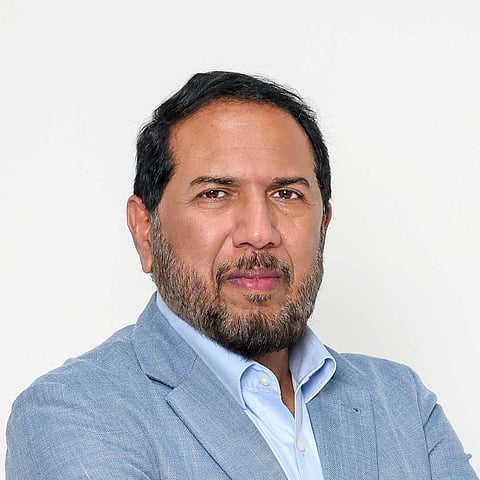
Pakistan’s Ambassador to the UAE, Shafqat Ali Khan, made the call while delivering the country’s national statement at the 15th United Nations Congress on Crime Prevention and Criminal Justice.
The Congress, being held at Abu Dhabi National Exhibition Centre from September 26 to October 1, is one of the UN’s largest global gatherings devoted to crime prevention and criminal justice. It brings together governments, international organisations, civil society, academics and experts to discuss emerging crime threats and ways to strengthen justice systems.
Global crime landscape
Ambassador Khan said the global crime landscape was changing rapidly as socio-economic inequality and underdevelopment combined with the misuse of digital and AI technologies to create new risks.
He called for the safe, secure and responsible development and use of emerging technologies while stressing the need to ensure developing countries were not left behind in acquiring the tools and expertise needed to tackle increasingly sophisticated crime.
He called for stronger international cooperation, national capacity-building, technical assistance and meaningful technology transfer to developing countries.
Ambassador Khan also linked crime prevention with sustainable development, calling for renewed commitment to the UN Sustainable Development Goals and highlighting what he described as the mutually reinforcing relationship between development and the rule of law.
Organised crime
Counter-narcotics cooperation was another major focus of Pakistan’s statement.
Khan reaffirmed Pakistan’s commitment to tackling transnational organised crime and the global drug problem, pointing to the country’s counter-narcotics operations, major drug seizures and poppy-free status.
He also raised concerns about the potential expansion of opium cultivation and synthetic drug production and the links between narcotics trafficking and terrorism, warning of the implications for regional security.
He called for greater international action against corruption, money laundering and illicit financial flows. Khan said countries needed to improve asset recovery mechanisms and prevent criminals from finding safe havens for themselves or their illegally acquired assets.
Human trafficking
The ambassador also reaffirmed Pakistan’s commitment to combating human trafficking and migrant smuggling.
At the same time, he argued that providing safe, regular and affordable migration pathways could form part of broader efforts to tackle these crimes by reducing people’s reliance on irregular and potentially dangerous routes.
Khan also raised concerns over Islamophobia, racism and xenophobia, calling for measures to combat hate speech, strengthen legal protections for victims of Islamophobia and promote greater mutual understanding and respect.
He congratulated the UAE on hosting the Congress and praised the arrangements for the international gathering.
Held every five years, the UN Crime Congress provides a global platform for governments and other stakeholders to shape approaches to crime prevention, criminal justice and the rule of law. This year’s agenda covers issues including emerging forms of crime, international cooperation, technical assistance and the responsible use of technology.