Abu Dhabi leads AI-driven transformation in global energy sector
The energy sector is becoming a focal point for advanced automation and AI
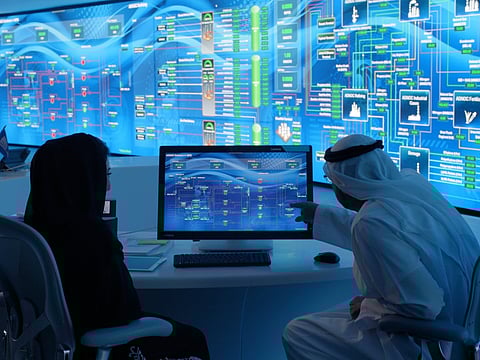
As the UAE pivots from a resource-based economy to an industrial innovation hub, technology leaders see the region reshaping global energy operations through automation, sustainability and advanced manufacturing
Abu Dhabi is no longer defined solely by the energy it produces. Increasingly, it is being shaped by how that energy is designed, managed and optimised. As the UAE accelerates its transition from a resource-based economy to an innovation-led industrial hub, the energy sector is becoming a focal point for advanced manufacturing, automation and artificial intelligence.
This shift aligns closely with national priorities such as the Make it in the Emirates programme and the UAE’s broader industrial strategy. Energy, long the backbone of the economy, is now also serving as a testbed for how technology can drive efficiency, resilience and sustainability at scale.
“The UAE is steadily evolving into a building and innovation economy, and Abu Dhabi sits at the heart of that shift,” says Samer Najm, Strategic Account Director at Emerson Automation Solutions. “We are witnessing a decisive transformation from a resource-based model to one powered by production, design and technology-led innovation.”
The growing role of local manufacturing
One of the clearest indicators of that transformation is the growing role of local manufacturing. Nearly 80 per cent of what companies such as Emerson manufacture in the UAE, including valves, sensors and integrated automation systems, is exported to support critical energy and infrastructure projects across the Middle East, Africa and beyond. Local facilities are no longer focused only on domestic demand but are reinforcing global supply chains and enabling faster project delivery across multiple markets.
As manufacturing capability expands, the energy sector is also confronting a new set of challenges. Rising operational costs, emissions reduction targets and increasingly complex assets are pushing operators to look beyond incremental efficiency gains. Industry leaders argue that artificial intelligence will be central to addressing these pressures.
The UAE is building an innovation economy
Speaking to Gulf News, Samer Najm, Strategic Account Director, Emerson Automation Solutions, said: “The UAE is steadily evolving into a building and innovation economy, and Abu Dhabi sits at the heart of that shift. We are witnessing a decisive transformation, from a resource-based economy to one powered by production, design, and technology-led innovation. In short, Abu Dhabi is emerging as a center for advanced manufacturing, digital transformation, and industrial-scale problem-solving.
"The UAE has firmly positioned itself as a regional hub for industrial excellence, and Emerson’s own experience reflects that journey. At Emerson, we’ve seen this change up close: nearly 80 per cent of what we manufacture locally, from valves and sensors to integrated automation systems, is exported to serve critical infrastructure across the Middle East, Africa, and beyond.”
He added: “Today, our UAE operations don’t just support domestic energy projects; they reinforce global supply chains, accelerate project execution, and set a new benchmark for regional manufacturing capability. This demand for local manufacturing is only set to grow.
AI and the full lifecycle of energy assets
At the same time, the energy sector’s evolving challenges, from rising operational costs to the urgency of emissions reduction, require smarter, faster, and more scalable solutions. That’s precisely where the UAE is distinguishing itself. AI and automation are being embedded across the full lifecycle of energy assets for instance, front-end design to predictive maintenance and emissions optimization, driving the emergence of a more agile, self-reliant industrial model.
Looking ahead, Abu Dhabi will increasingly serve as a proving ground for how energy producers can lead the next era of industrial excellence through technology, efficiency, and sustainability at scale.”
How AI is helping with reducing energy consumption and operation?
Liam Hurley, President, Middle East & Africa, Emerson answered this question, saying that over the next few years, AI will fundamentally change how energy consumption and operations are managed, not incrementally, but structurally.
Three shifts stand out:
First, we will see AI move from monitoring performance to actively preventing inefficiency. Advanced analytics will increasingly detect subtle losses in energy performance long before they become visible at the operational level; whether through equipment degradation, process imbalance, or excess energy use. This will materially reduce waste across large-scale assets.
Second, AI will reshape day-to-day operations through predictive and autonomous decision-making. Energy facilities will rely less on manual intervention and reactive maintenance, and more on systems that continuously optimise themselves balancing throughput, energy use, and emissions in real time. This is where measurable reductions in downtime and energy intensity will come from.
Third, AI will become embedded at the design stage of new projects. Facilities will increasingly be engineered autonomous by design, with intelligence built in from the outset rather than added later. That shift will lower lifecycle energy consumption and create assets that are inherently more resilient, efficient, and scalable.Together, these changes will redefine what operational efficiency means in the energy sector.”
Emerson’s role in the region in the upcoming years
Widad Haddad, Vice President & General Manager – UAE, Oman, Yemen and Lebanon, Emerson told Gulf News: “In the coming years, Emerson’s role in the region, and particularly in the UAE, will be defined by sustained investment in capabilities that anchor long-term industrial value. We will continue to invest in advanced manufacturing and engineering capacity, expanding what can be designed, built, and exported from the UAE to support global energy and industrial projects.
We will also deepen our investment in industrial AI, automation, and software embedding intelligence earlier in the asset lifecycle, from project design through to operations and optimisation. This includes advancing autonomous-by-design facilities and scalable digital platforms that help operators reduce energy intensity and emissions while improving reliability.
Equally important, we will continue investing in local talent, partnerships, and centres of excellence across the UAE and the wider region. As the energy system evolves, Emerson’s focus will remain on building resilient, future-ready capabilities, locally rooted, globally connected, and aligned with the region’s long-term sustainability and diversification ambitions.