Abu Dhabi commits $300 billion to advance energy and water systems
Inflation above 42% and weak growth push economists to assess Iran’s battered rial outlook
Abu Dhabi: To support its long-term growth ambitions, Abu Dhabi is channelling over $300 billion in capital expenditure over the next decade to expand and modernise its energy and water systems. Each year, the emirate invests about 35 billion dirhams in operating, developing, and advancing the sector, laying the foundation for an integrated model built on security, sustainability, and growth.
The scale of the investment underscores the emirate’s position at the centre of the global energy transition. It also signals how Abu Dhabi plans to build resilience into critical infrastructure while maintaining affordability and reliability for residents and industries.
Integrated systems approach
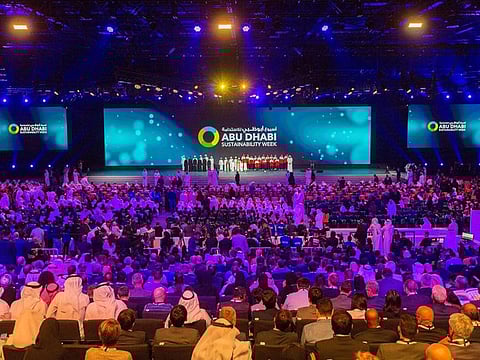
At the opening of Abu Dhabi Sustainability Week, Dr Abdulla Humaid Al Jarwan, Chairman of the Abu Dhabi Department of Energy, said the future of regulation lies in designing comprehensive systems rather than managing sectors in isolation. “Regulators cannot be one-dimensional,” he said. “They must understand the technical reality, the operational behavior and the financial consequences of every decision they take.”
He emphasised that today’s regulators act as “system designers and system orchestrators,” responsible not only for oversight but also for aligning policy, capital, and operations to ensure ambitions set at the strategic level translate into results on the ground. “This is how customers are protected, how investors are assured and attracted, with clarity, stability and confidence,” he added.
Building a cleaner energy mix
Abu Dhabi’s clean energy shift has advanced rapidly over the past decade. According to Dr Al Jarwan, the emirate’s energy system had less than 1% renewable and clean energy ten years ago. Today, that figure stands at 45%, and before 2030, it is expected to exceed 60%. “It is a 60-fold increase in less than 15 years — all delivered securely, affordably and competitively,” he said.
The growth is being driven by ambitious solar programs. Abu Dhabi adds more than three gigawatts of cost-competitive solar capacity each year. He is on track to surpass 33 gigawatts of renewable power before 2035, supported by 20 gigawatt-hours of storage to improve system stability and flexibility.
“This is sustainability by design, not a single technology, but rather the right energy mix,” Dr Al Jarwan said, calling it the “sovereign right energy mix” tailored to the UAE’s long-term development priorities.
Defining the next decade
Under the theme “Nexus of the Next,” this year’s sustainability agenda reflects how interconnected systems, energy, water, climate, and food must now be managed as one. Dr Al Jarwan identified five guiding imperatives shaping Abu Dhabi’s strategy: resilience, affordability, credibility, innovation, and collaboration.
“Resilience means developing systems that absorb shocks and remain reliable in all scenarios,” he said. “Affordability comes from efficiency, because the best capacity is the one we create through technology, not the one we must build. Above all, innovation and collaboration drive progress, because no one delivers alone.”
Dr Al Jarwan also stressed that technology alone will not define success. “Invest in systems, but more importantly, invest in people,” he said. “Our most valuable asset today is not networks or infrastructure alone, but the people who design, operate, regulate and improve these systems every single day.”