Dubai gold eases from all-time highs after sharp January rally. Is this a buying window?
Prices ease from highs, but demand stays firm amid geopolitics and rate-cut bets
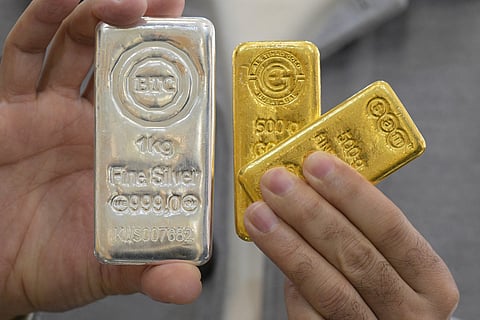
Dubai: Dubai gold prices steadied on Thursday morning after touching fresh records earlier this week, with traders and consumers digesting a sharp run-up that pushed rates to historic levels. (Check latest UAE gold prices here, alongside prices in Saudi Arabia, Oman, Qatar, Bahrain, Kuwait, and India.)
At 9.15 am, the 24-karat variety was quoted at Dh553 per gram, down from Dh558.50 on Wednesday, while 22-karat gold eased to Dh512.25 from Dh517. The pullback follows a strong rally that gathered pace through the first half of January, driven by safe-haven demand and momentum in global precious metals markets.
A rapid climb through January
Gold opened the year just above Dh520 per gram for 24-karat, edging higher in the first few sessions before breaking decisively past Dh530 by January 8. Prices briefly consolidated around Dh536 to Dh538 in the following days, then accelerated sharply from January 11, when 24-karat gold jumped beyond Dh543. By midweek, the rally peaked at Dh558.50, marking a new all-time high for Dubai bullion before easing back on Thursday.
The 22-karat market followed a similar trajectory, rising from around Dh481 at the start of the month to above Dh500 by January 9, before pushing to Dh517 at the height of the rally. Even after the latest dip, prices remain well above early-January levels, underscoring how quickly sentiment has shifted.
Global cues drive local prices
The pause in gold came alongside profit-taking in silver, which retreated sharply after hitting record highs earlier this week. Investors have been reassessing positions after a blistering rally across precious metals, fuelled by geopolitical tension and expectations of looser monetary policy later this year.
Geopolitics remain a key driver. According to Vijay Valecha, chief investment officer at Century Financial, uncertainty linked to Iran, Venezuela and ongoing conflict in Eastern Europe continues to push demand towards assets seen as insulated from political outcomes.
“Geopolitical tensions remain elevated, and that keeps gold and silver well supported,” Valecha said, adding that any near-term dip in prices is likely to be viewed as a buying opportunity while bullion trades near historic highs.
Technical levels and near-term risks
From a technical perspective, analysts see scope for short-term volatility after the speed of the recent move. Valecha pointed to resistance for spot gold near $4,675 an ounce, with support around $4,550, levels that traders are watching closely following this week’s surge.
Similar caution is emerging from global markets. Bas Kooijman, chief executive and asset manager at DHF Capital S.A., said gold’s advance reflects rising geopolitical risk premia and lingering concerns over the independence of the US Federal Reserve.
“Demand for safe-haven assets remains strong amid tensions in the Middle East, unresolved conflict in Eastern Europe and uncertainty around Venezuela,” Kooijman said. Expectations of rate cuts later this year are supportive, though upcoming economic data could inject fresh volatility.
The easing in prices may offer brief relief for consumers after a rapid climb that tested affordability. Yet the broader backdrop suggests gold remains firmly supported, even if short-term pullbacks occur.
With prices still hovering close to record levels, jewellers say buying decisions are increasingly being driven by necessity and long-term investment considerations rather than short-term price moves.
- With inputs from Bloomberg.