Ready to help keep Hormuz Strait open? Who said what
UK, France, Germany, Italy, Netherlands, Japan signal unity amid Gulf tensions
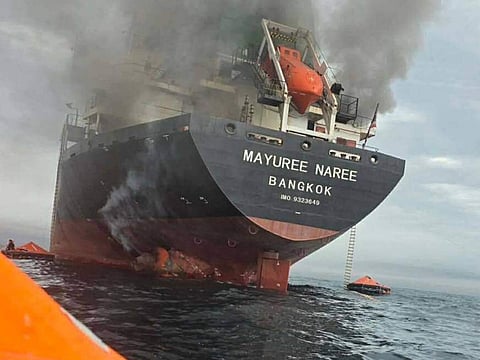
European powers, Canada and Japan have changed their posture on the ongoing Middle East war, by prioritising energy security while avoiding getting dragged by the US-Israel into its war with Iran.
Recent developments show the allies are preparing to act even without full US leadership, particularly on Hormuz Strait. Some countries, such as Japan, are talking directly to Iran's leadership.
As things stand, UK, France, Germany, Italy, Netherlands and Canada signalled unity alongside Japan on keeping the strait open, amid declarations by the Iranian regime to use the narrow strait as a "lever".
President Donal Trump, meanwhile, has said he's considering "winding down" US military operations in Iran.


Following are the recent developments:
Which countries have declared willingness to keep the Strait of Hormuz open?
Six major economies — the United Kingdom, France, Germany, Italy, the Netherlands, and Japan — have issued a joint statement pledging readiness to act.
They said they are “ready to contribute to appropriate efforts” to ensure safe passage through the strategic waterway.
What exactly did they say?
In a coordinated statement published on official government platforms (including the UK government website on March 19), the six countries said:
“We express our readiness to contribute to appropriate efforts to ensure safe passage through the Strait.”
They also:
Condemned Iran’s attacks on commercial vessels and energy infrastructure
Warned that interference with shipping is a “threat to international peace and security”
Reaffirmed that freedom of navigation is a fundamental principle of international law
Called on Iran to “cease immediately its threats”, including mining and missile attacks
They added:
“We welcome the International Energy Agency (IEA) decision to authorise a coordinated release of strategic petroleum reserves.”
Canada also joined the group, emphasizing the principle of freedom of navigation, calling any attempt to disrupt shipping in Hormuz “unacceptable” given its critical role in global energy flows.
Why is the Strait of Hormuz so critical?
The Strait of Hormuz handles around 20% of global oil trade.
Any disruption:
Sends oil prices surging, zooming towards $150/barrel
Threatens energy supplies in Europe and Asia
Risks wider global economic shock
Recent tensions have already disrupted shipping, though some vessels — including an Indian LPG carrier — have been allowed to pass.
What triggered this joint response?
The move follows:
Intensified strikes involving Iran
Reports of attacks on commercial shipping and oil facilities
Fears that the US may scale back direct involvement, leaving allies to step up
The statement reflects a shift toward energy security coordination, including:
Possible naval protection missions
Strategic oil reserve releases
Pressure on producers to increase output
What has Iran said — especially to Japan?
According to recent diplomatic reporting, Iran has sought to reassure key Asian buyers, particularly Japan, that energy flows will not be completely cut off. Hormuz is "open", according to Iran's Foreign Minister Abbas Araghchi.
Iranian officials have indicated:
They are not seeking a full closure of Hormuz
Passage may still be allowed for certain vessels under controlled conditions
This was underscored by Iran allowing ships — including fuel carriers — to transit the strait despite the conflict.
Such assurances appear aimed at:
Preventing a complete rupture with major oil customers
Avoiding escalation that could trigger direct international intervention
Is this a sign of a broader geopolitical shift?
Yes. Analysts describe it as a “pragmatic realignment”:
European powers and Japan are prioritising energy security
Allies are preparing to act even without full US leadership
There is growing willingness to counter disruptions while avoiding full-scale war
Notably, the coalition emphasised coordination via:
The International Energy Agency
The United Nations
International financial institutions
What happens next?
The pledge stops short of detailing concrete action, but options include:
Escorted shipping lanes or naval patrols
Expanded sanctions or diplomatic pressure
Further oil reserve releases
For now, the message is clear:
Major economies are signalling they will not allow the Strait of Hormuz to become a choke point that paralyses the global economy.
The broader message from this emerging coalition: Hormuz is not just a regional concern but a global artery, and keeping it open is a shared international priority.
Meanwhile, oil prices have gone through the roof, with Murban skyrocketing by 18% in one day, hitting $146/barrel, while Brent hit $112 and WTI at $98 as of 6.40am GMT on Saturday (March 21).


