Petrofac’s fall: How a Dh27.5 billion giant ended with UAE staff taking 70% dues
Petrofac’s collapse ended with former UAE staff accepting partial dues after months
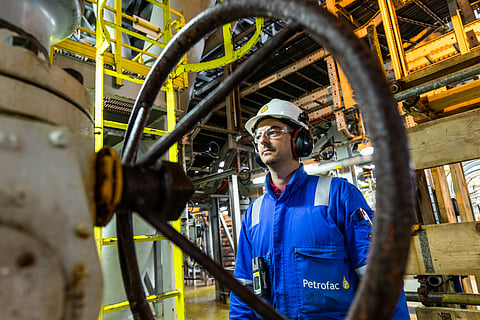
Dubai: Petrofac was once one of the biggest names in energy services, with a market value of more than £6 billion, or about Dh27.5 billion, and a place in the FTSE 100.
Its fall was not sudden. A corruption probe, heavy debt, failed restructuring attempts and the loss of a major offshore wind contract pushed the UK holding company into administration, while former employees in the UAE waited months for clarity on salaries, notice-period pay and end-of-service benefits.
Get updated faster and for FREE: Download the Gulf News app now - simply click here.
By June 2026, several former Petrofac employees in the UAE confirmed they had received about 70% of their outstanding dues.
2011 to 2017: Growth turns risky
Petrofac built a powerful position across the Middle East, winning major contracts in Iraq, Saudi Arabia and the UAE.
Court records later found that executives had used agents to bribe officials to secure contracts. Those findings damaged Petrofac’s standing with lenders, clients and state-backed buyers, and became one of the roots of the company’s later crisis.
2017: SFO probe begins
The UK Serious Fraud Office opened a formal investigation in May 2017 into suspected bribery, corruption and money laundering.
The probe marked a turning point for Petrofac, placing its past contracts under scrutiny and weakening confidence in a business that relied heavily on large state-backed energy projects.
2019 to 2021: Conviction and penalties
Former Petrofac executive David Lufkin pleaded guilty to 14 bribery counts across multiple jurisdictions.
In October 2021, Petrofac admitted seven counts of failing to prevent bribery and was ordered to pay penalties of more than £77 million. The judgment described the corruption as “systemic, serious and grave.”
The conviction restricted Petrofac’s access to key engineering and construction bids in core markets, cutting into the revenue base it needed to recover.
2022 to mid-2025: Debt pressure builds
Petrofac carried about $4 billion in debt and tried to push through a restructuring plan that included converting more than $800 million of debt into equity.
The High Court gave conditional approval in May 2025, but the Court of Appeal overturned the plan in July after challenges from partners. That left the group exposed to another major setback.
The contract represented more than 80% of revenue in Petrofac’s engineering and construction division, according to court filings. Its loss made recovery unworkable.
Later that month, Petrofac’s holding company applied to the High Court in London to appoint administrators and was delisted from the London Stock Exchange.
“We were all told that some 190 or 200 of us were getting terminated that day itself, with the next day being our last working day,” said one long-serving employee at Petrofac. “We were told that on Friday we will be paid our salaries up to the 19th and that is it.”
Another project director said staff were left without clear answers on notice periods and end-of-service benefits.
“In summary, we were given our notice in one day,” he said. “We had a town hall where we were informed of immediate termination on November 19. We asked about our notice period, end of service, the legal entitlements. We were not given any clear answer.”
“Yes, we received the salary for 19 days on Monday,” one former manager said.
“The main question still remains about the end of service and the notice period,” he added. “I was on a three-month notice period. When I am ready to serve my notice period and the company releases me, they should give me three months’ salary. That is not mentioned yet.”
“Due to increasing delays in the supply of materials and assembly works, and consequently failure to meet contractual deadlines in the implementation of the Bottom of the Barrel investment, Orlen Lietuva has decided to terminate the contracts with Petrofac International,” Orlen Group said.
The termination added to Petrofac’s growing list of contract losses and raised more questions about its ability to stabilise operations.
January 2026: Asset Solutions sale moves ahead
By January, Petrofac was working through a company voluntary arrangement tied to the sale of its Asset Solutions division to CB&I.
“The agreed sale of Asset Solutions to CB&I is a strong outcome for the business and for around 3,000 colleagues who are expected to move across on completion," said John Pearson, Chief Operating Officer for Petrofac’s Asset Solutions business. "After more than two years of restructuring, this CVA is the final step to deliver that outcome, and we are asking creditors to support it so the sale can complete.”
The deal covered the group’s core engineering and construction capability in the UAE, including execution teams in the UAE, Chennai and Mumbai.
Chief Executive Tareq Kawash said the deal “preserves Petrofac’s execution and engineering capability and delivers continuity for the contracts currently under execution.”
The company said Petrofac Emirates would operate as a self-sustaining business with no funded debt and growth opportunities across the UAE and wider MENA region.
Tareq Kawash was appointed Chief Executive Officer of Petrofac Emirates.
“The completion of this transaction marks an important milestone for Petrofac Emirates and the beginning of an important new chapter for the business,” he said.
One former senior employee said most staff received about 70% of what they were owed and accepted it as a full and final settlement.
“We got 70% of what they owed us, but then most of us, the critical mass, we decided that 70% was, you know, good enough,” he said. “It’s better we take the one bird in hand rather than strive for two in the bush.”
The same former employee said his own end-of-service benefit was paid in full, but others lost part of their entitlement by accepting the settlement.
“My end of service benefit I got in full, but that’s just me speaking for myself,” he said. “Most other people, I think, they lost about 5% to 10% of the EOSB in having accepted the 70% as full and final settlement.”
Former employees said government pressure helped push the issue towards closure after workers raised complaints with the Ministry of Human Resources and Emiratisation.
Petrofac declined to comment on the payments.
“Thank you for your enquiry. We are unable to comment on this at the present time,” the company said.
The payout brings relief to many former UAE staff, while Petrofac Emirates begins its next phase under new ownership after one of the most difficult chapters in the company’s history.