Oil prices split: Brent, WTI regain climb as market unconvinced about Trump's bombing 'pause' — Murban crude drops in market twist
Oil rates pulled in opposite directions as Mideast tensions lift Brent/WTI, Murban tumbles
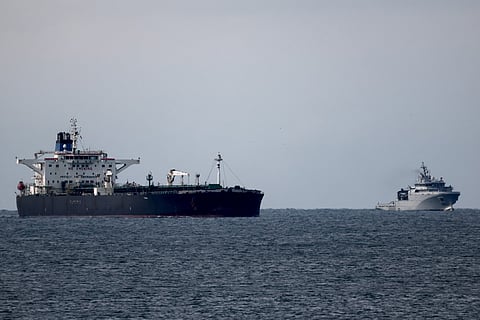
Oil markets are currently being driven by two competing forces: escalating geopolitical risk pushing global benchmarks higher, and regional supply dynamics pulling some crude grades in the opposite direction.
The rebound in Brent crude and West Texas Intermediate (WTI) reflects a renewed war premium.
Fresh missile exchanges between Iran and Israel have revived fears of a broader war escalation, particularly the risk of disruption in the Strait of Hormuz, a critical chokepoint that carries roughly a fifth of global oil supply.
Brent rose 3.11% to $103.05 (+3.11% per barrel)
West Texas Intermediate (WTI) climbed 3.94% to $91.60 (+3.47) per barrel
Murban dropped 7.67% to $135.17 (-$11.23) per barrel
(Data as of 7:00am GMT on March 24, 2026)
Market unconvinced
While US President Donald Trump signalled a "pause" in major strikes following what he described as “productive” talks.
With more questions than answers given by US leader, the market remains unconvinced that tensions will ease in the near term.
As a result, prices have become highly reactive to headlines — falling sharply on signs of diplomacy, then rebounding quickly as conflict resumes.
Both Brent and WTI are rising in tandem, but for slightly different reasons.
Brent, as the primary global seaborne benchmark, is more directly exposed to Middle East supply risks.
WTI, by contrast, reflects inland US crude, but is still pulled upward by global sentiment and arbitrage dynamics.
WTI price is primarily based on Light Sweet Crude Oil futures contracts traded on the New York Mercantile Exchange (NYMEX).
It's a major US benchmark, reflecting costs for physical delivery at Cushing, Oklahoma, driven by production from the Permian Basin and market sentiment towards the futures market.
The widening spread between the two — Brent trading above $100 while WTI lags in the low $90s — signals a growing premium on internationally traded barrels and continued logistical constraints in fully linking US supply to global markets.
Divergence
In contrast, Murban crude has moved sharply lower, highlighting the divergence between market sentiment and crude flows.
Traders may also be unwinding earlier premium positions, accelerating the decline, according to industry watchers.
The result is a split market: Brent and WTI are being driven by fear, while Murban reflects actual cargo availability.
Russian crude oil, on the other hand, with Urals trading significantly higher, sitting at approximately $90 per barrel. This rise follows a surge in global oil prices, which has boosted Russian export revenues.
This divergence is likely to persist unless physical supply routes are directly affected.


