Jet fuel crisis deepens: Airlines cancel flights, raise fares as global supply tightens
Fuel shortages trigger cancellations, fare hikes as Europe braces for disruption
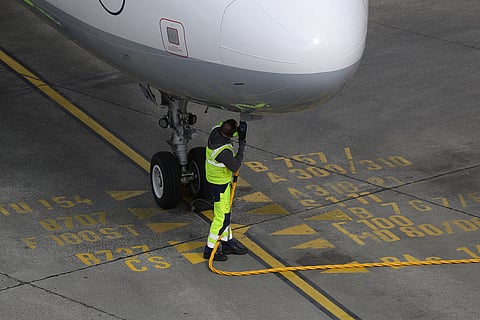
Dubai: Airlines across Europe and other international markets are cancelling flights, raising fares and cutting routes as a worsening jet fuel crisis begins to disrupt global aviation.
The crisis is being driven by a sharp drop in oil supply linked to the ongoing US-Israel war on Iran, which has significantly impacted flows through the Strait of Hormuz — a critical route for global energy shipments.
Get updated faster and for FREE: Download the Gulf News app now - simply click here.
According to Bridget Payne, Head of Energy Forecasting at Oxford Economics, around 10 million barrels per day of oil supply has been removed from global markets, creating a shortfall that is increasingly difficult to offset. And jet fuel is emerging as one of the most affected segments of the energy market.
Bridget said that aviation demand is more sensitive to price increases compared to other sectors, as air travel is largely discretionary and fuel costs are quickly passed on to passengers through ticket prices.
“Air travel is more discretionary than road freight or household energy use, and fuel surcharges pass through to ticket prices quickly. That makes aviation one of the first areas where demand is cut through price, particularly for leisure travel,” she wrote in a research briefing – a prolonged Iran War would lead to severe fuel shortages.
With Brent crude prices up sharply since the crisis began, demand destruction has started — but not enough to fully close the supply gap. This is pushing the market towards rationing, which could severely impact airline operations.
Fare hikes and cancellations
Several major carriers have already begun adjusting operations, Reuters reported.
Air France-KLM, Cathay Pacific, Thai Airways, SAS and United Airlines have increased fares, added fuel surcharges or cut routes. Cathay Pacific raised fuel surcharges by 34 per cent from April 1.
Thai Airways flagged fare increases of 10 per cent to 15 per cent. SAS, Scandinavian Airline Systems, plans to cancel around 1,000 flights in April.
AirAsia X said it has raised fuel surcharges by about 20 per cent. Fare levels have gone up between 31 per cent and 40 per cent. AirAsia X also expects to cut some flights on routes where fuel costs can no longer be covered.
European airports impose fuel restrictions
The situation is already translating into operational constraints on the ground in Europe.
Four northern Italian airports — Milan Linate, Bologna, Venice and Treviso — have introduced jet fuel restrictions due to shrinking supplies.
Priority is being given to medical and emergency flights, state operations, and long-haul flights exceeding three hours.
Short-haul flights are now limited to 2,000 litres of fuel per aircraft — an amount that provides less than one hour of flying time for aircraft such as Boeing 737s or Airbus A320s.
This effectively restricts certain domestic routes unless aircraft refuel elsewhere.
Summer travel at risk if crisis persists
Airlines are increasingly warning that the situation could worsen if disruptions continue.
Ryanair said it may reduce routes and warned summer flights could be at risk
Lufthansa is preparing contingency plans and could ground up to 40 aircraft
United Airlines plans to cut unprofitable routes over the next two quarters
Air New Zealand will reduce flights by about 5 per cent from May
Vietnam Airlines and other regional carriers are scaling back operations
Ryanair’s CEO, Michael Kevin O'Leary, said supply disruptions in Europe could begin as early as May if the conflict continues.
Rising costs ripple across global aviation
The financial impact on airlines is significant. United Airlines’ CEO said current fuel prices could add an extra $11 billion in annual costs — more than double the airline’s best-ever yearly profit.
Meanwhile, Pakistan International Airlines has scrapped passenger discounts and scaled back operations as part of cost-control measures.
What happens next?
The International Energy Agency has warned that oil supply losses could accelerate in the coming weeks, with shortages of jet fuel and diesel expected to spread from Asia to Europe by April or May.
Analysts say that while strategic reserves and inventories are currently cushioning the impact, these buffers are limited.
If the disruption persists, the aviation sector — already one of the most exposed to fuel price shocks — could face deeper cuts, higher fares and widespread cancellations, especially heading into the peak summer travel season.


