Airfares to stay up globally as Iran war disrupts flights, drives up fuel costs
Fuel surge and route disruptions tighten global flight supply, pushing fares higher
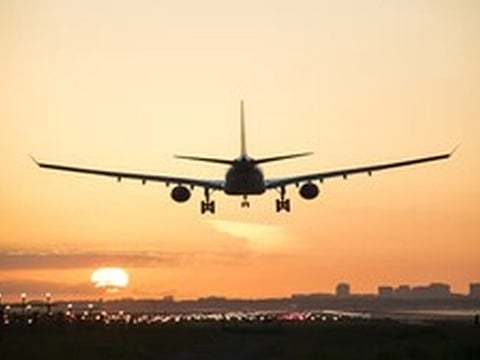
Dubai: The war in the Middle East has been pushing up travel costs worldwide, as surging fuel prices and airline disruptions push airfares higher and reduce availability on key international routes. What started as an energy market shock is now feeding directly into airline pricing decisions across major aviation hubs.
Oil markets have swung sharply in recent days. Crude fell more than 10% on Monday on a five-day pause on planned US strikes targeting Iranian energy infrastructure, easing immediate supply concerns.
Despite the pullback, both remain well above pre-conflict levels. Since late February, Brent is still up about 43% and WTI roughly 36%. For airlines, that increase is significant, with fuel remaining one of their largest costs.
Stay updated: Get the latest faster by downloading the Gulf News app - it's completely free. Click here for Apple or here for Android. You can also find it us on the Huawei AppGallery.
Fuel shock ripples through airline costs
For carriers worldwide, the rise in oil prices is feeding directly into ticket pricing and operational planning. Jet fuel prices have surged from around $85–90 per barrel before the conflict to as much as $150–200 in recent weeks, according to multiple global airline disclosures.
In Asia, jet fuel prices jumped more than 70% within days as supply concerns intensified, according to market data cited by news agencies. The speed of the increase has widened the gap between crude oil and refined jet fuel costs.
Jet fuel prices have risen far faster than crude, with fuel in some markets doubling since the conflict began while oil rose by roughly a third, according to a Reuters analysis of airline and market data. That divergence is adding pressure on airline margins and accelerating pricing adjustments.
Airlines have already begun responding to these higher costs. Carriers across the United States, Europe and Asia are raising fares, trimming schedules and revising forecasts as fuel expenses rise, according to multiple reports in March.
Airlines pass on costs as capacity tightens
US-based Delta Air Lines said the surge in jet fuel alone added about $400 million to its costs in March, highlighting the scale of the pressure on airline finances. The increase illustrates how quickly fuel costs are translating into operational strain.
Industry executives say fare increases are now unavoidable under current conditions. “Increasing ticket prices is a necessary move,” airline leaders said at a recent industry conference, reflecting a broader shift toward passing higher costs on to passengers.
At the same time, airlines are relying on strong demand to offset those increases. “We have a goal this year to fully offset the increase in fuel prices,” United Airlines Chief Executive Scott Kirby said, adding that fares booked in recent days were up 15% to 20%.
Capacity is tightening alongside rising costs, further amplifying the pricing effect. United Airlines has cut flights and suspended select routes as it prepares for a prolonged period of elevated oil prices.
Network disruption adds to pricing pressure
The carrier is planning for a scenario in which crude remains above $100 per barrel, with the potential to reach stay high despite the current decline. That outlook reflects a broader expectation within the industry that fuel costs could stay elevated.
In Europe, Scandinavian airline SAS is cancelling around 1,000 flights and raising fares in response to rising fuel costs. Its chief executive told media that “the price of jet fuel has doubled in ten days.”
Low-cost carriers are also signalling further increases ahead. EasyJet reportedly said fares are likely to rise as fuel hedges unwind, exposing airlines more fully to higher spot prices.
Operational disruption is compounding the cost pressures. Airspace restrictions across parts of the Middle East have forced airlines to reroute flights, sometimes adding hours to journey times, according to aviation analysts cited by Reuters.
Fewer routes, longer flights, higher fares
These longer routes increase fuel burn and reduce aircraft utilisation, both of which contribute to higher ticket prices. The effect is being felt across global airline networks as carriers adjust flight paths.
The result is a tightening of supply across major long-haul corridors linking Asia, Europe and North America. As fewer seats are available, pricing pressure builds across multiple markets.
Routes between Asia and Europe — many of which rely on Middle East airspace — have already flagged higher fares and reduced availability. Even routes that avoid the region are becoming more expensive as demand shifts to alternative corridors.
Analysts warn the disruption could deepen if the conflict persists. “Absent near-term relief, airlines around the world could be forced to ground thousands of aircraft,” Deutsche Bank analysts said in a note.
Outlook uncertain as oil risks remain elevated
Energy market analysts say the underlying cost pressure may not ease quickly. “An extended conflict will only increase the oil prices,” Saul Kavonic, head of energy research at MST Marquee, told Reuters.
Even if crude prices fluctuate in the short term, structural disruption to energy infrastructure could keep prices elevated for longer, the International Energy Agency has warned. That adds to uncertainty around airline cost planning.
For travellers, the impact is already visible across multiple dimensions. Fares are rising as airlines pass on fuel costs, while flight options are tightening as carriers reduce capacity.
Travel times are also becoming less predictable as routes are adjusted. These shifts are happening simultaneously, making it harder for travellers to anticipate pricing trends.
Booking strategy shifts as volatility increases
This is where the personal finance dimension becomes more relevant. Rising oil prices may prompt travellers to focus on securing the lowest fare, but that approach carries more risk in a volatile pricing environment.
As Michelle Singletary of The Washington Post advised travellers, avoid basic economy tickets in such conditions. She notes that only fares that allow changes enable passengers to claim credits if prices fall after booking.
When prices are stable, that distinction may have limited impact. In the current market, where fares can shift quickly, it becomes a more meaningful factor in the total cost of travel. For travellers worldwide, the decision is no longer just about when to book, but how much flexibility to build into that booking.
A flexible ticket allows you to rebook if fares drop and receive a credit for the difference — meaning, a ticket that costs higher and later falls can yield a credit amount — while basic economy fares typically lock in the original price with no option to benefit from later declines.
As long as fuel costs remain elevated and airlines continue to adjust capacity, dramatic swings in airfare are likely to persist — atleast for now.