Air France resumes Dubai flights after six-month disruption, Riyadh services also return
Air France is restoring Gulf flights as Dubai sees strong demand
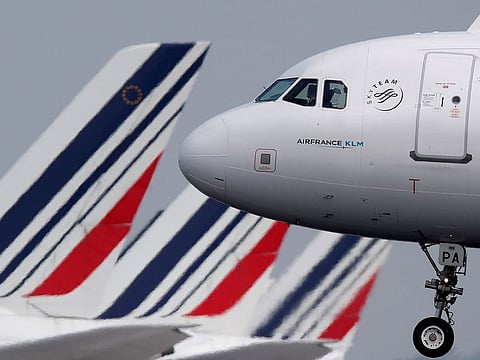
Dubai: Air France has resumed flights to Dubai after months of disruption and repeated cancellations amid regional tensions, with services to the UAE and Riyadh returning.
The French national carrier had suspended its Dubai and Riyadh operations amid the security situation and restrictions affecting some regional airspaces.
It said flights to Dubai and Riyadh would resume on August 26, while services to Beirut remain suspended until September 1.
“The resumption of operations will remain subject to an assessment of the security situation locally, which is rapidly evolving,” Air France said.
The airline said it is monitoring the situation in the Near and Middle East in real time.
Dubai returns
Air France’s website shows flight AF0655 from Dubai to Paris scheduled to depart Dubai at 12.40 am on August 27. Gulf News has reached out to Air France.
The return of the French carrier comes as Dubai Airports reports a steady recovery in international airline capacity and passenger demand.
Paul Griffiths, CEO of Dubai Airports, also confirmed Air France had already returned to the Dubai market. “Air France have already started back, which is good, and their loads are extremely strong,” Griffiths told Gulf News on Wednesday on the sidelines of a media roundtable where DXB’s H1 passenger numbers were discussed.
The comments come as Dubai works towards restoring its full airline network following months of disruption.
Riyadh flights
Air France has also resumed services involving Riyadh, with flights including SV 0596, SV 0552 and SV 0592 operating between Riyadh and Dubai.
The airline had previously extended the suspension of flights to and from Riyadh until August 25, with services departing Riyadh resuming from August 26.
For Beirut, however, the suspension has been extended until September 1, 2026, inclusive. Air France said it is informing affected customers individually.
More airlines
Griffiths also revealed that Dubai Airports is in advanced talks with several major international carriers that have not previously operated at DXB, although he declined to identify them.
“We're not talking about startups, we're not talking about minor carriers,” he said. “I'm talking about major international carriers that hitherto haven't actually been operating here, and they're interested in DXB and DWC.”
The Dubai Airports chief said the return of capacity would be supported by the arrival of new-generation aircraft capable of opening up more routes.
A321XLR boost
Griffiths pointed to long-range narrow-body aircraft such as the Airbus A321XLR as a potential game-changer for Dubai's future network.
“Those aircraft, which are capable of flying incredibly long distances with small amounts of capacity, will be a feature of our network very soon,” he said.
The economics of the aircraft could make it viable for airlines to operate to smaller cities that may not generate enough demand to support a larger wide-body aircraft.
Griffiths said DWC's eventual development could allow Dubai to serve “maybe 600 cities” directly, roughly three times its current reach, by opening up smaller markets that were previously commercially unattractive.
Strongest source markets
India, Saudi Arabia and the UK remain Dubai's strongest source markets, Griffiths said.
The ranking has remained broadly consistent over the years, while Saudi Arabia has been growing, particularly following the launch of Riyadh Air services.
“Things are going to be on a fairly steady upward trajectory for the next few months,” Griffiths said.
He also expressed hope that traffic growth in 2027 would be “similarly audacious” to previous years.
50:50 traffic split
Griffiths also said the expected shift in Dubai's passenger mix following the conflict has not materialised as much as anticipated.
He had expected a larger proportion of passengers to use Dubai primarily as a transit hub rather than travelling to and from the city itself.
“I rather thought that what would happen is post the conflict we would see a rebalancing... but I've been very pleasantly surprised,” he said.
“The balance between people coming to and from the city and those in transit to other cities remains exactly 50/50.”
He said the figures suggest that while tourism numbers may have been somewhat lower, millions of people are still travelling to and from Dubai, with the overall balance between point-to-point and transfer passengers remaining broadly unchanged.


