UAE welcomes IMO Council’s resolution condemning Iran’s attacks and purported closure of Strait of Hormuz
115+ states back move calling for freedom of navigation in critical artery of global trade
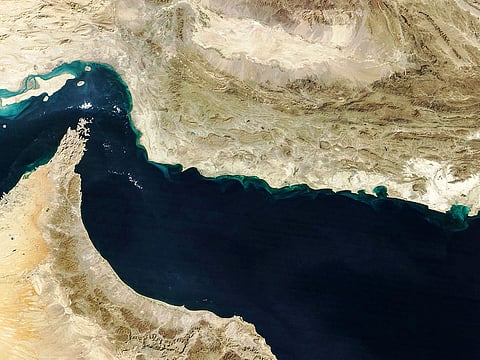
Dubai: The UAE has welcomed a resolution adopted by the International Maritime Organisation (IMO) Council strongly condemning Iranian threats and attacks on shipping, as well as the purported closure of the Strait of Hormuz.
The decision was adopted during the council’s 36th extraordinary session, with the IMO warning that such actions endanger lives, particularly those of seafarers, and pose serious risks to the marine environment.


The council also condemned Iranian attacks on Gulf Cooperation Council states and Jordan, describing them as violations of international law.
Shared responsibility
The UAE said the resolution, co-sponsored by more than 115 member states — the highest number in the organisation’s history — reflects broad international concern and underscores the shared responsibility to safeguard freedom of navigation in the Strait of Hormuz.
Under the resolution, Iran is urged to refrain immediately from any actions or threats aimed at closing the strait, disrupting international navigation or targeting commercial vessels.
The council reaffirmed the right of commercial ships to navigate freely and safely, stressing the importance of protecting seafarers and referencing UN Security Council Resolution 2817 (2026), which warned that obstructing international waterways constitutes a serious threat to global peace and security.
Maritime security corridor
The UAE also welcomed the IMO Council’s adoption of Japan’s proposal which encourages the establishment of a framework of a maritime security corridor to facilitate the safe evacuation of seafarers from the Strait.
Mohamed Khamis Saeed AlKaabi, Permanent Representative of the UAE to the IMO, welcomed the Council Declaration, stating: “The Council, and the international community as a whole, spoke in clear terms today to demand that Iran respect its obligations under international law and allow merchant and commercials vessels to navigate freely and safely through the Strait of Hormuz, an essential international waterway to energy supply and global economy”.
Critical artery of global trade
The UAE underscored that the Strait of Hormuz is not only a vital energy corridor through which a significant share of the world’s oil and gas supplies pass, but also a critical artery for global trade, including fertilizers, minerals, petrochemicals, and essential goods.
Any disruption carries far-reaching consequences for global markets, economic stability, and the cost of living worldwide, particularly in vulnerable regions.
The UAE reiterated that any attempt to use the Strait as a tool of economic coercion or to threaten international shipping is unacceptable and risks undermining both regional stability and the broader global economic order.
The UAE reaffirmed commitment to engagement in all relevant multilateral fora to effectively address the impacts of Iran’s unlawful actions. The threat to maritime security and the freedom of navigation deeply undermines regional and international stability and must be addressed.


