Gold prices in Dubai slowly start to recover from post-Diwali crash
Buyers see slow rebound after long-awaited relief from unsustainably high prices
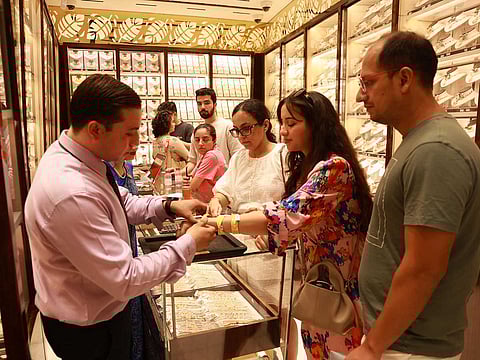
Dubai: Buyers see a gradual rebound after long-awaited relief from record gold prices, as a steep correction in global gold markets brings down 24-karat and 22-karat rates in the UAE following months of record-breaking highs.
In Dubai, the price of 24-karat gold rose Dh9 by Thursday evening after slipping to around Dh490.25 per gram earlier in the day. Meanwhile, the much-popular 22-karat costs Dh462.25, compared to Dh454 per gram earlier.
Gold climbed relentlessly through August and early October, driven by fears of inflation, currency debasement and geopolitical uncertainty. With the metal up roughly 55 % year-to-date, traders had piled into safe-haven positions.
“Gold and silver underwent a long-overdue correction, triggered by a post-Diwali slowdown in physical demand from key Asian buyers,” said Ole Hansen, Head of Commodity Strategy at Saxo Bank. “Silver’s deeper correction relative to gold once again highlights the liquidity gap between the two markets, silver’s liquidity is roughly nine times lower, amplifying both rallies and sell-offs.
“The structural drivers behind this year’s historic rallies remain intact, leaving metals that are no longer over-bought but still under-owned in portfolios well supported longer term.”
Analysts say the recent sharp decline was sparked by a combination of the inability of gold to break convincingly above the $4,380 / oz level which shifted market sentiment from break-out mode to profit preservation, and technical selling amplified by leveraged positions exiting.
“What followed was a classic rush towards an exit too narrow to cope with the sudden burst of selling from technical focused leveraged traders and recent buyers finding themselves underwater," Hansen noted.
What was behind the slide?
A number of factors converged to prompt the pull-back:
Softening physical demand from Asia, especially in the lead up to and then after Diwali, which typically signals a shift away from buying into the season.
The US dollar strengthening and equity markets shifting into a risk-on mode, reducing the relative appeal of gold as a haven.
Large outflows from gold-backed exchange-traded funds, one of the largest in five months, signalling a broader investor re-assessment of the metal’s near-term upside.
The proximity of the metal to its recent highs prompted profit-taking. The correction for gold came after nearly nine weeks of a 31% gain, while silver soared 45%.
Longer-term outlook
Despite the current dip, Hansen remains bullish on the broader outlook,
“We maintain a bullish outlook for gold and silver into 2026, traders will likely pause for thought before concluding the developments that drove the historic rallies this year has not gone away, and will likely continue to offer support to metals that are no longer over-owned in portfolios.”
Key upcoming risk events to watch include talks between Donald Trump and Xi Jinping of China, and whatever comes of possible meetings with Vladimir Putin, as geopolitical shock-factors still help underpin safe-asset interest.
While the recent slide feels sharp and perhaps catches some buyers by surprise, the underlying fundamentals that drove gold’s surge remain intact. What has changed is sentiment, positioning and technical momentum. For UAE-based buyers and investors, this might be the correction that the market needed to reset risk, but staying alert to volatility is essential.