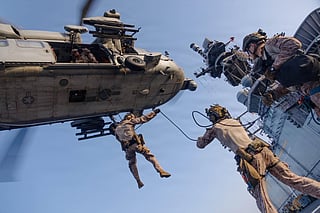
US Navy fires on oil tanker as Iran blockade resumes: 1 vessel disabled, 2 turned back — CentCom
Hellfire strike halts Curacao-flagged tanker as US tightens Gulf oil chokehold
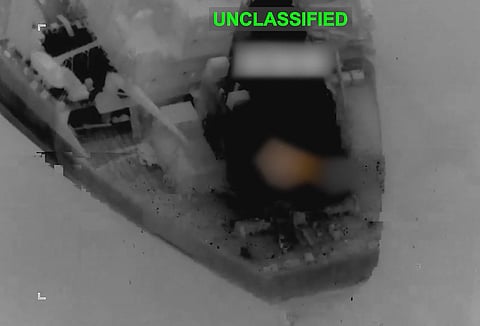
The United States said it has stepped up enforcement of its renewed naval blockade against Iran, announcing that it disabled an oil tanker after the vessel allegedly ignored repeated warnings while sailing towards an Iranian port in the Arabian Gulf.
Get updated faster and for FREE: Download the Gulf News app now - simply click here
According to the US Central Command (CentCom), the Curacao-flagged tanker M/T Belma, which was not carrying cargo, was intercepted after it was observed travelling through international waters towards Kharg Island, Iran's principal oil export terminal.
CentCom said the vessel disregarded multiple warnings and attempted to breach the US blockade.
A US military aircraft subsequently fired AGM-114 Hellfire missiles into the ship's smokestack, disabling the vessel without sinking it.
"The ship is no longer transiting to Iran," CentCom said in a statement.
Blockade resumes
The latest action came after the United States resumed naval blockade operations at 4 pm Eastern Time (ET) on Monday, 14 July, equivalent to 12:00 midnight GST (15 July) in the UAE.
The renewed enforcement targets commercial vessels travelling to or from Iranian ports and coastal areas, part of Washington's effort to tighten economic pressure on Tehran amid the ongoing conflict.
First 24 hours
CentCom said that during the first 24 hours of renewed enforcement:
Two commercial vessels complied with US instructions and altered course.
One vessel — the M/T Belma — was disabled after refusing repeated warnings.
US naval and air forces remain on station to enforce the blockade.
The military said it remains "vigilant and prepared to ensure full compliance" with the maritime restrictions.
Why Kharg Island matters
Kharg Island is Iran's most important crude oil export hub, historically handling the majority of the country's seaborne oil shipments. Any disruption to shipping bound for the island could have significant implications for Iran's oil exports and regional energy markets.
The renewed blockade also coincides with heightened tensions across the Gulf, where commercial shipping has come under increasing scrutiny following attacks on tankers and military exchanges involving the United States and Iran.
Energy corridor
The maritime enforcement follows months of escalating hostilities between Washington and Tehran.
The Strait of Hormuz and surrounding Gulf waters remain among the world's most strategically important energy corridors, carrying roughly one-fifth of global oil consumption under normal conditions.
The United States has said the blockade is intended to restrict Iran's ability to sustain military operations and export oil, while Iranian officials have denounced the measures as unlawful and warned they reserve the right to respond.
The latest incident involving the M/T Belma marks the first publicly announced case of a commercial vessel being disabled since the renewed blockade took effect, signalling a tougher US enforcement posture in one of the world's busiest shipping lanes.