Tragic end to search for Indian sailor after Oman vessel attack
Discovery highlights mounting risks for civilian crews in the Strait of Hormuz
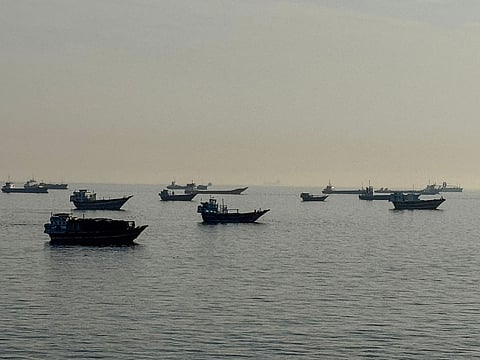
The body of an Indian marine engineer who had been missing since a commercial vessel was attacked off the coast of Oman has been recovered, bringing a tragic end to a three-day search as concerns grow over the safety of merchant shipping in the Gulf.
Heramb Karmarkar, 30, from Pune in western India, disappeared after the Cypriot-flagged cargo vessel GFS Galaxy came under attack on Sunday while sailing near the Strait of Hormuz, one of the world’s busiest and most strategically important maritime routes.
According to India’s Forward Seamen’s Union, Karmarkar’s family was informed by the shipping company on Tuesday evening that Oman’s coast guard had recovered his body. Union official Manoj Yadav said the discovery came nearly 60 hours after news first emerged that the marine engineer was missing.
The remaining 23 crew members aboard the vessel, including 10 other Indian nationals, were rescued shortly after the attack.
The United States has blamed Iran for the strike, saying the vessel suffered severe fire damage and its engine room was disabled. Tehran has not publicly accepted responsibility.
Karmarkar’s death has become one of the clearest human costs of the rapidly escalating conflict in the Gulf, where commercial vessels have increasingly become caught in the crossfire between Iran and the United States.
India’s Ministry of External Affairs on Tuesday described the attacks on commercial shipping as “deeply worrisome”, saying civilian vessels and maritime infrastructure should never be targeted. It also reiterated its call for an immediate end to hostilities and a return to dialogue.
Diplomat summoned
The latest incident follows another deadly day for Indian seafarers. On Tuesday, New Delhi summoned Iran’s senior diplomat to lodge a strong protest after two more commercial ships — MT Al Bahiyah and MT Mombasa — were attacked while transiting the Strait of Hormuz.
Those attacks involved 46 crew members, including 30 Indians. Indian authorities confirmed that one Indian sailor was killed and several others were injured.
The mounting threats have prompted India to introduce a new emergency mechanism, dubbed Seafarer-First, aimed at tracking and protecting Indian nationals serving aboard merchant vessels operating in the Arabian Gulf, the Strait of Hormuz and the Gulf of Oman. The system will maintain a vessel-by-vessel dashboard to account for Indian crew members regardless of the ships’ national flags.
Largest supplier of merchant seafarers
India is one of the world’s largest suppliers of merchant seafarers, with more than 320,000 active sailors working on international vessels. Thousands routinely sail through the Gulf, making the deteriorating security situation a growing concern for both shipping companies and the government.
The attacks are unfolding against the backdrop of an expanding confrontation between Iran and the United States.
Washington has renewed military operations against Iranian targets and reimposed a naval blockade on Iranian ports, while Tehran has vowed to keep the Strait of Hormuz closed until what it calls US aggression comes to an end.
Iran’s Revolutionary Guards have warned that oil and gas exports through the region could remain disrupted, while US Central Command says its strikes are intended to reduce Iran’s ability to threaten commercial shipping and civilian crews.
The Strait of Hormuz is a critical artery for global energy supplies, with around one-fifth of the world’s seaborne oil trade passing through the narrow waterway before the conflict erupted earlier this year. Continued attacks on merchant vessels have raised fears of prolonged disruption to international shipping, driven up oil prices and heightened risks for civilian seafarers navigating one of the world’s most important maritime corridors.
- with inputs from AFP


