Ship traffic through Strait of Hormuz plunges as renewed US-Iran fighting jolts global shipping
Renewed US-Iran clashes choke vital oil corridor, spooking global shippers
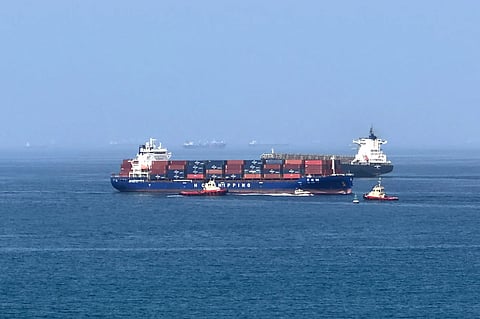
Marine tracking firms have reported a sharp decline in commercial shipping through the Strait of Hormuz, highlighting growing concerns among shipowners and insurers after renewed military exchanges between the United States and Iran threatened one of the world's most critical maritime chokepoints.
According to maritime intelligence firms cited by The Wall Street Journal, vessel movements through the narrow waterway have fallen well below recent levels after the collapse of a fragile ceasefire.
Data from Kpler and Windward showed only about 25 vessel transits, compared with the 30 to 50 crossings recorded during the partial recovery in recent weeks.
Reuters reported that at one point Thursday, only two ships were observed making the passage: the Iranian crude supertanker Berg 1 and the chemical tanker Well Sail.
The slowdown follows renewed US airstrikes on Iranian military targets and Iran's retaliatory attacks on commercial shipping and US military facilities in the Gulf.
Several vessels have also reportedly switched off their Automatic Identification System (AIS) transponders — a practice known as "going dark" — making it difficult to determine the true volume of maritime traffic.
Actual vessel movement may be 'understated'
Maritime analysts caution that public tracking data likely understates actual vessel movements because some ships continue transiting without broadcasting their positions.
The latest disruption reverses a modest recovery seen after the June ceasefire agreement, when commercial traffic had begun returning to the waterway.
Before the renewed fighting, tracking firms reported vessel crossings gradually increasing from the extremely low levels recorded during the height of the conflict, although they remained well below the roughly 120 to 140 commercial vessels that typically transit the Strait each day under normal conditions.
Shipping risks have intensified after several commercial vessels were attacked earlier this week, prompting some marine insurers to advise shipowners to postpone voyages or reassess coverage before entering the Gulf.
Although no formal closure of the Strait has been declared, maritime security experts say the combination of missile attacks, drone threats and rising war-risk premiums has made many operators reluctant to transit the waterway until the security situation stabilises.
Earlier on Thurdsay, Iran's chief negotiator Mohammad Ghalibaf has declared that Hormuz will "re-open" under Iran's own terms.
The Strait of Hormuz is one of the world's most strategically important energy corridors, carrying about 20% of global oil consumption and a significant share of liquefied natural gas exports from Gulf producers including Saudi Arabia, Iraq, the United Arab Emirates, Kuwait and Qatar.
Any prolonged disruption risks delaying cargoes, increasing freight and insurance costs, and adding upward pressure on global energy prices.

