US-Iran war: What UAE residents need to know today (July 17)
US blockade tightens, Iran bridges hit; Tehran issues stark warning over Gulf oil lifeline
The United States and Iran exchanged fresh military and diplomatic warnings Friday as the conflict entered a new phase, with US forces expanding strikes across southern Iran, Tehran declaring the Strait of Hormuz an "unbreakable red line," and Gulf nations tightening security amid fears of a broader regional war.
Get updated faster and for FREE: Download the Gulf News app now - simply click here
The latest escalation comes as Washington continues near-daily attacks on Iranian military targets while enforcing a naval blockade aimed at restricting Iranian shipping.
Following are the latest updates:
US expands strikes on Iran: The US military said it carried out a fresh round of airstrikes designed to "further degrade Iranian military capabilities." On the evening of July 16 (9:40 p.m. ET / 5:40 a.m. Gulf Standard Time), CentCom completed its latest (sixth consecutive night) major wave of precision strikes against Iranian military targets. These used fighter jets, drones, and warships, hitting dozens of sites including coastal surveillance, air defense systems, military logistics infrastructure, and maritime capabilities. Iranian news agencies also reported US strikes near Qeshm Island, located at the entrance to the Strait of Hormuz.
Explosions reported, 2 bridges hit: Iranian state media reported explosions in Bushehr, home to Iran's only civilian nuclear power plant, as well as attacks around Ahvaz. State broadcaster IRIB later reported US strikes on an airport, railway station and two bridges in Bandar Abbas, Iran's largest commercial port overlooking the Strait of Hormuz.
Advice to travelers: Travelers flying to and from the UAE are facing another week of changing travel plans, with major international airlines extending flight suspensions, new health requirements coming into force for passengers travelling to India, and carriers across the region continuing to adjust schedules as security concerns persist. Recently, British Airways and Singapore Airlines have extended the suspension of flights to destinations in the region until October. Airlines remain cautious despite a gradual easing of tensions elsewhere.
Kuwait intercepts hostile missiles: Kuwaiti air defences intercepted hostile missiles and drones early Friday amid what the military described as Iranian aggression, officials said, urging residents to follow safety protocols as explosions echoed in parts of the country. In a statement posted on X, the Kuwait Army General Staff Headquarters said its air defenses were actively responding to "hostile missile and drone attacks" following "the criminal Iranian aggression.” It added that any explosions heard by the public were the result of successful interceptions by air defense systems.
Qatar repels missile attacks: Qatar’s Ministry of Defence announced repelling a missile attack targeting the country. According to the Ministry of Interior, a child was injured after shrapnel fell from interception operations. Qatari authorities earlier elevateed its national security threat level to "high." The Interior Ministry urged residents to remain indoors or stay in protected locations and avoid windows, glass-fronted buildings and exposed outdoor areas until further notice.
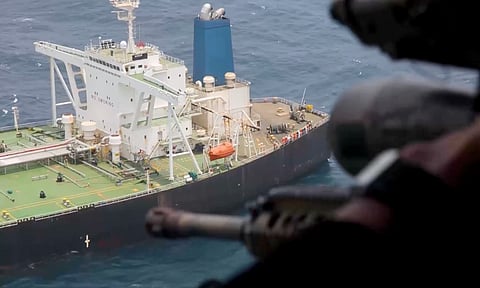
Maritime blockade enforcement (Gulf of Oman/Strait of Hormuz): US forces, including Marines from the 11th Marine Expeditionary Unit, conducted a verification boarding of the vessel M/T Wen Yao on July 16. This fits into ongoing operations to enforce the US naval blockade against vessels attempting to reach Iranian ports.
Iran warns US over Strait of Hormuz: Iran's military issued one of its strongest warnings since hostilities resumed, saying it would never allow the US to interfere with the Strait of Hormuz, the strategic waterway through which roughly one-fifth of global oil consumption and nearly one-third of seaborne crude trade passes. Brig. Gen. Ebrahim Zolfaghari, spokesman for Iran's central military command, described the waterway as Iran's "unbreakable red line."
"Under no circumstances will we permit the United States to interfere with the Strait of Hormuz," he said in televised remarks. He warned that Iran would target "all infrastructure throughout the region" if President Donald Trump authorises attacks on Iranian civilian or energy facilities.
Trump says diplomacy remains possible: Despite the expanding military campaign, the White House insisted diplomatic channels remain open. Press Secretary Karoline Leavitt said President Donald Trump remains willing to negotiate with Tehran. "The president will hold them accountable when they turn their back on the words that they state to the United States," Leavitt said. "But he is always open to diplomacy at the very same time."
Indirect communication continues: Officials said indirect communications between Washington and Tehran continue despite the renewed fighting.
Drone hits commercial ship near Basra, Iraq: Meanwhile, a drone struck a commercial ship near Iraq's southern port of Basra.
Iraqi officials said the vessel had arrived from the United Arab Emirates carrying American-branded vehicles. Separately, Iraq's Oil Ministry said an unidentified object landed near an oil tanker but reported no fire or structural damage.
Houthis warn Saudi Arabia: In Yemen, the Iran-backed Houthi movement warned it would attack Saudi Arabia's oil facilities and other strategic infrastructure if Riyadh becomes directly involved in the conflict.
Syria intercepts Iran missile shipment to Hezbollah: Syria announced it had intercepted a shipment of missiles and advanced weapons allegedly destined for Hezbollah after being smuggled across the Iraqi border.
Iran condemns strike near cancer hospital: Iran accused the United States of carrying out what it called a "barbaric attack" after strikes near a cancer hospital in the country's southwest reportedly forced the evacuation of 211 chemotherapy patients. Foreign Ministry spokesman Esmaeil Baqaei said the incident caused panic among hospitalised children and compared it to previous attacks on healthcare facilities. The United States has not publicly commented on the allegation.
Oil prices steady despite tensions
Despite the expanding conflict, oil markets showed little sign of panic.
Brent crude slipped 0.31% to $84.69 a barrel, while US benchmark West Texas Intermediate fell 0.14% to $79.49 in Friday trading.
Abu Dhabi's Murban crude dropped 4.13% to $78.55, while US natural gas futures edged down 0.62%.
Analysts said investors appear to believe that, despite escalating military operations, global crude supplies remain sufficient and shipping through the Strait of Hormuz has not yet experienced widespread disruption.
Why it matters
The Strait of Hormuz remains the world's most strategically important oil chokepoint. Any prolonged disruption to shipping could send energy prices sharply higher, affect global inflation, and threaten supply chains across Asia, Europe and North America.
While military operations continue to intensify, markets and governments are closely watching whether the conflict spills further into neighboring Gulf states or disrupts commercial navigation through the narrow waterway.