US-Iran war: Tehran plans Hormuz exclusion zone as Israel accuses Hezbollah of ceasefire violations
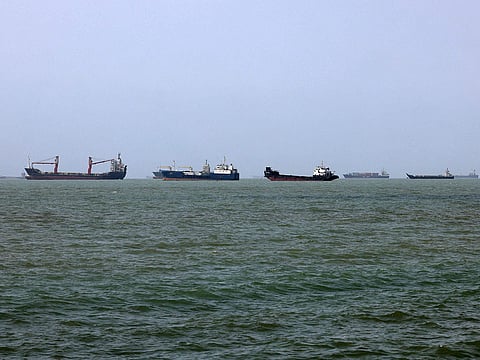
Iran said the zone would target vessels attempting to transit the strategic waterway
Highlights
We are closing this live coverage. For the latest updates, click here.
Baghaei assails Canada for supporting US-Israel military campaign against Iran
Iranian Foreign Ministry Spokesperson Esmail Baghaei on Monday launched a scathing verbal assault against Canada, accusing it of "strategic confusion" and endorsing US-Israel military aggression after Canadian Foreign Minister Anita Anand and Finance Minister François-Philippe Champagne condemned Tehran's "destabilising activities" in the Middle East.
Baghaei’s remarks come amid escalating tensions over maritime navigation and international sanctions, with Tehran sharply questioning Canada’s commitment to diplomacy and its standing as an independent sovereign state.
In a strongly worded post made on X, Baghaei claimed Canada chose to "appease their bullying neighbour" by backing military actions and sanctions against Iran rather than calling for de-escalation.
"Canada cannot credibly present itself as a champion of 'peace and security,' 'freedom of navigation,' and 'international law' while simultaneously backing US military aggression and Washington’s illegal, interventionist actions in our region," Baghaei stated.
Oil prices spike: Brent rises to $97 as US-Iran conflict threatens Gulf supplies
Oil prices climbed to a six-week high as renewed fighting between the US and Iran intensified concerns about disruptions to crude supplies through the Strait of Hormuz, with Brent crude moving toward $97/barrel, as of 8.01 am in Beijing on Tuesday (Sept. 8, 2026).
US West Texas Intermediate crude was at $92.53. Murban crude, the UAE benchmark, was around $106.80. Brent reached an intraday high of $98.06 a barrel on Monday, its highest level since July 24, before settling at $97.31. WTI also reached a six-week high.
The latest rally reflects growing concern that the escalating US-Iran conflict could further disrupt oil flows through the Strait of Hormuz, one of the world's most important energy chokepoints.
The latest jump followed a series of attacks involving commercial and military vessels. US forces on Saturday struck 3 Iranian oil tankers after Iran launched ballistic missiles toward two US Navy warships, according to US Central Command.
Iran says upgraded ballistic missile, ready for preemptive action against threats
Iran state media on Monday said a ballistic missile with improved capabilities was demonstrating a new doctrine: Tehran “will take action against any threat, even before it is carried out.”
The report by Iran’s state news agency repeatedly cited comments aired on state TV the day before by the head of Iran’s Supreme National Security Council, Mohsen Rezaei, who boasted of new missile capability and claimed it had been “tested” against a US warship.
It was not clear whether what was tested was the missile the new report described, the solid-fueled Qassem Basir, unveiled last year, when it was described as having at least a 1,200-kilometer (745-mile) range.
The US on Saturday said ballistic missiles were launched at US warships and it struck three Iranian oil tankers in response.
Experts called the launch an "escalation", noting that until then Iran's attacks at sea had targeted commercial shipping during six months of war. The US said the warships evaded the attacks.
Iran’s messaging in recent days has become more assertive, and Monday’s report said the Qassem Basir marks “a turning point in Iran’s defense strategy.”
US warships enforcing blockade are now targets: Iran general
Iran has warned that it can strike US Navy vessels enforcing Washington's blockade of Iranian shipping, escalating an already dangerous confrontation in the Arabian Gulf after a series of tit-for-tat attacks on military and commercial vessels.
Iran's acting defense minister, Brig. Gen. Majid Ibn Reza, said late on Monday that Iranian forces possess the ability to attack US warships enforcing what Tehran calls an "economic blockade", Tehran-based Press TV reported.
Ibn Reza claimed the country's military capabilities are "sufficient" to target American naval forces. The warning came two days after the US struck three Iranian crude-oil carriers following Iranian missile attacks on two US Navy vessels.
The exchange has pushed the conflict into a new phase in which Iran's oil exports, commercial tankers and US naval forces enforcing the blockade are increasingly becoming interconnected military targets.
Board of Peace's Mladenov says Gaza, West Bank escalation makes two-state solution 'impossible'
A top official within the US-backed Board of Peace on Monday said a failure to move forward in Gaza paired with rising violence in the West Bank were making a two-state solution "impossible".
Nickolay Mladenov, the high representative for Gaza under the US-backed "Board of Peace" tasked with implementing an October ceasefire plan, was speaking at the Hili Forum in Abu Dhabi.
"I would say that if Gaza continues the way it is now, or does not move into implementing... the plan that we have under the comprehensive plan, the two-state solution will become practically impossible," he said.
"Because, with everything that is happening in the West Bank, and with more than 50 per cent of Gaza now under the control of the Israeli army and less than 50 per cent under the control of Hamas, there is no credible pathway forward to a political resolution of the conflict," he added.
"The only way that we can build back to that is if we have transitional governance, if we have decommissioning of weapons, if we have withdrawal in Gaza," he said.
Traffic through the Strait of Hormuz at lowest level since May
Traffic through the Strait of Hormuz has fallen to its lowest level since May, with shipping data showing an average of 10 vessels a day transiting the waterway on Sunday, Reuters reported, citing analytics firm Kpler.
Only two vessels passed through the strait on Saturday and six on Sunday, mostly using the Iranian route, according to Reuters. The 10-day average stood at 13 vessels on Saturday, down from more than 15 on Friday.
Get updated faster and for FREE: Download the Gulf News app now - simply click here.
Israel threatens war with PA in case of Oct 7-style attack
Israel on Monday threatened a "full-scale war" against the Palestinian Authority if it prepared an attack against Israeli forces or settlements similar to the one launched by Hamas from Gaza on October 7, 2023.
The unusual warning, denounced by Palestinian authorities as an attempt to fuel the conflict during the Israeli election season, comes as violence surges in the occupied territory.
The remarks from Defence Minister Israel Katz followed a stabbing attack that wounded an Israeli settler in the northern West Bank, with the military saying it had shot and killed the Palestinian assailant.
"If... the Palestinian Authority's security mechanisms and related bodies initiate, or we know with certainty that they are about to initiate, a terror attack in the style of October 7 against IDF forces and Jewish settlements -- Prime Minister Benjamin Netanyahu and I have instructed the IDF to prepare for the opening of a full-scale war," Defence Minister Israel Katz said.
Houthis accuse Saudi Arabia of airstrikes as fighting escalates across Yemen
Yemen's Houthi group on Monday accused Saudi Arabia of carrying out airstrikes and cruise missile attacks across several provinces of the war-ravaged country, as an escalating battle with government forces spread to multiple fronts.
"The Saudi enemy targeted the provinces of Al-Jawf, Al-Bayda, Marib and Taiz with several airstrikes and cruise missiles," Houthi-affiliated al-Masirah TV reported, without giving details on casualties or damage.
Houthi military spokesperson Yahya Sarea said the group had "managed to shoot down a Saudi CH-4 reconnaissance drone" over Khabb wa ash-Sha'af district in the northern province of Al-Jawf on Monday.
Iran says talks with Oman on Hormuz Strait reach final stage
Iranian Foreign Ministry spokesman Esmaeil Baghaei said Monday that Iran-Oman negotiations on the designation of a temporary route for safe passage through the Strait of Hormuz have reached their final stage.
The understanding between the two countries regarding the route's designation would likely be registered with the International Maritime Organisation in the coming days, Baghaei said at a weekly press conference in Tehran, Xinhua News Agency reported.
The insecurity in the waterway is a consequence of the US-Israeli "military aggression" against Iran, he said, noting, "Vessels will not be able to travel this route with confidence and a sense of security by the time this situation continues."
Oman navy rescued 16 crew members from Saudi vessel struck by Iran
Oman's navy on Monday revealed that it had rescued 16 crew members from a Saudi-flagged oil tanker that Iran attacked one week ago in the Strait of Hormuz.
"A Royal Navy of Oman vessel provided logistical support to the tanker's 25-member crew and evacuated 16 crew members while ensuring that the necessary medical care was provided," Oman's Maritime Security Centre said in a statement.
The statement did not elaborate on the fate of all the crew members but confirmed two seamen on the vessel, the SIDR, had been killed in the incident.
Israeli rubble-clearing in Gaza could erase 'atrocity crimes' evidence: UN expert
A UN expert warned Monday that large-scale rubble removal in parts of Gaza under Israeli control risked erasing traces of "atrocity crimes", and preventing the recovery and identification of human remains.
Francesca Albanese, the United Nations special rapporteur on the Palestinian territories, warned in a statement that the implications of Israel's "ongoing removal, crushing and relocation of rubble in Gaza" were "profound".
"Gaza's rubble contains human remains and physical evidence relevant to the investigation of alleged international crimes, including genocide," she said, pointing to estimates from Palestinian authorities that more than 10,000 people remain buried under the debris in the war-ravaged Palestinian enclave.
The Italian-born independent expert has faced harsh criticism from Israel and some of its allies over her long-standing accusations that Israel is committing genocide and other war crimes against Palestinians in Gaza and the occupied West Bank.
Israel strikes Lebanon, accuses Hezbollah of truce violations
Israel conducted a wave of deadly airstrikes in south Lebanon, Lebanese state media said Monday, as it accused Hezbollah of violating a ceasefire agreement that had brought a period of relative calm.
The strikes overnight killed 11 people in a south Lebanon village, including two infants, Lebanon's official National News Agency (NNA) said, a day after separate raids left seven dead.
Israel has been intensifying strikes in the southern Nabatieh area after saying on Thursday that it had seized the strategic Ali al-Taher ridge from Hezbollah, a claim the Iran-backed group has not commented on.
South Korea 'in talks with intl community over Hormuz security'
South Korea is closely communicating with relevant countries and the international community to help ensure the free passage of all vessels through the Strait of Hormuz, the foreign ministry said on Monday.
The statement came after Iranian academic Mohammad Marandi warned that Tehran could regard Seoul as an enemy and target South Korean assets in the region if Seoul joins a US-led effort to secure navigation through the strait, according to the London-based Middle East news website Middle East Eye.
"We are closely communicating with the international community, including relevant countries, to help restore peace and stability in the Middle East as soon as possible and to ensure the free passage of all vessels, including those of our country, through the Strait of Hormuz," the ministry said in a release, Yonhap news agency reported.
Iran attacks were premeditated: Anwar Gargash
Iran’s attacks on the UAE and other Gulf countries were premeditated and planned rather than an impulsive response, and rebuilding the trust destroyed by the conflict could take decades, a senior UAE official said.
Dr Anwar Mohammed Gargash, Diplomatic Adviser to the UAE President, said engagement with Iran remained a central issue for the UAE and its Gulf neighbours because geography left them with little choice but to maintain communication.
Speaking at the Hili Forum 2026 in Abu Dhabi, Gargash, however, drew a clear distinction between restoring a necessary working relationship with Tehran and rebuilding trust.
Read more here.
Yemen's Houthis accuse Saudi Arabia of air raids, missile strikes
Yemen's Houthis on Monday accused Saudi Arabia of carrying out airstrikes on various areas of Yemen as the rebels push on with an offensive to seize territory bordering the strategic Bab al-Mandeb strait.
"The Saudi enemy targeted the provinces of Jawf, al-Bayda, Marib and Taiz with several airstrikes and cruise missiles," said the Saba news agency, which is affiliated with the Houthi movement.
Iran warns South Korea against involvement in Hormuz
Iran's foreign ministry on Monday warned South Korea against military deployment or involvement in US operations in the Strait of Hormuz, saying such a move would have "serious consequences".
On Friday, Seoul said it was considering "contributions" to US security efforts in the strategic Strait of Hormuz, which Tehran has largely controlled since the outbreak of war against the United States on February 28.
South Korea said it would consider the move provided that its own military readiness was not compromised, but added that no decision had been made.
On Monday, Iran's foreign ministry spokesperson Esmaeil Baqaei warned South Korea against succumbing to what he called "US pressure and intimidation".
"Any military deployment or participation in operations by other countries in the Gulf or the Strait of Hormuz can only be regarded as direct support for the party responsible for that aggression and will have serious consequences," he said in a post on X.
Get updated faster and for FREE: Download the Gulf News app now - simply click here.
Israel accuses Hezbollah of repeatedly violating ceasefire agreement
Israel on Monday accused Iran-backed Hezbollah of repeatedly violating a ceasefire agreement in recent days, as Lebanese state media reported 11 killed in overnight Israeli strikes in a southern village.
"Repeated drone attacks. Weapons storage. Terror infrastructure. Command centres embedded in civilian areas. Hezbollah continues attempting to rebuild its military capabilities in southern Lebanon. These violations will not be accepted," Israel's foreign ministry wrote on X.
Lebanon state media says Israeli strikes on southern village killed 11
Lebanese state media reported Monday that Israeli strikes overnight killed 11 people in a southern village, including two infants, a day after separate raids left seven dead.
The official National News Agency said nine people were killed in one strike that destroyed a three-storey residential building in Kfar Rumman, while two rescuers in the area whose car was targeted were also killed.
Saudi, UK foreign ministers discuss regional tensions
Saudi Foreign Minister Prince Faisal bin Farhan bin Abdullah received a phone call from UK Foreign Secretary Edward Miliband, during which the two ministers discussed regional developments and efforts to strengthen bilateral cooperation.
They reviewed Saudi-UK relations and ways to enhance coordination, as well as developments in the region and their implications for security and stability.
The ministers stressed the need to intensify diplomatic efforts to de-escalate tensions and strengthen regional security.
Tortured and jailed: Iranian twins face death, 25 years
For four months, Marzieh Nourmohammadi searched for her twin daughters.
She went from hospitals to government offices and courts, desperately trying to discover what had happened to Taraneh and Romina Rahimi after masked men took the 19-year-old high school students from their beds in the middle of the night.
Then came a phone call.
Read full story here.
US denies that Iran struck an uncrewed US ship in the Strait of Hormuz
The U.S. military denied that Iran struck an uncrewed American military vessel in the Strait of Hormuz, calling the claim a "total lie." A top Iranian official said Tehran plans to announce an "exclusion zone" outside the Strait of Hormuz aimed at vessels it believes are attempting to transit the waterway.
Israel army orders evacuation of zone in south Lebanon
The Israeli army demanded early Monday that residents of Deir Zahrani in southern Lebanon leave a specific zone ahead of strikes against Iran-backed Hezbollah.
The army said that an explosive drone had been launched toward its forces and "Hezbollah's terrorist activity compels the IDF to act forcefully against it", without specifying whether any of its soldiers were wounded.
It warned in a message in Arabic that it was targeting a "Hezbollah terrorist facility" and said those who remained in the area were at risk.
Hezbollah's Al-Manar television channel later reported Israeli airstrikes on Deir Zahrani.
£35.75m Mojtaba-linked London penthouses go on sale
Two luxury London penthouses linked to Iran’s Supreme Leader Mojtaba Khamenei have been forced onto the market after their sanctioned registered owner defaulted on mortgages, offering a glimpse of how mounting financial restrictions are squeezing an overseas property network allegedly built for Iran’s ruling elite.
The apartments at 3a Palace Green, one of London’s most exclusive addresses overlooking Kensington Palace, were bought for a combined £35.75 million (About $48 million/Dh 177 million) but have now entered receivership, The Sunday Times reported.
US oil companies aren’t rushing to build new refineries despite Trump’s push
President Donald Trump wants US oil companies to produce more gasoline and bring down prices at the pump. But the refiners he is pressing face a problem they cannot easily solve: there is little spare refining capacity to unlock, and building a new refinery would take years and billions of dollars.
Trump has few immediate options as gasoline prices remain elevated and the war between the US and Iran continues to disrupt oil and fuel supplies around the world.
Trump met this week with executives from major oil and refining companies, including Chevron, Marathon Petroleum, Valero Energy and PBF Energy, urging them to increase refining capacity and boost fuel supplies.
But US refineries are already operating at exceptionally high rates. The bigger obstacle may be even harder to overcome: the price of crude oil itself, with WTI crude trading around $92 a barrel Monday, while global benchmark Brent was near $97.
Hormuz risks keep Brent near $97, Murban tops $103
Oil prices were mixed early on Monday (September 7), with global benchmark Brent crude holding near $97 a barrel as markets continued to assess the impact of the U.S.-Iran conflict and disruptions around the Strait of Hormuz. As of 8:28 am Tokyo time on Sept. 7, the market snapshot showed: Brent crude up 0.43% to $96.69 , WTI Crude up 0.60% to $92.03, and Murban crude at $103.30, down -1.36%. Natural gas was down 1.5% to $2.929.
The Strait of Hormuz remains at the centre of the oil market's risk calculation. The waterway normally handles a huge share of global oil shipments, but tanker traffic has been severely disrupted amid the conflict.
Brent had already climbed above $96 last week after the latest escalation, while traders weighed the possibility of prolonged disruptions through Hormuz, as the market remained volatile. The premium could widen further if shipping restrictions become more severe or if attacks damage additional energy infrastructure.
Iran oil exports crumble, Rezaei widens restricted zone
Iran is preparing to expand its maritime restrictions beyond the Strait of Hormuz, escalating an already dangerous confrontation with the US and raising fresh concerns for commercial shipping and global oil supplies.
Iran hardliner Mohsen Rezaei, 71, secretary of the Supreme National Security Council, said on Sunday that Tehran would announce a new “restricted zone” in the Arabian Gulf in the coming days.
The zone would begin at the line of the US naval blockade and extend into parts of the Gulf. Ships entering the area would be placed on an Iranian sanctions list, he said.
Tehran expanding 'blacklist', US ramps up blockade
Iran's expansion of its "restricted zone", announced by top security chief Mohsen Rezaei, follows an earlier Iranian campaign against vessels Tehran says have violated its navigation rules.
Iran has expanded its blacklist by 11 vessels, bringing the total to 56. The vessels include crude-oil tankers, LNG and LPG carriers and clean-product ships. Iran has also warned that vessels cooperating with blacklisted ships — including through ship-to-ship transfers — could face sanctions.
Meanwhile, the US blockade is also becoming more aggressive, as Central Command forces struck three Iranian oil tankers, according to US military officials.
The latest escalation marks a significant shift from economic pressure into direct confrontation over the movement of Iranian oil. The US says its naval presence is intended to enforce the blockade and protect maritime security. Washington has also argued that the Strait of Hormuz is a vital international waterway rather than an Iranian-controlled passage.
Iran says it plans to announce a new 'exclusion zone' near the Strait of Hormuz
The new head of Iran's Supreme National Security Council on Sunday said Tehran plans to announce an "exclusion zone" outside the Strait of Hormuz aimed at vessels it believes are attempting to transit the waterway.
Mohsen Rezaei's comments to Iran's state broadcaster came with few details, a day after the U.S. struck three Iranian oil tankers in response to Tehran launching ballistic missiles at U.S. warships. Experts called the launches a dangerous escalation after Iran's previous attacks at sea targeted commercial shipping.
The new zone should be announced in the coming days and weeks and "will begin from the line of the U.S. naval blockade, extend toward the Strait of Hormuz, and from this side continue into the Persian Gulf," Rezaei said. "Any ship that enters this area with the intention of passing through the Strait of Hormuz and is identified will be placed on our sanctions list."
Iran raises price of petrol as US applies economic pressure
Iranian authorities on Sunday announced they were raising the price of petrol for heavier consumers, as the United States steps up sanctions seeking to isolate the country's economy.
Iran's quota system prices petrol in three tiers -- 1,500 tomans per litre for a consumer's first 60 litres in a given month, 3,000 tomans per litre for their next 50, and 5,000 tomans per litre after that. The toman is an informal unit equivalent to 10 Iranian rials.
On Sunday, government spokeswoman Fatemeh Mohajerani said the price for the third tier would double to 10,000 tomans (about 4.5 US cents).
"The rate will increase to 10,000 toman rials from the morning of September 8," Mohajerani said in remarks carried by state media.
US‑Israel war on Iran: Recent developments
Day 186: Iran to declare 'prohibited zone' near Hormuz Strait
Day 185: Iran military vows 'more severe' reprisals if US attacks continue
Day 184: US insists Iran conflict is not a war while economic blockade tightens
Day 183: Trump boasts ‘unlimited’ US ammo, warns of more strikes
Day 182: US strikes on Iran would not continue 'too long': Trump


