US-Iran conflict: What UAE residents need to know this evening (July 24)
Flight updates, travel advisories and the latest military developments across the region
Dubai: The conflict between the United States and Iran continues to escalate, with fresh military action, new travel warnings and growing concerns over shipping and aviation across the Middle East.
While the UAE remains safe and airports are operating normally, the latest developments have prompted several countries to renew travel advisories. Some airlines have also adjusted flight schedules as a precaution.
Here's what UAE residents need to know this evening.
Key developments
Iran says it launched drone attacks on US military bases in Bahrain, Jordan and Kuwait in retaliation for recent American strikes.
Iran's Revolutionary Guards warned civilians in countries hosting US troops to stay at least 500 metres away from American military sites.
The United States continued military strikes inside Iran, saying the attacks were aimed at reducing Tehran's ability to target commercial shipping.
Iran rejected the idea of a temporary ceasefire, insisting its demands over the Strait of Hormuz must first be addressed.
The United Nations expressed concern over the widening conflict, warning of risks to regional stability, trade and maritime security.
Travel advisory
Several governments, including the United States, the United Kingdom, Canada and Australia, have updated their travel advisories, warning that the security situation in the Middle East remains unpredictable.
Although there are no major disruptions at UAE airports, airlines continue to review operations as regional airspace conditions change.
Get updated faster and for FREE: Download the Gulf News app now - simply click here.
Flight updates
Etihad Airways has extended cancellations on selected Bahrain and Kuwait services.
flydubai has cancelled one scheduled service to Bahrain.
Other UAE airlines continue to monitor the situation and may adjust schedules if required.
Passengers travelling today or over the weekend are advised to:
Check their flight status before leaving for the airport.
Monitor airline websites or mobile apps for the latest updates.
Make sure airlines have their current contact details.
Allow extra time when travelling to the airport.
Follow official travel advice issued by their destination country.
The US Department of State has also maintained its Worldwide Caution advisory, warning American citizens that the security environment remains complex and could deteriorate further.
Iran rejects ceasefire proposal
Iranian Foreign Minister Abbas Araghchi ruled out accepting a temporary ceasefire, saying Tehran would not consider such a proposal unless its demands concerning the Strait of Hormuz were addressed, according to Iran's Tasnim news agency.
He said Iran had responded firmly whenever the United States challenged the country and accused Washington of continuing the same approach.
Araghchi also warned that any country assisting the US in military action against Iran would be held responsible under international law. He said Iran reserved the right to take all necessary measures in self-defence.
Iran claims attacks on US military bases
Iran said it carried out drone attacks against several American military installations across the Gulf.
According to Iranian state media, the targets included:
Isa Air Base in Bahrain.
Al-Azraq Air Base in Jordan.
US military facilities in Kuwait.
Ali Al Salem Air Base in Kuwait.
Iran claimed it struck aircraft hangars, maintenance facilities, military barracks and an ammunition depot. The claims have not been independently verified.
Separately, Iran's Revolutionary Guards urged civilians living near US military facilities to leave the surrounding area, warning people to remain at least 500 metres away from American bases.
US strikes continue inside Iran
The US military said it carried out attacks inside Iran for the 13th consecutive night, targeting military infrastructure linked to Tehran's ability to threaten shipping in the Gulf.
Iranian officials said overnight strikes in Khuzestan province killed four people and injured five others.
State media also reported explosions in Ahvaz, Bandar Abbas and Omidiyeh.
Iran said an Islamic Revolutionary Guard Corps naval headquarters in Zibakenar, in Gilan province, was damaged during one of the attacks.
Concern grows over shipping in the Gulf
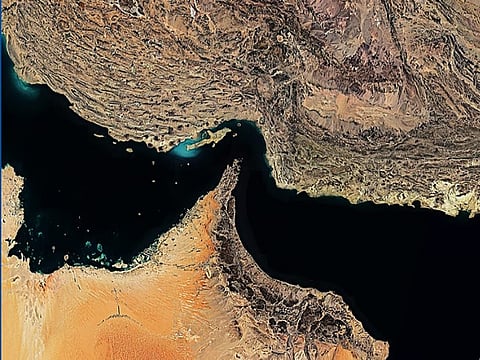
The Strait of Hormuz remains at the centre of the crisis.
The waterway is one of the world's busiest oil shipping routes, making any disruption a concern for global energy markets and international trade.
Adding to those concerns, Iran claimed it had targeted and destroyed an Amazon data centre in Bahrain. Neither Amazon nor Bahraini authorities have commented on the claim.
Meanwhile, Tehran criticised US President Donald Trump's proposal to use frozen Iranian assets to compensate for shipping damage in the region, calling the suggestion an "incendiary precedent".
UN raises alarm over Red Sea attacks
The United Nations warned that the conflict risks spreading further after Yemen's Houthi rebels attacked commercial oil tankers in the Red Sea.
UN Secretary-General António Guterres said the attacks could worsen regional tensions and undermine efforts to restore peace in Yemen.
The UN also warned that further attacks could have serious economic, humanitarian and environmental consequences.
Separately, UN High Commissioner for Human Rights Volker Türk called for urgent international action to help around 6,000 sailors stranded in the Strait of Hormuz.
He urged all parties to ensure stranded seafarers could leave safely and receive essential supplies.
Explosions reported in northern Iraq
Explosions were also reported near Erbil International Airport in Iraq's Kurdistan region, where US-led coalition forces are based.
According to AFP, air defence systems were activated after drones were spotted over the city. Smoke was seen rising near the airport following several explosions.
There was no immediate confirmation of casualties or damage.
Netanyahu to visit Washington
Israeli Prime Minister Benjamin Netanyahu is scheduled to travel to Washington next week for talks with US President Donald Trump.
According to the Israeli Prime Minister's Office, the two leaders will meet at the White House on Tuesday as the conflict with Iran continues.
The visit comes amid reports of growing differences between Washington and Tel Aviv over the handling of the war.
What UAE residents should know
At present:
UAE airports remain operational.
Some regional flights continue to face schedule changes.
No official UAE security alerts have been issued for the general public.
Travellers should monitor airline announcements and official government advisories before flying.
Residents are advised to rely on verified information from official authorities and avoid sharing unconfirmed reports circulating on social media.
What happens next
The coming hours are expected to remain critical as military operations continue across the region.
Airlines are likely to keep reviewing flight schedules, while governments continue to monitor security developments. Shipping companies will also be closely watching the situation around the Strait of Hormuz, where any further escalation could affect global trade, aviation and energy markets.
For UAE residents, the immediate priority is staying informed through official sources, checking travel plans before heading to the airport and following any updates issued by airlines and local authorities.


