Trump: Government of Iran 'seriously fractured'
Pakistan’s request, internal Iranian turmoil factor into US decision to hold attack
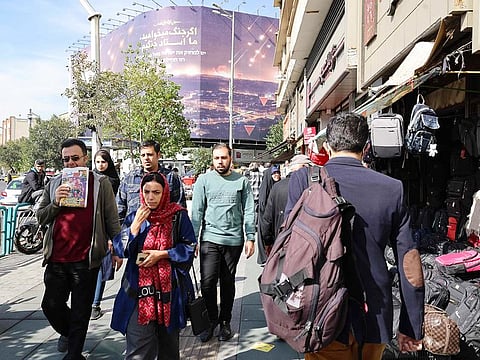
The government of Iran is "seriously fractured", the reason cited by US President Donald Trump for the US delaying a potential strike on Iran indefinitely.
The US leader stated that the decision was also made after a request from Pakistan’s leadership.
Meanwhile, the US Navy is keeping the Iran blockade in place and the its forces on standby.
“Based on the fact that the Government of Iran is seriously fractured… we have been asked to hold our Attack… I have therefore directed our Military to continue the Blockade… and will therefore extend the Ceasefire until such time as their proposal is submitted.”
As the world awaits Iran's response, Iran’s new supreme leader, Mojtaba Khamenei, has remained out of public view.
This has fuelled questions about his health, his location, and how the regime is managing power behind the scenes, even as the regime faces one of the most serious crises of the Islamic Republic era.
US officials believe internal fractures in Iran’s new leadership are slowing progress in backchannel talks, with uncertainty over whether negotiators have clear authority to make decisions on uranium enrichment and the country’s growing stockpile of enriched uranium.
According to the officials, Washington’s view is that the Iranians have yet to settle on a unified position, and that confusion may be tied to whether Supreme Leader Mojtaba Khamenei is giving direct orders or leaving subordinates to infer his wishes.
His continued absence from public view, they believe, has complicated internal discussions and blurred decision-making inside Tehran.
For now, though, the timing remains uncertain, underscoring how leadership opacity in Tehran is affecting a negotiation already bogged down by mistrust, "red lines" and questions over who really speaks for Iran.
Uranium issue
The uranium issue remains the core obstacle in the talks because it goes to the heart of Iran’s nuclear capabilities and any limits the US would want in exchange for sanctions relief.
The Institute for the Study of War (ISW), a think-thank, believes that when leadership is fragmented, even small gaps in authority can stall diplomacy, especially if negotiators cannot promise that any concession will be accepted at the top.
The broader concern in Washington: Iran’s hidden decision-making structure may be making the talks less predictable.
That raises the risk of delays, mixed signals and missed windows for a deal, though both sides still publicly leave the door open to further engagement.
Meanwhile, retired US Army intelligence officer Lt Col Charles DeVore cited "cracks emerging" inside Iran’s leadership — with IRGC factions now openly clashing with the foreign ministry.
Power rift
The ISW, citing sources "familiar with the negotiations", signs of Iran's fractured leadership are starting to emerge.
"The Iranian negotiating team does not have the authority to independently determine Iran’s negotiating positions, however. IRGC Commander Major General Ahmad Vahidi and other senior members of the IRGC have consolidated control and wielded significant influence over the negotiations process thus far," ISW posted.
This, as Iran attempts to establish a protection racket in the Strait of Hormuz, which could help consolidate the IRGC’s control over the strait and gain "leverage" over the US in negotiations.
Iran has reportedly decided to give vessels that pay a “security” fee and adhere to Iranian protocols "priority" to transit through the Hormuz Strait.
On April, the IRGC Navy reportedly forced two Indian oil tankers attempting to transit through the strait to change course.
A number of other vessels that intended to transit through the strait have turned around.
The US response to IRGC's sealing of Hormuz: a naval blockade, imposed on April 13.
Dozens of Iran in-bound and outbound vessels have been turned back, a move that forms part of a broader US campaign to pressure Tehran following the failed negotiations.
US forces disabled a commercial ship bound for Bandar Abbas that tried to run the blockade, while Marines boarded an Iran-linked tanker in the Indian Ocean.
The US Central Command have deployed thousands of personnel and multiple warships to enforce the operation, warning that vessels attempting to breach it could be intercepted or seized.
Iran, however, has signalled it may respond by disrupting shipping lanes across the Arabian Gulf and nearby waters, while the Houthis threatened to shutdown Bab Al Mandab — raising fears of wider economic fallout and potential military escalation.
Bigger picture
Separate reports have suggested that Khamenei may be injured and not fully capable of appearing in public.
A CNN source said he suffered a fractured foot, a bruised left eye and minor facial lacerations in the same wave of strikes that killed his father and senior military commanders.
Reuters later reported, citing unnamed sources, that he has been joining meetings by audio and weighing in on war-related decisions and talks with Washington.
Those reports point to a leadership model that is still functioning, but in a more hidden and controlled way than under his father.
That in itself is politically significant, because the Islamic Republic depends heavily on the image of a strong, visible supreme leader at the centre of decision-making.
Bigger picture
Th ISW says the lack of public appearances by Mojtaba can be read in several ways: possible injury, security concerns, internal power management, or a deliberate effort to reduce exposure during wartime.
It may also reflect a regime trying to avoid projecting weakness at a moment when rivals, domestic critics and even hardliners will be watching closely for signs of instability.
For Iran, the supreme leader is the core of the system, so uncertainty around his condition quickly becomes uncertainty around the regime’s durability, its command structure and its ability to handle war, diplomacy and succession at the same time.


