Iran's Rezaei sets sweeping conditions for Hormuz reopening as US talks hit new impasse
Iran's $300B Hormuz demand raises stakes: Mediators see glimmers of progress
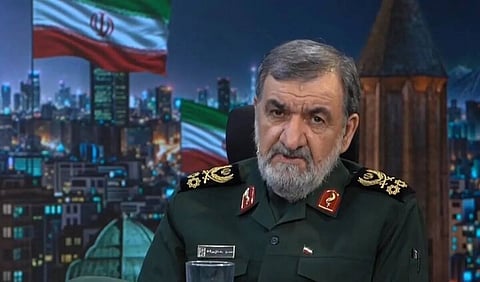
Iran has hardened its conditions for reopening the Strait of Hormuz, with a senior official saying the strategic waterway will remain closed — unless its conditions are met.
Mohsen Rezaei, the newly-appointed secretary of Iran's Supreme National Security Council, said that Tehran would not reopen the strait unless Washington changes its behaviour and accepts Iran's conditions.
Rezaei made Iran's broader demands clear, stating that the US must:
end the war
lift its blockade and sanctions
release frozen Iranian funds
agree to a broader regional ceasefire.
Get updated faster and for FREE: Download the Gulf News app now — simply click here.
Reuters reported that the demands had been conveyed through mediators.
Iranian media carried Rezaei restated Iran's position: Hormuz would remain closed until the US ends the war and naval blockade, releases Iran's frozen assets and accepts a region-wide ceasefire, including in Lebanon and Gaza.
$300B compensation, $100B asset release
The demands reportedly include about $300 billion in compensation for wartime damage, the release of up to $100 billion in frozen Iranian assets, an end to US sanctions, withdrawal of American forces from the region and the termination of the naval blockade.
Iran has also demanded recognition of transit arrangements that could include fees for ships using the waterway.
From Hormuz dispute to regional settlement
The latest conditions significantly broaden the dispute.
What began as a confrontation over the reopening and management of the world's most important oil chokepoints has increasingly become tied to the wider US-Iran war and conflicts involving Iran's regional allies.
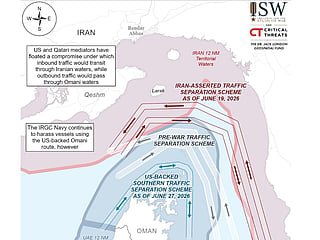
Iranian officials have said talks with Oman could establish new arrangements for shipping through the strait, but Tehran has made clear that an agreement with Muscat would not by itself guarantee a full reopening.
This suggests that a technical agreement on shipping routes is not necessarily a political agreement to reopen Hormuz.
The US and Iran had exchanged new demands and that the competing conditions were making a broader settlement more difficult.
Oil prices rose sharply as expectations for a quick reopening faded.
The result is a diplomatic paradox: mediators see movement, while the public positions of Washington and Tehran appear to be hardening.
Pakistan sees possible opening
The latest Iranian demands came just as Pakistan signaled that Washington and Tehran may be moving toward an arrangement.
Pakistan's defence minister said Tuesday that the two sides were getting closer to "some sort of arrangement" over the strait, while Pakistan's interior minister traveled to Tehran for talks with Iranian officials.
But the optimism contrasts sharply with Iran's public position.
Trump adds his own compensation demand
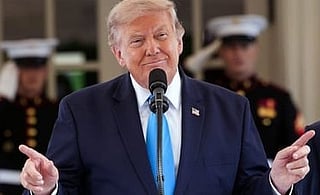
US President Donald Trump has also introduced compensation into the negotiations.
Trump said Iran should pay for deaths and injuries linked to conflicts and attacks over several decades. He specifically cited the families of U.S. sailors killed in the 2000 USS Cole bombing and other victims. He has also demanded compensation for people killed in conflicts involving Iran and its regional allies.
That creates a potentially difficult negotiating equation: Iran wants compensation from the United States for the war, while Trump is demanding compensation from Iran for past attacks and casualties.
Hormuz remains the pressure point
The Strait of Hormuz is the central economic lever in the confrontation.
Before the war, roughly one-fifth of the world's oil and LNG supplies moved through the waterway. The continuing disruption has already pushed crude prices higher and raised concerns about inflation, fuel costs and global energy supplies.
Oil prices climbed more than 5% Monday and extended gains Tuesday, with Brent hitting $88.91 a barrel as of 8.40am Tokyo time on Wednesday, as per OilPrice.com.
The crisis is also spilling beyond Hormuz, as renewed Houthi attacks in the Red Sea are raising concerns about the Bab al-Mandab, another major maritime chokepoint and an alternative route for some Gulf energy shipments.
Why the new demand matters
Rezaei's statement suggests that Tehran is no longer treating Hormuz as an isolated maritime-security issue.
Instead, Iran is using the strait as leverage for a comprehensive political settlement covering:
the U.S.-Iran war;
the American naval blockade;
U.S. military deployments in the Middle East;
sanctions on Iran;
frozen Iranian overseas assets;
compensation for wartime damage;
shipping and transit arrangements through Hormuz;
and ceasefires involving Lebanon and Gaza.
That makes a quick reopening considerably harder.
For Washington, accepting all of Tehran's demands would amount to a sweeping reversal of key elements of its regional policy.
For Tehran, reopening the strait without securing major concessions would mean surrendering one of its strongest bargaining tools.
The market is watching
The competing US and Iranian demands are complicating negotiations, pushing oil prices higher.
Whether or not the talks can produce an agreement that actually restores unrestricted commercial traffic through Hormuz, remains uncertain.
Pakistan's mediation points to a possible diplomatic opening. Iran's latest conditions, however, show that Tehran is demanding a settlement far broader than simply allowing tankers to pass.
Until those differences are resolved, the Strait of Hormuz remains a powerful pressure point for both sides — and a major source of risk for global oil prices, shipping and inflation.