35 ships forced to turn back as US blockade chokes Iranian ports
Central Command redirects commercial vessels amid ongoing blockade of Iranian ports
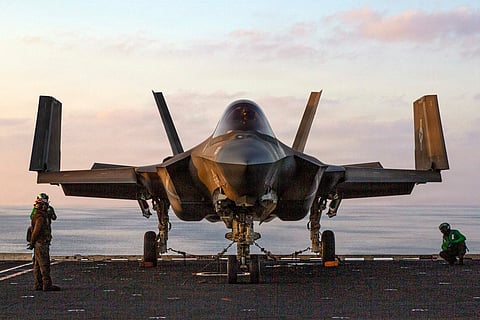
The US military has redirected 38 commercial vessels as part of the renewed naval blockade of Iranian ports, according to the latest figures reported by the command amid continued enforcement operations in the region.
The update came as the aircraft carrier USS Abraham Lincoln transited the Arabian Sea, with a US Marine Corps F-35C stealth fighter launching from its deck in support of the mission.
The blockade of maritime traffic entering and exiting Iranian ports resumed on July 14 at the direction of President Donald Trump.
Get updated faster and for FREE: Download the Gulf News app now - simply click here
Blockade Part 1
An earlier naval blockage period ran from April 13 to June 18, during which CentCom said US forces redirected more than 140 compliant vessels, disabled 9 non-compliant ships and allowed more than 50 commercial vessels carrying humanitarian aid to pass.
American officials lifted the initial restrictions in mid-June around the signing of a memorandum of understanding between Trump and Iranian President Masoud Pezeshkian that sought to end hostilities and restore shipping access.
US authorities later cited Iranian non-compliance, with Iranian attacks on ships for what Tehran claimed as an "unauthorised" transit in Hormuz, as the reason for restarting interdictions.
CentCom has maintained that the operation targets vessels bound for or departing Iranian ports and coastal areas while keeping the Strait of Hormuz open to compliant international traffic.
Iranian officials have challenged that characterisation, asserting greater control over the strategic waterway in recent statements and warning of potential impacts on global energy markets.
The Abraham Lincoln and its air wing, including Marine F-35Cs, have played a central role in the US naval presence throughout the broader 2026 war that intensified after conflict involving the United States, Israel and Iran erupted in late February.
Shipping costs and insurance rates for ships transiting the area have stayed elevated due to the intermittent interdictions and competing claims over freedom of navigation.
Humanitarian vessels that comply with the blockade terms continue to be allowed through, according to U.S. military statements.


