Vietnam’s economic miracle: How the Asean powerhouse became the world’s new manufacturing magnet
Tourism, tech and farms: The three engines driving Vietnam’s economic transformation
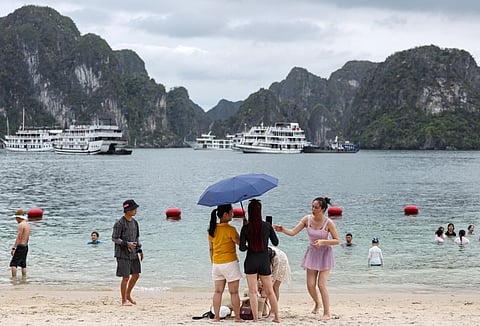
Vietnam (population: 102 million) has cemented its status as Southeast Asia’s most dynamic economic powerhouse.
It has shattered regional growth records and emerged as a growing global global manufacturing, trade, and tourism.
How it got here, from being known as the source of "boat people" (refugees fleeing by sea) is nothing sort of a miracle.


With a remarkable 8.2% GDP growth in 2025 — a performance that outpaced all Asean peers — the nation is rapidly transitioning from a developing frontier into a sophisticated, high-tech industrial giant.
New manufacturing and trade hub
The cornerstone of Vietnam’s rise is its strategic transformation into the world’s "China + 1" manufacturing hub.
As global firms seek to de-risk supply chains amidst US–China trade tensions, Vietnam has attracted massive Foreign Direct Investment (FDI), reaching $38 billion in 2024 alone.
This capital has fuelled a surge in high-tech manufacturing, particularly in electronics and semiconductors, moving the country far beyond its traditional roots in textiles and footwear.
POPULATION | LAND AREA: At 102 million people, Vietnam's population ranks as the world's 16th-most populous country. The country covers a total land area of approximately 331,338 km2
According to the Asia Manufacturing Index 2026, Vietnam currently ranks as one of the top three most promising manufacturing hubs in Asia.
This shift is bolstered by a potent combination of competitive labor costs, a network of free trade agreements, and geographic proximity to major Asian markets.
The resulting export boom has propelled Vietnam to rank second only to Singapore in total trade turnover within Asean, positioning it to potentially join the ranks of the top 15 trading economies globally.
Tourism and agricultural resilience
Beyond its industrial engine, Vietnam has achieved unparalleled success in tourism and agriculture.
In 2025, the country recorded the highest growth rate of international visitor arrivals within the Asean bloc, fueled by robust post-pandemic infrastructure investment and aggressive international marketing.
This tourism surge continues to be a primary driver of domestic spending and service-sector growth.
Concurrently, the agricultural sector remains a pillar of national stability and global influence. Vietnam consistently ranks among the world’s top exporters of rice, coffee, and seafood, leveraging advanced processing technologies to move up the value chain.
Challenges
Challenges exist.
International bankers acknowledge that the market is becoming more demanding, citing the need for continued regulatory reforms and the management of global economic uncertainties.
Vietnam is no longer just a destination for inbound capital. It is also increasingly a market in its own right – one with a stronger domestic corporate base, deeper supply-chain linkages and a more consequential role as a rising global hub.
Vietnam’s push for greater financial inclusion is creating opportunities in digital banking and fintech.
Also Read: Vietnam exports surge over 17% in Q1 2026
Banks are scaling up capabilities in sustainable finance, digital banking, treasury management, and fintech to meet the demands of Vietnam's maturing business sector.
While Vietnam has evolved into a sophisticated domestic powerhouse, Vietnam’s position as a beneficiary of global supply-chain has shifted, has turned it into a high-priority market.
As Vietnam’s corporate operations become more complex, the demand for sophisticated services like foreign exchange, risk management, and ESG-aligned advisory is surging.
And despite this meteoric ascent, analysts warn that long-term sustainability hinges on navigating structural hurdles.
The path forward
According to regional insights from AMRO (Asean+3 Macroeconomic Research Office), future growth will depend heavily on upgrading the labour force to high-skill levels, expanding technological adoption, and investing in climate-resilient infrastructure to counter regional vulnerabilities.
With FTSE Russell slated to upgrade Vietnam’s stock market status to "Emerging Market" in September 2026, the country is poised to deepen its integration into global capital markets.
While finance giants remain cautious regarding regulatory evolution and global investment sentiment, they remain bullish on Vietnam’s long-term trajectory.
As industrial, financial reforms continue and the nation pushes toward a green-energy economy, Vietnam is not merely participating in the regional growth story — it is actively reshaping it.


