No trade barriers: ASEAN takes firm stand to protect supply chains
Bloc pushes energy security, food resilience, and uninterrupted flow of essential goods
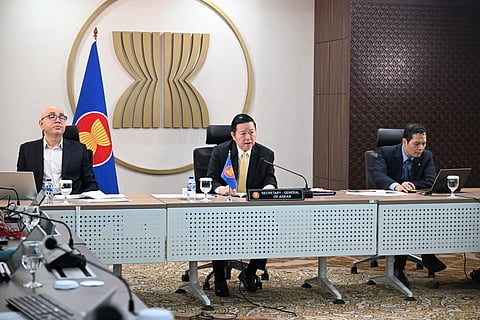
Dubai: Southeast Asian nations have agreed to keep trade flowing and avoid export restrictions as they mount a coordinated response to mounting economic pressures linked to the ongoing conflict in the Middle East.
Meeting under the Philippines’ chairmanship, economic ministers from the Association of Southeast Asian Nations (ASEAN) have noted that the current situation requires a unified regional approach rather than individual action by member states.
“We convened… to exchange views on the far-reaching economic implications arising from the situation in the Middle East and its escalating impacts on global energy markets, supply chains, food security, and transport and logistics networks,” said the ministers in a joint statement.
“These developments are increasingly affecting our peoples and businesses across the region, particularly micro, small, and medium enterprises, and are expected to have significant implication on the region’s overall economic growth.”
Get updated faster and for FREE: Download the Gulf News app now - simply click here.
Firm stance against export curbs
At the core of the discussions was a commitment to avoid trade-restrictive measures, including export bans on essential goods, a step aimed at preventing shortages and price volatility across the region.
The move has signalled ASEAN’s intention to keep markets open amid global uncertainties, reinforcing the bloc’s push for economic stability.
Moreover, ministers have agreed to accelerate upgrades to existing free trade agreements, including those with China, Korea, and Canada, and the ASEAN trade in goods agreement.
These efforts have been expected to ease the movement of goods, reduce tariffs, and strengthen intra-regional trade at a time when global trade flows face increasing strain.
Energy cooperation
Energy security has also been one of the priorities, with ASEAN pushing ahead with plans to expand the ASEAN power grid, enabling cross-border electricity sharing to manage external supply shocks.
Additionally, ministers have highlighted the heightened risks to global energy markets, particularly from disruptions in the Strait of Hormuz.
“We expressed deep concern that the current disruptions to key maritime routes, particularly the Strait of Hormuz, where around one-quarter of global seaborne oil and liquefied natural gas (LNG) exports pass through, with over 80 percent destined for Asia, are posing severe risks to global energy security, fuelling persistent volatility in oil and LNG prices, and sharply increasing freight, insurance, and logistics costs,” explained the ASEAN Economic Community Council (AECC).
According to AECC, these pressures are spilling over into broader economic challenges, including inflation, exchange rate volatility, and tighter financial conditions.
With this, the association has stressed the importance of keeping sea lanes open to ensure the uninterrupted flow of energy and goods.
“To minimise disruptions to energy trade flows, we underscored the importance of maintaining secure and open sea lanes, ensuring freedom of navigation, and the safe, unimpeded and continuous transit passage of vessel and aircraft in straits used for international navigation.”
Food security and logistics
Strengthening food security and supply chain coordination has been another pillar of the meeting, with ministers reiterating the need to ensure uninterrupted access to essential goods.
Philippine trade secretary Maria Christina Roque has bared that the agency has been working closely with logistics providers to address supply chain concerns, including a transition incentive programme for transport operators eyeing to shift from fuel-powered vehicles to electric alternatives.
“We cannot cause any delay in the movement of food, medicines, and essentials. We are 7,600 islands,” stated Roque.
The outcomes of the special AECC meeting will be consolidated into a joint statement to be presented at the upcoming 48th ASEAN summit in Cebu, Philippines on May 8.