Ube in focus: US puts $34.1 million behind Philippine purple yam, funded by American soybean meal
Deal: US earmarks $34.M to boost Philippine ube production via soybean meal funding
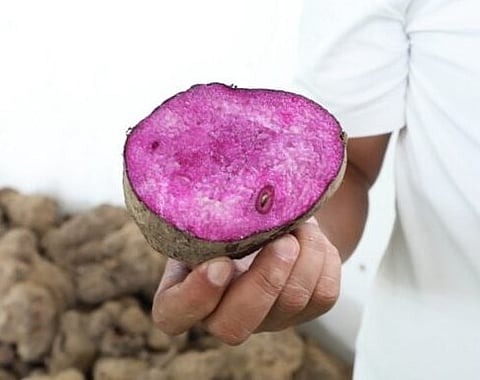
MANILA: The US Department of Agriculture (USDA) has announced the rollout of $34.1 million to support the Philippines’ push to develop "ube", the purple yam, it was announced by the US Embassy in Manila on Friday.
The project, implemented by US-based nonprofit TechnoServe, is expected to support 12,500 Filipino farmers over five years.
US Ambassador to the Philippines Lee Lipton announced the award, which is roughly ₱2 billion and comes through the USDA’s "Food for Progress" program.
It coincides with the 80th anniversary of US-Philippine diplomatic relations.
The USDA believes the Philippines could unlock ube’s potential by coordinating investments that tackle production bottlenecks together.
One vehicle, the Food for Progress programme, has named the Philippine ube value chain a priority.
What to know
$34 million: the amount mentioned in the US Embassy in Manila statement.
12,500+ farmers, five years: Reports say “approximately” or “more than” 12,500. A rough calculation shows $34.1 million spread over 12,500 farmers is about $2,700 each over five years.
TechnoServe: The international nonprofit that will run the program.
Nearly 40,000 metric tons of soybean meal: It means the money doesn’t arrive as cash. The project is funded by proceeds from the sale of nearly 40,000 metric tons of US soybean meal. It is paid for by selling the meal, not by writing farmers a check.
“We’ve got a deal”: This is a USDA award, not a bilateral trade agreement.
Much of the project spending will go to training, inputs and programme costs, rather than direct payments to farmers.
What it means
For farmers: The programme targets a real gap. USDA data cited by Manila Bulletin put 2025 ube output at 12,483 metric tons, down 6.7% from the year before.
USDA’s earlier call for proposals said processing capacity is insufficient for demand and asked applicants to address planting materials, productivity, postharvest handling, processing and market access, as per Business Mirror.
For the Philippines: Ube has become an export prospect, but supply is limited. The Philippines recently suspended exports of fresh purple yam to protect scarce planting stock from competitors like Vietnam and China.
For the US: The deal serves US interests too. Soybean meal is the top US agricultural export to the Philippines, at $1.01 billion in 2024. Lipton also described ube as an important raw material for food and beverage makers worldwide, including in the US.
How the money will be spent
The award of $34.12 million will be given to an eligible organisation to run a field-based project raising ube output in Luzon (land area: 109,965 sqkm) and the Visayas (total land area: 71,503 sqkm ).
The private-sector partner must craft a strategy aligned with existing government and donor programmes, especially to improve access to quality inputs.
Planned activities include training farmers in good agricultural practices and financial readiness, strengthening farmer groups and cooperatives, upgrading postharvest systems and processing quality, and encouraging sustainable technologies.
Separately, a steering committee and technical working group have been proposed to streamline coordination across agencies.
The body would define the official scope of ube, standardise raw and processed products, and harmonise quality requirements for agencies and exporters.
The Philippines Department of Agriculture (DA) said the aim is to remove "inconsistencies' that delay shipments, weaken competitiveness and deter large investments.
What's next
While the USDA’s notice said the project would aim to boost ube output in Luzon and the Visayas, there was no start date for the programme mentioned yet.
Worth watching:
Where TechnoServe picks its first sites and how it recruits farmers.
Whether the programme helps rebuild planting-material supply, which the export suspension aims to protect.
Whether processing capacity grows enough to turn ube into higher-value products.
Whether the Philippine government ties this to its own ube export strategy.
Whether a ramp in production would find enough processors and buyers.
Whether sales of donated commodities deliver value as efficiently as direct cash aid.


