What changes as Nadra adds facial, iris scans to Pakistan’s biometric system
New rules allow facial and iris scans to fix fingerprint verification failures
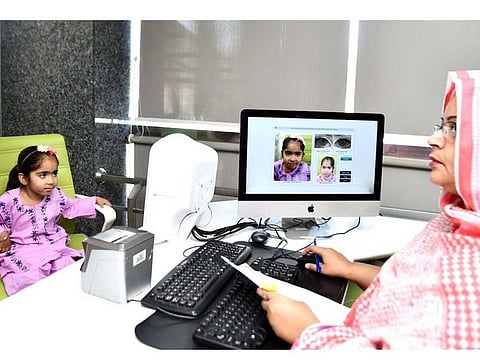
Dubai: Pakistan’s federal government has amended the National Identity Card (NIC) Rules to formally recognise facial and iris scans as valid biometric identifiers, expanding the definition of biometrics beyond fingerprints, the National Database and Registration Authority (Nadra) said on Wednesday.
The amendment, introduced on Nadra’s recommendation, provides a clear legal foundation for a multi-biometric verification system, enabling wider use of contactless and facial recognition technologies, according to Dawn.
Based on the revised rules, Nadra has rolled out technical innovations allowing biometric verification through contactless fingerprints and facial recognition.
The system is already operational at Nadra registration centres and through the Pak-ID mobile application for services under the authority’s jurisdiction. It is currently being used for biometric verification in Islamabad-registered vehicle transfers and online passport applications.
In the coming months, the system will be expanded further. Proof-of-life certificates for federal government pensioners will also be issued under the new framework, while additional digital services are being introduced in phases.
What changes from January 20, 2026
Facial and iris scans formally recognised as biometric identifiers, alongside fingerprints
Facial recognition-based verification certificates to be issued nationwide by Nadra
Certificates available for citizens whose fingerprint verification fails
Nominal fee: Rs20 per certificate
Certificate includes CNIC details, photographs, QR code and tracking ID
Validity: Seven days
Certificates to be verified online by banks, telecom firms and other institutions
Service to expand to e-Sahulat centres and later to the Pak-ID app after Digital ID launch
Verification certificates
From January 20, 2026, Nadra will begin issuing facial recognition-based biometric verification certificates at all registration centres for citizens whose fingerprints cannot be verified. Where institutions require biometric authentication, citizens will be able to obtain the certificate from any Nadra centre for a nominal fee of Rs20.
Under the procedure, if fingerprint verification fails at a service provider’s end, the citizen will visit a Nadra centre for a fresh photograph.
The image will be matched with Nadra’s existing records. Upon successful verification, Nadra will issue a certificate containing the purpose of verification, the citizen’s current and record photographs, CNIC number, name, father’s name, a unique tracking ID, and a QR code. The certificate will be valid for seven days and can be verified online by the relevant institution.
In the future, these certificates will also be available through Nadra e-Sahulat franchises, and following the formal launch of the Digital ID, the facility will be accessible directly via the Pak-ID application.
Nadra said it was fully prepared to implement the system but urged regulators, public institutions and private organisations to upgrade hardware and software to approved standards.\
Initial stage
In the first phase, institutions will need to integrate Nadra-issued facial verification certificates into their systems. In the second phase, service points will be required to install or integrate camera-enabled KYC machines.
The authority said complaints regarding service availability after January 20, 2026, should be directed to the relevant institutions, as the facility will be available from Nadra’s end.
Officials said the move is expected to resolve long-standing difficulties faced by citizens with faded fingerprints, particularly elderly individuals and those with medical conditions. Such citizens often face problems accessing banking, SIM registration, property transfers and other services requiring biometric verification.
The initiative follows directives issued by Prime Minister Shehbaz Sharif and Interior Minister Mohsin Naqvi, aimed at ensuring immediate and effective solutions to biometric verification failures. Nadra reaffirmed its commitment to strengthening digital services while enhancing safeguards against identity fraud and misuse.


