Biometrics 3.0: When devices begin to understand us
We are moving from biometrics as a security tool to biometrics as an intelligence layer
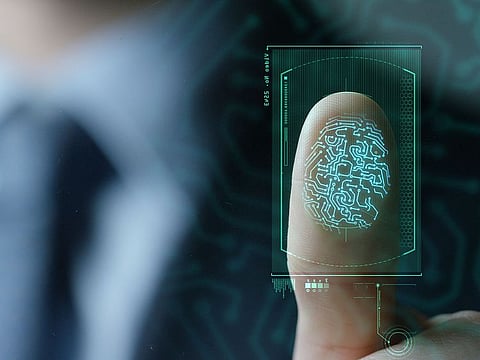
Apple does not acquire companies for incremental innovation. It acquires capabilities that signal where the next interface shift is heading. Its recent move into advanced facial sensing technology is not simply about improving device security. It reflects a broader transition in how technology interacts with human behaviour. We are moving from biometrics as a security tool to biometrics as an intelligence layer.
For more than a decade, biometric technology has focused on authentication. Fingerprints replaced passwords. Facial recognition replaced PIN codes. The value was convenience: faster access, fewer steps and stronger protection.
But the emerging phase is fundamentally different. It is not just about confirming identity. It is about interpreting subtle human signals; i-e, facial micro-movements, behavioural patterns and contextual cues to enable more intuitive interaction with devices.
In practical terms, this marks a shift from access control to contextual awareness. When sensing technologies evolve to this level, user interfaces begin to disappear. Devices no longer wait for commands; they respond to nuance. Interaction becomes ambient rather than transactional. The screen becomes secondary to perception.
Instead of responding to clicks, systems will interpret behaviour. Instead of segmenting audiences by historical data alone, platforms may adapt in real time to live contextual signals.
This will influence multiple sectors simultaneously from retail and financial services to healthcare and smart infrastructure. Secure transactions may become frictionless and passive. Customer journeys may adapt dynamically. Smart environments may calibrate themselves based on human presence and behaviour.
Yet capability alone will not determine success.
As biometric intelligence deepens, so does responsibility. Consumers may accept facial recognition for device access, but they will scrutinize technologies that interpret emotion or behavioural nuance. The conversation will shift from ‘Can this be done?’ to ‘Should this be done, and under what governance?’
Stay updated: Get the latest faster by downloading the Gulf News app - it's completely free. Click here for Apple or here for Android. You can also find it on the Huawei AppGallery.
Trust to define market
Organizations that invest in transparency, ethical clarity and responsible communication will be positioned to lead. Those that prioritize innovation without consent frameworks risk eroding credibility.
The evolution of biometrics can be understood in three chapters.
The first was authentication — proving identity.
The second was recognition — confirming presence.
The third, now emerging, is interpretation — understanding intent and behaviour.
Interpretation changes the relationship between humans and machines. It transforms devices from tools into perceptive systems.
For business leaders, this is not merely a technology update. It is a strategic signal that digital infrastructure, marketing architecture and regulatory frameworks must evolve in parallel.
The future of biometrics is not about unlocking devices rather than it is about unlocking understanding. And that is a far more profound transformation!
- The writer is Senior Consultant at ROSA eSolutions


