Kuwait e-visa fraud in India: How to spot fake visa traps after global crackdown
Here are the common red flags and safety tips every job-seeker should know
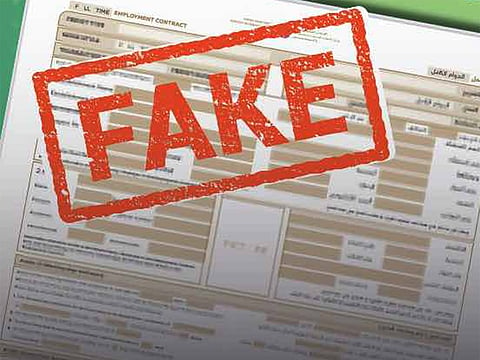
Dubai: After reports of widespread fake Kuwait e-visa services cheating Indian job-seekers, investigators say scammers are using increasingly sophisticated methods — from professional-looking websites to forged digital documents that appear official at first glance.
Victims are often approached through social media advertisements, WhatsApp messages or local agents promising quick and “guaranteed” visas for work in Kuwait. Many are asked to transfer large sums upfront through digital payment platforms or personal bank accounts, only to later discover that the visas are fake or cannot be verified through official channels.
Officials say fraud networks deliberately target unemployed youth and migrant workers desperate for overseas jobs, exploiting their limited familiarity with legitimate visa procedures.
Authorities linked to the Ministry of External Affairs India have repeatedly warned that visas are issued only through authorised government portals or approved agencies — and not through private agents offering shortcuts or assured approvals.
Five visible signs of fake Kuwait e-Visa services
Guaranteed or instant visa promises: No legitimate agent can assure approvals without official checks
Large upfront payment demands: Often routed through UPI, wallets or personal bank accounts
Fake official-looking websites: Strange URLs, spelling mistakes, no physical address, only WhatsApp contacts
Poor-quality or editable visa documents: Blurry stamps, incorrect names, wrong formats
Pressure tactics: “Last day offer”, “limited slots”, or “fast-track approval” to rush payments
Cybercrime units say urgency is a common tactic used by scammers, who pressure victims with claims of limited slots, expiring offers or fast-track processing.
Fake online portals designed to resemble official websites are also increasingly being used to build trust before money is transferred.
The warnings come in the wake of a major multinational crackdown that recently busted a fake online racket promising Kuwaiti e-visas and lucrative job appointments in leading companies.
The operation, carried out under a global drive named CyStrike, led to the arrest of a key cyber fraud operative and raids at 35 locations across Delhi and nine other Indian states.
The action was spearheaded by the Central Bureau of Investigation in coordination with law enforcement agencies from the United States, the United Kingdom, Kuwait, Ireland and Singapore, along with Interpol.
Investigators said the accused were running fake digital platforms under the guise of providing Kuwait e-visas and arranging employment appointments in top companies in the Gulf nation, targeting Indian nationals in exchange for large sums of money.
Swift expansion
One fraudulent domain — eservicemoi-kw.com — was found hosting forged visa documents and bogus job offers to dupe victims.
During the raids, authorities seized laptops, mobile phones and computer hard disks containing incriminating digital evidence, including fake e-visas and fabricated employment letters. A cash haul of Rs 60 lakh was also recovered.
Officials warn that such transnational cyber fraud networks are growing rapidly, using fake websites, digital payment routes and mule bank accounts to move money across borders and avoid detection.
With job-seekers among the most vulnerable groups, authorities continue to urge people to verify official websites, confirm visa status through embassy channels and avoid making payments through unofficial or private platforms.


