US striking 'deeper' into Iran, say US general: Turkey warns Tehran over missile launch
Hegseth: ‘America is winning decisively, devastatingly, and without mercy'
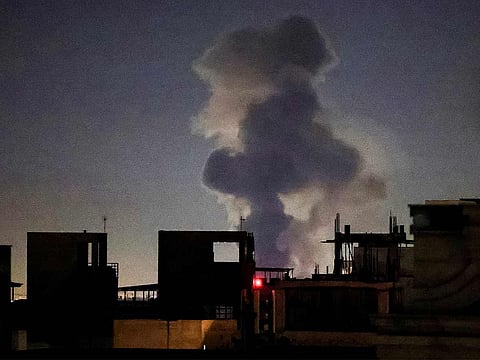
In a Pentagon briefing on March 4, 2026, Department of War Secretary Pete Hegseth and Joint Chiefs Chairman General John Daniel "Raizin" Caine outlined the progression of the first four days of “Operation Epic Fury”, the joint US-Israeli military campaign against Iran.
As the campaign enters its fifth day, General Caine announced an expansion of strikes, stating the US “will now begin to expand inland, striking progressively deeper into Iranian territory.”
US military moving 'further inland' to destroy IRGC infrastructure
Historic torpedo strike by a US submarine on an Iranian warship — the first since World War II
Analysts predict a severely weakened Iran but warn of prolonged engagement
Oil markets remain volatile
Nato allies like Turkey intercepting missiles
The operation aims to dismantle Iran's ability to project power beyond its borders, including its nuclear infrastructure, navy, and ballistic missile capabilities.
America is winning decisively
Hegseth proclaimed: “America is winning decisively, devastatingly, and without mercy,” emphasising swift gains such as the killing of Iran's Supreme Leader Ayatollah Ali Khamenei and the elimination of the Iranian unit leader behind an assassination attempt on President Trump.
Hegseth said: “Iran’s senior leaders are dead. The so-called governing council that might have selected a successor? Dead, missing, or cowering in bunkers — too terrified to even occupy the same room.
“Senior generals, mid-level officers, and enlisted ranks can’t talk or communicate, let alone mount a sustained offensive. That’s not great for morale.”
Expansion of strikes inland
General Caine also confirmed a historic torpedo strike by a US submarine on an Iranian warship — the first since World War II.
Regime-change
Hegseth dismissed regime-change notions, insisting the focus is on neutralising threats, while predicting uncontested control of Iranian airspace “within days” alongside Israel.
“Starting last night, and to be completed in a few days... the two most powerful Air Forces in the world will have complete control of Iranian skies.
“I hope you understand what ‘uncontested airspace’ means — it means we will fly, all day — day and night — finding, fixing, and finishing the missiles and defense industrial base of the Iranian military.”
“The Iranian Air Force is no more — built for 1996, destroyed in 2026. The Iranian Navy rests at the bottom of the Gulf — combat ineffective, decimated, destroyed, defeated.”
Iran reported over 1,000 deaths, including from a strike on a girls' school blamed on the US military, fuelling global outcry.
There are conflicting reports, however, one stating that the girls who went to a school near a military base were victims of an Iranian missile that misfired.
No forever war
Hegseth clarified it won’t be a forever war, drawing a sharp distinction between this conflict and past wars that devolved into quagmires, particularly Iraq.
Hegseth said the campaign was never meant to be a fair fight and compared the scale of air power to 2003 — but “minus Paul Bremer and the nation-building.”
Social media reactions highlight divisions: supporters hail America’s game-changing move while critics decry civilian slaughter and compare it to the 2003 Iraq invasion, questioning undefined objectives.
As more forces arrive, the conflict signals a potential weeks-long campaign, marking a generational turning point in Middle East geopolitics.
In describing those actions, Hegseth is clearly projecting momentum — signalling strength and early tactical success as the conflict unfolds.
What’s not clear
What was less clear, however, was what the endgame looks like.
He did not explain how the US would define victory or what conditions would mark the conclusion of the campaign.
Instead, he emphasised endurance, saying Americans are “just getting started” and prepared for a prolonged fight.
The message was clear: decisive force without the prolonged occupation that followed the Iraq invasion.
There was also a notable contrast in tone regarding the six Americans killed in Kuwait.
Hegseth said their deaths would be avenged, but he also criticised the press, suggesting coverage of the tragedy was politically motivated.
Hegseth’s message was clear: decisive force without the prolonged occupation that followed the Iraq invasion.
Hegseth framed the campaign as intentionally overwhelming and one-sided, saying it was never meant to be a fair fight and comparing the scale of air power to 2003 — but “minus Paul Bremer and the nation-building.”
Cain’s message
By contrast, General Dan Cain took a more solemn approach. He recited the names and paid tribute to the fallen US troops publicly identifying them and making a point of honouring them directly.
His remarks were more restrained and reverent, acknowledging that officials expect additional casualties as the conflict continues.
The contrast highlighted two different tones: one focused on projecting strength and defiance, the other centered on solemn recognition of sacrifice.
Both Hegseth and Cain, however, acknowledged that this war is likely far from over.


