Europe wary as Iran war deepens, divisions emerge over US-Israel strikes
Spain rejects use of bases, UK hesitates and EU leaders urge de-escalation
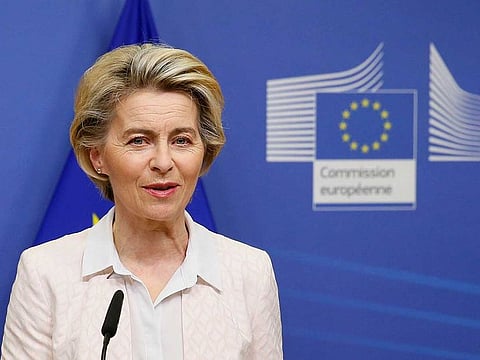
Europe has reacted cautiously — and in some cases critically — to the escalating conflict with Iran, as several leaders express concern over the widening war and the continent struggles to present a united response.
When the United States and Israel launched airstrikes on Iran on Saturday, “very few” European leaders had advance notice, according to Hannah Neumann, a member of the European Parliament and chair of the delegation for relations with Iran.
“Very few people have been informed,” Neumann told CNBC’s Squawk Box Europe on Tuesday.
She said even German Chancellor Friedrich Merz, leader of Europe’s largest economy, “had just been informed a few minutes in advance.”
The limited consultation highlights how Europe has largely found itself on the sidelines of the rapidly escalating Middle East crisis — even as its economic and security consequences could strongly affect the continent.
Joint statement
European Commission President Ursula von der Leyen and European Council President Alberto Costa initially issued a joint statement saying the European Union was closely monitoring developments and maintained a “steadfast commitment to safeguarding regional security and stability.”
But divisions soon emerged among European governments over how to respond.
Von der Leyen later urged urgent efforts to prevent the conflict from widening. “We must work hard to de-escalate and stop the conflict spreading,” she said in Brussels, warning that “the stability of the region is of the utmost importance.”
“The situation remains volatile,” she added.
Implications of strike
At the same time, EU leaders acknowledged the dramatic implications of the killing of Iran’s supreme leader, Ayatollah Ali Khamenei, during the US-Israeli strikes.
“This moment carries a real risk of instability that could push the region into a spiral of violence,” von der Leyen said, even as she noted that Khamenei’s death could bring “renewed hope for the oppressed people of Iran.”
EU foreign policy chief Kaja Kallas described the development as “a defining moment in Iran’s history.”
“What comes next is uncertain. But there is now an open path to a different Iran, one that its people may have greater freedom to shape,” she wrote on social media.
No unified stance
Despite these statements, European governments have struggled to coordinate a unified stance. France, Germany and the United Kingdom issued a joint warning over the weekend that they were prepared to take “defensive action” if Iran continued missile and drone attacks, but stopped short of endorsing the strikes themselves.
The United Kingdom initially refused Washington permission to use British bases for the strikes before reversing course and allowing them to be used for “defensive” operations targeting Iranian missile sites.
Even then, tensions emerged between London and Washington. US President Donald Trump criticised British Prime Minister Keir Starmer, telling the Telegraph he was “very disappointed” and that it “took far too long” for the United States to receive permission to use the bases. He also told The Sun that the relationship between the two countries was “not what it was.”
Spain’s strong position
Spain, meanwhile, has taken one of the strongest positions against the military action. Prime Minister Pedro Sanchez publicly rejected involvement in the conflict and refused to allow US aircraft to use Spanish bases for attacks on Iran.
“The position of the government of Spain can be summed up in four words: no to war,” Sanchez said in a televised address.
“We will not be complicit in something that is harmful to the world and contrary to our values and interests, simply out of fear of retaliation,” he added.
“We oppose this disaster.”
Spanish authorities later confirmed that US aircraft had left bases in Spain after Madrid denied their use for the strikes.
Domestic consequences
Across the continent, European governments are also grappling with the potential domestic consequences of the conflict. Energy prices have already surged, with European gas prices rising sharply amid fears of disruption to Middle Eastern supplies.
At the same time, governments are assessing how to protect or evacuate thousands of European citizens living in the region should the crisis escalate further.
Politically, the situation has exposed the difficulty Europe faces in presenting a coherent response to fast-moving geopolitical crises — particularly when the United States acts quickly and unilaterally.
For many European leaders, the challenge is balancing their concerns about regional escalation with the need to maintain relations with Washington at a time when they still rely heavily on US support in confronting Russia’s war in Ukraine.


