What to watch in the UAE night sky in 2026: eclipses, meteors, planets
UAE stargazers can catch eclipses, meteor showers and planetary alignments in 2026
Astronomy enthusiasts have a spectacular year ahead, with two solar eclipses, two lunar eclipses, notable planetary conjunctions and some of the strongest meteor showers, Mohammad Shawkat Odeh, Director of the Abu Dhabi-based International Astronomical Center, said.
January: Quadrantids meteor shower
The year opens with the Quadrantids meteor shower on the evening of 3 January. One of the brightest and most frequent annual showers, peak rates can exceed 100 meteors per hour. However, observation conditions will be less favourable this year as the peak coincides with a full moon.
February: Solar eclipse and planetary parade
February promises significant celestial events. An annular solar eclipse will occur on 17 February, visible from Antarctica. The following day, a very thin crescent moon will appear close to Mercury in the western sky after sunset, a delicate sight that may require binoculars.
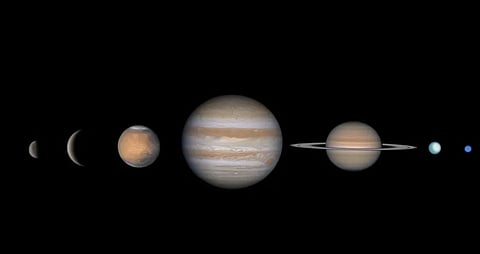
The month concludes with a “planetary parade,” when six planets will appear roughly aligned due to their differing orbital speeds around the Sun.
March: Total lunar eclipse
March will feature one of the year’s most notable lunar events, with a total lunar eclipse on 3 March, visible over the Pacific Ocean.
April: Crescent moon meets Venus and Lyrids meteor shower
On 19 April, the crescent moon will meet Venus and the Pleiades star cluster in the western sky after sunset, creating a visually striking scene.
This will be followed by the Lyrids meteor shower on 22 April, the oldest recorded meteor shower, known for bright meteors and lingering dust trails. Observation conditions are expected to be favourable, with the moon near its first quarter.
June: Venus and Jupiter conjunction
A particularly eye-catching planetary conjunction occurs on 8 June, when Venus and Jupiter appear close together in the evening sky towards the southwest, visible from sunset until around 11pm. The planets will shine intensely, separated by roughly the width of a finger, beneath the twin stars Castor and Pollux in Gemini, making it ideal for observation and astrophotography.
July–August: Perseids meteor shower and total solar eclipse
Activity continues into mid-July with the start of the Perseids meteor shower, lasting until late August. August is expected to be the peak of astronomical activity.
A total solar eclipse will take place on 12 August, visible from Europe and seen as partial from western parts of the Arab world. This coincides with the peak of the Perseids on 12–13 August, when rates may reach around 150 meteors per hour, with a strong chance of bright fireballs. Odeh noted that viewing conditions will be ideal, as the peak coincides with a new moon, providing dark skies free from lunar light.
The month concludes with a partial lunar eclipse on 28 August, visible across much of the Arab region.
October–November: Jupiter and Orionids meteor shower
On 6 October, Jupiter will appear extremely close to the crescent moon in a rare pre-dawn scene visible in the eastern sky before sunrise.
During October and November, the Orionids meteor shower, associated with Halley’s Comet, will be active. Known for fast meteors and persistent luminous trails, the shower will be somewhat affected by moonlight but still offer good viewing opportunities.
December: Geminids meteor shower
The year ends with the Geminids meteor shower, regarded as one of the finest and most prolific of all meteor showers. With rates reaching around 120 meteors per hour, relatively slow-moving meteors, and minimal moonlight during the peak, conditions are expected to be ideal, providing a spectacular finale to a year filled with exceptional celestial events.


