Heavy rain hits UAE: Watch overflowing wadis as water levels rise
Authorities warn residents to avoid risky areas and heed fines
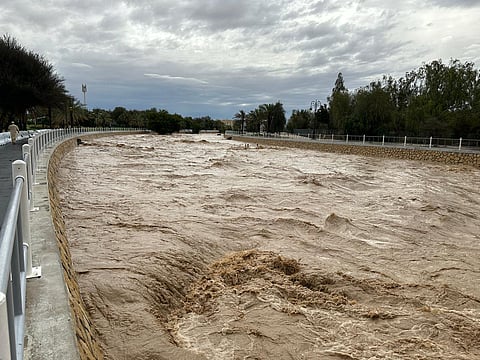
Heavy rainfall across the UAE has caused wadis to overflow, creating striking scenes widely shared on social media.
On Friday, the country experienced the final phase of an unstable weather system, bringing cooler temperatures, strong winds, and reduced visibility across several regions.
Stay updated: Get the latest faster by downloading the Gulf News app now - it's completely free. Click here for Apple or here for Android. You can also find it on the Huawei AppGallery.
In Al Ain, heavy rain poured over the city, with videos shared by Storm_ae showing rapidly rising water levels. Wadis in the area are reported to be flowing strongly, highlighting the impact of continued heavy rainfall.
Look: Heavy rains cause wadi behind Al Ain Park to overflow
Heavy rains turn Wadi Bih in Ras Al Khaimah into raging waters
Authorities warn residents about flooding dangers
As water levels rise across the UAE, authorities have issued stern warnings to residents about the dangers of wadis and flood-prone areas. The Ministry of Interior emphasised that unsafe behaviour during rainfall can put lives and property at risk.
In a public advisory, the ministry said:
Gathering near valleys, flood channels, or dams during rainfall carries a Dh1,000 fine and six traffic points.
Entering flowing wadis carries stricter penalties: Dh2,000 fine, 23 traffic points, and vehicle impoundment for 60 days.
Authorities stressed that these measures are in place to protect public safety and ensure smooth emergency operations. Residents are urged to avoid risky areas and follow official guidance during heavy rain.
Authorities on alert
Emergency and field teams across the UAE have been deployed to monitor water accumulation, maintain traffic flow, and respond quickly to incidents. Residents have been urged to:
Exercise caution, especially while driving in low visibility
Avoid flood-prone areas and wadi channels
Follow official safety guidance via government channels
Stay updated through official weather alerts
Final wave of rain sweeps across UAE
The National Centre of Meteorology (NCM) said the country remains under the influence of a deepening low-pressure system from the west, resulting in cloudy to overcast skies and intermittent rainfall across most areas.
The final rain band affected western regions on Thursday evening, before moving overnight toward Al Dhafra, Abu Dhabi, the northern emirates, Al Ain, and eastern areas, and is expected to continue into Friday. The system is accompanied by heavy downpours, thunder, lightning, and winds up to 60kph, causing blowing dust and reduced visibility.
Earlier rainfall and overflowing wadis
Heavy rain on Thursday affected Dubai, Sharjah, Ajman, Ras Al Khaimah, and Fujairah, bringing thunderstorms and a noticeable drop in temperatures.
The unstable weather also caused wadis and mountain valleys to flow in several eastern regions following continued cloud activity from last weekend.
Significant rainfall totals recorded earlier this week include:
47.9mm in Al Tawiyeen
39.7mm in Al Marjan
33.3mm in Khor Fakkan
31.6mm in Khatm Al Shakla
Will UAE face more heavy rain today?
On Friday, the NCM reported partly cloudy to cloudy skies, with convective clouds bringing rainfall of varying intensity across most parts of the UAE at intervals. Temperatures dropped further, while moderate to fresh winds of 15–30kph, reaching up to 60kph, caused blowing dust and reduced visibility.
Sea conditions remain rough, particularly in the Arabian Gulf and Sea of Oman, especially during periods of cloud activity. Cloud cover is expected to decrease gradually by Friday evening, with improvement forecast from Saturday as north-westerly winds prevail and temperatures drop slightly. By Sunday and Monday, conditions are expected to stabilise, with fair weather and improving sea conditions, though fresh winds may still cause dust in some areas.


