US-Iran war: What UAE residents need to know today (Sept. 3, 2026)
UAE travellers urged to double-check flights as Gulf and Russian risks grow
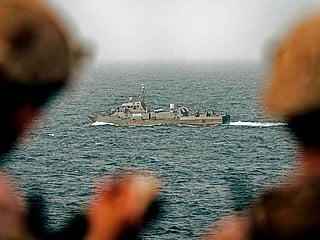
The US-Iran conflict has entered another dangerous phase, with US forces striking Iranian air-defence and radar systems and maritime capabilities while Tehran retaliates against US military positions and allies across the Gulf.
For UAE residents, the immediate impact is being felt in air travel, shipping, fuel prices and the wider regional security environment.
At the same time, a separate but increasingly important aviation risk is emerging over Russian airspace, where Ukrainian drone activity has prompted warnings to airlines and insurers.
Get it: Fast, verified news for FREE ... download the Gulf News app — simply click here
Here is what UAE residents need to know today so far:
US-Iran fighting has flared again
The latest US strikes targeted Iranian air defences, radar systems, maritime assets, mine-laying capabilities and communications sites, according to the US military.
The attacks followed a US strike Sunday on Iranian rocket launchers on Larak Island near the Strait of Hormuz. Washington said Iranian forces were preparing to use rockets to deploy sea mines that could threaten international shipping. Iran retaliated by firing missiles at US positions in Jordan.
Iran subsequently launched missile and drone attacks against US-linked targets and bases in Bahrain, Kuwait, Jordan and Iraq, while Gulf states activated air defences.
Kuwait reported further missile and drone attacks early Thursday, saying its air defences intercepted the incoming threats. Bahrain also said Iranian drones had been intercepted.
The escalation has raised fresh concerns about the safety of commercial aviation and shipping throughout the Gulf.
Hormuz remains the biggest economic risk
The Strait of Hormuz remains at the centre of the confrontation. The US says it is escorting and guiding commercial vessels through the Strait while maintaining a blockade against Iranian ports.
But traffic remains severely depressed. Reuters reported that only four commodity vessels crossed the Strait on Wednesday, compared with a 10-day average of about 13, according to preliminary Kpler data.
The US Central Command, however, reported having escorted 40 ships through Hormuz Strait on September 1, amounting to record 18 million barrels of oil despite Iran’s claims of a crude oil tanker being hitting by mines early on Monday.
CentCom later denied the Iran-claimed marine mine incident.
Oil prices reflected the uncertainty. Brent crude dropped 1% to $94.67/barrel as of 3.27pm Beijing time on Thursday, while West Texas Intermediate also dropped nearly 1% to $90. Murban dropped slightly to $106.1.
Two tankers attacked near Hormuz
The Bahrain-based Joint Maritime Information Center said two tanker-related incidents were reported over a 48-hour period.
One involved the oil tanker Burgan, which reported a security incident and subsequently anchored near Jazirat Um Al Ghanam.
UAE flights: expect a mixed picture
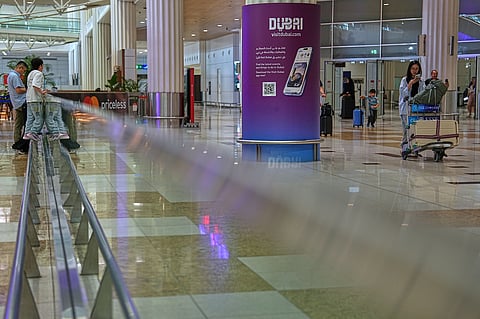
Airlines in the UAE are continuing to operate, but schedules remain fluid. As of Thursday morning, the latest airline update showed:
Emirates
Selected Dubai-Bahrain and Dubai-Kuwait services were scheduled to operate. But several other flights listed at Dubai International were cancelled.
Passengers should check their individual booking before heading to the airport.
Etihad Airways
Etihad's Abu Dhabi-Bahrain and Abu Dhabi-Kuwait services were largely operating in the latest update.
But delays were also being reported for reasons unrelated to the regional conflict. EY440 to Manila was delayed for operational reasons, while EY295 from Karachi to Abu Dhabi was delayed because of a technical issue.
Not every UAE flight delay or cancellation is caused by the US-Iran conflict. Airlines continue to experience routine operational, technical and scheduling disruptions.
flydubai
flydubai said its flights to Dubai and Bahrain were operating as scheduled in the latest update. The airline is nevertheless closely monitoring the security situation and has warned passengers that schedules and routings can change.
Air Arabia
Air Arabia reported cancellations including G9068 (Sharjah-Kuwait), G9124 (Sharjah-Kuwait), G9107 (Sharjah-Bahrain), 3L020 (Abu Dhabi-Kuwait). Again, travellers should verify their individual flight rather than assume that an entire route has been suspended.
Air France pauses Dubai flights
International carriers are also adjusting their schedules.
Air France has suspended Dubai services until Sept. 4, with flights departing Dubai suspended through Sept. 5.
Other international airlines have also maintained or extended suspensions while some carriers are gradually restoring services as parts of the regional network stabilise.
A second aviation challenge: Ukraine-Russia
UAE travellers flying toward Europe and Asia also need to watch developments far beyond the Gulf.
Ukrainian President Volodymyr Zelenskyy has warned that increased Ukrainian drone operations have made Russian airspace increasingly dangerous for civilian aviation.
Ukraine has notified the International Civil Aviation Organisation of its concerns.
Russia, however, rejects the warning and says its airspace and airports remain operational and safe.
European and US airlines largely avoid Russian airspace following Moscow's 2022 invasion of Ukraine, but airlines from China, Turkey, the UAE and other Gulf states continue to use parts of the airspace.
Reuters reported that Moscow airports experienced significant disruption Wednesday, including hundreds of delays and dozens of cancellations. Some airlines cancelled flights without directly attributing the decisions to the Ukrainian drone threat.
Rubio raises another warning: sanctions
The conflict is also moving into the economic sphere. US Secretary of State Marco Rubio warned that countries helping Iran evade American sanctions could themselves face sanctions.
Rubio said Washington would not object to countries maintaining their own foreign policies or diplomatic contacts with Tehran, but warned against helping Iran create mechanisms to generate revenue that Washington believes could support terrorism or Iran's nuclear program.
The warning comes as Iran faces mounting economic pressure from the US blockade, sanctions and sharply reduced oil exports.
What does this mean for UAE residents?
For most residents, life in the UAE continues normally. The bigger issue is uncertainty.
For travellers: Passengers departing Dubai have been advised to arrive at least four hours before departure, complete online check-in where possible.
Flights: possible cancellations, delays, diversions and last-minute schedule changes.
Gulf routes: Bahrain, Kuwait and other destinations remain particularly sensitive to military developments.
Long-haul flights: Russia-related airspace risks could affect some routes even when the flight has nothing to do with the Middle East.
Fuel: renewed Hormuz tensions could keep oil prices elevated.
Shipping: disruptions could eventually feed into freight and consumer prices.
Travel insurance: passengers should check whether policies cover cancellations or rerouting linked to war and airspace closures.
Don't assume your flight is operating just because it operated yesterday.
Check the airline app, check the airport status and check again before leaving home.
In a region where the security situation can change within hours — and where a second conflict is now complicating Russian airspace — the safest itinerary today is the one you verify twice.
What's next?
The immediate question is whether the latest US-Iran exchange remains a short, sharp escalation or becomes another sustained phase of the war.
The US says it has destroyed Iranian capabilities threatening the Strait and remains prepared to “strike again”. Trump has warned of further military action.
Iran, meanwhile, has demonstrated that it can still threaten US positions and commercial shipping.
Diplomacy remains possible, but the battlefield is currently moving faster than the negotiating table.