US-Iran conflict: What UAE residents need to know today (Sept. 8, 2026)
Rising Gulf tensions, new Hormuz curbs and what they mean for UAE residents
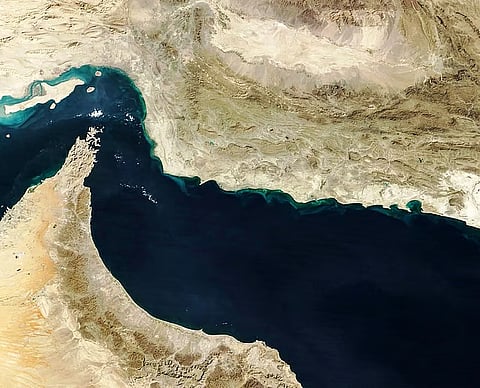
Iran has threatened to widen the battlefield beyond the Strait of Hormuz, warning US warships and countries helping Washington, while a new “restricted zone” threatens to further complicate shipping through the Gulf.
The conflict is increasingly being viewed by analysts, including the Institute for the Study of War (ISW) and the Centre on Global Energy Policy (CGEP) at Columbia University, not simply as a US‑Iran confrontation but as a regional economic and maritime war, with implications for aviation, shipping and energy prices.
Fresh attacks in Saudi Arabia and rising oil prices are adding to concerns across the globe and the UAE.
Washington is trying to keep Hormuz open and prevent Iran from exporting oil. Tehran, meanwhile, is attempting to demonstrate that if Iran cannot freely export energy, nobody can expect normal Gulf shipping to continue without Iranian consent.
Here are the key developments UAE residents should know on Tuesday, Sept. 8, 2026:
Iran will create a new 'restricted zone' outside Hormuz
Iran has announced plans for a new maritime “exclusion” or “restricted” zone near and outside the Strait of Hormuz, effectively expanding the area in which Tehran says it can regulate shipping.
Mohsen Rezaei, head of Iran's Supreme National Security Council, said the new zone would be established along the area covered by the US naval blockade.
Iran, Oman agree on an 'alternative shipping corridor'
Iran says maps for an alternative shipping corridor have been agreed with Oman and are expected to be finalized soon.
The move could create a parallel maritime system in the Gulf: Washington says it is maintaining freedom of navigation, while Tehran is attempting to impose its own routes and restrictions.
Iran's IRGC has warned vessels using routes it considers “unauthorised” that they could be targeted. For the UAE, this matters because Hormuz sits immediately north of the UAE and is one of the world's most important energy arteries.
Iran is warning US warships about a new missile capability
Tehran is increasingly portraying its response as a shift from defensive operations to pre-emptive and asymmetric warfare.
Iran has unveiled the Qassem Basir ballistic missile, which Iranian officials say has improved accuracy, a range of at least 1,200 km and enhanced resistance to missile defenses and electronic warfare.
Iranian officials have claimed the weapon was used against US warships. The Pentagon has disputed Tehran's claims about the effectiveness of its attacks.
The significance is less about whether every Iranian claim is independently verified and more about the new doctrine Tehran is publicly articulating: Iranian officials are increasingly threatening to strike first if they believe an attack is imminent.
That raises the risk of miscalculation involving US naval forces operating close to the Gulf states.
Iran warns South Korea: joining the Hormuz operation could have consequences
Iran has directly warned South Korea against sending military forces or otherwise participating in US-led efforts to secure navigation through Hormuz.
Iranian Foreign Ministry spokesman Esmaeil Baghaei said Seoul's military participation would be interpreted as support for what Tehran calls U.S. aggression and could have “serious consequences.”
Tehran assails Canada for supporting the US-led effort
Iran has also sharply criticised Canada after Ottawa backed U.S., British and French efforts to reopen Hormuz and announced additional pressure on Tehran.
Canadian Foreign Minister Anita Anand and Finance Minister François-Philippe Champagne condemned Iran's threats against vessels, its nuclear activities and its support for regional armed groups. Ottawa said it supported international efforts to reopen the waterway.
Iranian Foreign Ministry spokesman Baghaei responded by accusing Canada of “strategic confusion” and submission to U.S. pressure, arguing that Ottawa's position makes Canada part of the confrontation.
Saudi Arabia's Jizan oil facilities hit again
Saudi Arabia is also facing renewed pressure. Saudi Aramco facilities in Jizan were reportedly attacked Monday, according to the Financial Times. Damage was still being assessed, and no group had immediately claimed responsibility.
Jizan is strategically important because it houses a refinery capable of processing about 400,000 barrels per day and lies close to Yemen.
The attack is significant because it comes amid renewed fighting involving the Iran-backed Houthis and Saudi Arabia. The Houthis have previously targeted Saudi energy infrastructure, although responsibility for the latest Jizan attack has not been established.
Oil approaches $100 mark again
Oil prices rose sharply as the latest US-Iran confrontation intensified. Brent crude reached around $97 a barrel, while WTI rose above $92, with markets pricing in the possibility of prolonged disruption around Hormuz.
Reuters reported that Middle East crude exports have fallen substantially from prewar levels, although alternative export routes, continued — albeit reduced — flows through Hormuz and additional non-OPEC production have so far prevented Brent from decisively breaking above $100.
Aviation: Operational status and disruptions
Airports open, but delays/cancellations persist: Dubai International and Abu Dhabi’s Zayed International Airport remain open, yet rolling delays and some cancellations have been reported since late August and into early September, driven largely by US–Iran tensions and evolving airspace risk bulletins.
Conflict-zone advisories: The European Union Aviation Safety Agency (EASA) has extended a Conflict Zone Information Bulletin covering the Arabian Gulf and Gulf of Oman through 30 September 2026, prompting carriers to reroute and manage exposure rather than impose blanket suspensions.
Regional route trimming: UAE carriers continue to adjust Gulf routes — especially to Kuwait and Bahrain — with selective cancellations and schedule changes, while most of their wider networks remain in service.
Long-haul knock-on effects: Volcanic ash from Indonesia’s Krakatau led to temporary closure of Jakarta’s main airport, causing Emirates to cancel a Dubai–Jakarta flight and delay others, with Etihad also delaying Abu Dhabi–Jakarta services.
Emirates: Operating most services from Dubai but with scattered cancellations/delays on Gulf routes (e.g., some Dubai–Bahrain flights cancelled; Dubai–Kuwait largely operating). The airline is adding new long-haul capacity, including daily flights to Helsinki from October.
Etihad Airways: Abu Dhabi–Bahrain and Abu Dhabi–Kuwait services mostly normal, though individual flights have faced delays; the carrier has launched new destinations such as Calgary in 2026.
flydubai: Running a “reduced schedule” across parts of its network in 2026 while still serving 100+ destinations; the airline advises passengers to allow extra time (four hours for Dubai departures) and check status before travelling.
Air Arabia: Has cancelled some flights to Kuwait and Bahrain amid the same regional pressures, while maintaining broader operations.
The UAE has a particularly large stake in preventing the crisis from shutting down Gulf trade.
Dubai and Abu Dhabi have been developing alternative logistical and energy routes precisely because prolonged disruption in Hormuz could affect shipping, insurance, fuel prices and regional supply chains.
Gulf markets remain sensitive to developments around the strait, while UAE presidential adviser Anwar Gargash said the country's energy exports must remain secure and warned that rebuilding trust with Iran could take decades.
For residents, the immediate impact is likely to be felt first through fuel, transportation, airline operations, shipping costs and imported goods, rather than an immediate shortage of essential supplies.
What this means for UAE residents today
There is no indication from these developments alone of an immediate disruption to daily life across the UAE.
The key things to watch are:
Oil: Another major strike on Gulf energy infrastructure could push crude sharply higher.
Shipping: Iran's proposed restricted zone could further reduce commercial traffic through Hormuz and increase insurance and freight costs.
Aviation: Any expansion of missile or drone activity around Gulf airspace could trigger additional flight rerouting or cancellations.
UAE security: The UAE's proximity to Hormuz makes it particularly important to monitor official UAE security and civil-aviation announcements.
Regional escalation: The biggest danger is that Iran begins treating countries supporting the U.S. blockade — rather than only U.S. forces — as legitimate targets. The latest escalation suggests Iran is trying to transform the US blockade from a military problem into a global economic problem.
The proposed "restricted zone", threats against US warships, warnings to South Korea and criticism of Canada all fit into that strategy.
And that is the key risk for the UAE: the longer the confrontation continues, the harder it becomes to keep the Gulf's commercial economy separate from the war.