RTA announces more dedicated bus and taxi lanes, trackless tram
New projects aim to transform commuting, reduce congestion in Dubai
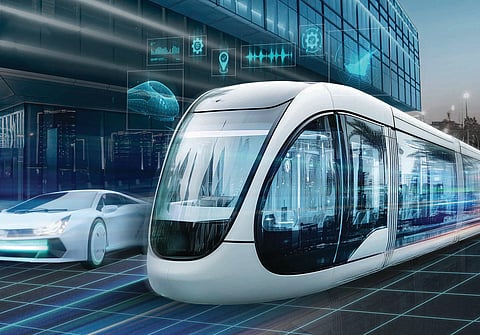
Dubai: Dubai is stepping up its transport infrastructure with ambitious expansion projects designed to make commuting faster, safer, and more sustainable.
Central to this drive is the planned trackless tram system, an autonomous, electric-powered transit solution that uses virtual tracks guided by cameras detecting road markings. Offering lower costs and faster implementation than conventional trams, the system is set to operate across eight key locations, reshaping mobility across the city.
Dedicated taxi, bus lanes
Alongside this, the Roads and Transport Authority (RTA) is extending dedicated bus and taxi lanes, adding six new corridors totalling 13km to increase the overall network to 20km. These lanes are expected to reduce bus journey times by 41%, improve on-time performance by 42%, and increase ridership by 10%, providing commuters with a reliable alternative to private cars.
Mattar Al Tayer, Director General of RTA, said: “These projects form part of our vision to position public transport as the first choice for mobility in Dubai. By enhancing service quality, expanding coverage, and integrating multiple modes, we are creating a flexible, sustainable, and efficient system that supports the city’s growth and improves quality of life for residents and visitors.”
The announcement comes as Dubai’s public transport system continues to see strong usage. In 2025, 802 million riders used metro, buses, taxis, marine transport, and shared mobility services, marking a 7.4% increase from 2024. With the trackless tram, new dedicated lanes, and ongoing network enhancements, Dubai is moving closer to a seamless, high-capacity, and future-ready transport ecosystem.
What is trackless tram
The next-generation tram, which operates without fixed tracks, uses optical navigation, GPS, and LiDAR technologies to follow virtual routes with remarkable precision.
Powered by AI, the system autonomously detects obstacles and adjusts its path in real time, offering a flexible, sustainable, and cost-efficient alternative to traditional rail systems.
Dubai’s Trackless Tram will add a new dimension to the emirate’s advanced public transport system, which already includes the Dubai Metro, one of the world’s most efficient driverless metro networks, and the Dubai Tram, the first tram system outside Europe powered by a ground-based electric supply.
Mattar Al Tayer, Director General and Chairman of the Board of Executive Directors of RTA, said the Trackless Tram embodies Dubai’s ambition to lead the world in smart, sustainable public transport.
According to RTA, the trackless tram would be deployed at eight locations across Dubai. Unlike the existing tram system, which runs on tracks, this self-driving tram system operates on virtual tracks, guided by cameras that follow painted lines on dedicated lanes. Powered by electricity, it offers a more sustainable alternative with lower costs and quicker construction timelines compared to traditional trams.
Key features
Each tram will have three carriages, accommodating up to 300 passengers.
It will reach a top speed of 70 km/h, with an operational speed ranging from 25 to 60 km/h.
A single charge will enable the tram to cover a distance of up to 100 km.


