TRENDS launches ‘AI4ID’ alliance for AI-enhanced interfaith dialogue
Think tank pairs tech-driven dialogue project with landmark extremism index
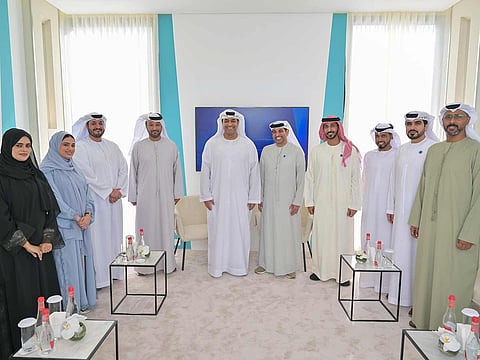
Abu Dhabi: TRENDS Research & Advisory has announced the launch of the Artificial Intelligence for Interfaith Dialogue (AI4ID) Alliance, coinciding with the release of the 2025 Global Muslim Brotherhood Influence Index and the convening of a high-level international dialogue session bringing together leading researchers, experts, and global academic institutions, both in person and virtually.
The launch of the alliance and the index from TRENDS’ Dubai office, under the supervision of its virtual offices in Canada and France, forms part of an integrated intellectual framework that reflects the center’s comprehensive approach to understanding shifts in the global landscape. The event combined a rigorous scientific diagnosis of the trajectories of political Islam movements with the presentation of knowledge-based and ethical alternatives that leverage artificial intelligence to foster dialogue, tolerance, and the countering of polarization and extremism.
In his opening remarks, Dr. Mohammed Abdullah Al-Ali, CEO of TRENDS Research & Advisory, emphasized that the simultaneous launch of the AI4ID Alliance and the 2025 Muslim Brotherhood Influence Index is not merely symbolic, but reflects a firm conviction that confronting extremism begins with understanding, deconstructing, and challenging narratives and mechanisms of influence not relying solely on security solutions.
AI for reframing moderate religious and political discourse
Dr. Al-Ali noted that AI is no longer a neutral technical tool, but a major actor in shaping collective awareness and reproducing religious and political discourse. He stressed that the AI4ID Alliance seeks to transform technology from a driver of polarization into a force for mediation and peacebuilding, grounded in principles of digital ethics and good governance as outlined in UNESCO’s 2021 recommendations. He also described the Muslim Brotherhood Influence Index as the first global index of its kind dedicated to measuring the group’s ideological and organizational weight across geographical regions.
For his part, Maqsoud Kruse, Envoy of the Minister of Foreign Affairs for Counter-Extremism and Counter-Terrorism, described the launch of the AI-enhanced interfaith dialogue alliance as an exceptional milestone that combines technological innovation with a noble humanitarian mission. He said the initiative, launched by TRENDS in cooperation with prominent international think tanks, represents an advanced step in strengthening human dialogue and mutual understanding, and a key pillar in countering extremist ideologies particularly amid accelerating global challenges that underscore the urgent need for interfaith dialogue.
Kruse added that the initiative is a proactive step to address the misuse of AI in both physical and virtual spheres, complementing efforts to promote a culture of tolerance, support moderate discourse, and strengthen human fraternity. He reaffirmed that dialogue and tolerance are the true opposites of extremism and hatred, and that employing AI to enhance interfaith dialogue is a strategic step toward protecting societies and building peace. He stressed the UAE’s continued commitment to entrenching a culture of tolerance and dialogue and supporting initiatives that use AI responsibly to serve humanity and promote coexistence and peace.
French Senator Nathalie Goulet, representing Orne (Normandy) and a member of the TRENDS Advisory Council – France, said AI4ID represents a qualitative shift in addressing contemporary religious and intellectual issues by combining technological innovation with ethical responsibility, opening new horizons for confronting hate speech and polarization in digital spaces. She underscored the importance of the 2025 Muslim Brotherhood Influence Index as a vital research and strategic tool for policymakers and legislative and security institutions in Europe, offering in-depth scientific analysis of the group’s ideological and organizational transformations and patterns of expansion in democratic and open societies.
Three years of mapping, then a chatbot and smart dialogue platform
The project will span three years, beginning with analytical mapping of international experiences, followed by the design of a prototype chatbot or secure intelligent dialogue platform. In its final year, the project will undergo rigorous evaluation in university and religious environments to measure its effectiveness in reducing stereotypes and enhancing the quality of exchange among followers of different faiths.
Expected outcomes include peer-reviewed scientific publications, a practical guide for the ethical use of AI in religious contexts, and the provision of an open-source digital platform adaptable to different geographic settings. Partner institutions aim to lay the foundation for a new research field that combines digital humanities with computer science, strengthening their role in shaping international peace agendas embraced by organizations such as UNESCO and the United Nations, and offering innovative solutions to preserve social cohesion in the age of comprehensive digitization.
AI and interfaith dialogue
Dr. Wael Saleh, Director of TRENDS’ virtual offices in Canada and France, outlined the project’s intellectual and scientific framework, noting the unprecedented intersection between technological transformations and crises of meaning and identity. He said religious discourse in digital spaces has at times become a tool of polarization and symbolic conflict.
The project is driven by a central civilizational question: how can AI be transformed from a factor that deepens polarization into an ethical, conscious tool that supports dialogue and peacebuilding? It adopts an integrated approach combining computational analysis of religious discourse, critical perspectives from the humanities, and the conscious embedding of ethical values into algorithm design, under strict ethical oversight to ensure technology remains a mindful human extension rather than a substitute for humanity.
On the research front, Dr. Patrice Brodeur presented key findings of the 2025 Muslim Brotherhood Influence Index, which showed a decline in the group’s overall strength from 67.7% in the first edition to 47.3% in the current index. The data indicated a shift in the group’s center of gravity from the Arab region to Western and Asian spheres: the Americas ranked first at 24.8%, followed by Asia at 22.5%, Africa at 20.2%, Europe at 17%, and the Arab world last at 15.5%, reflecting organizational fragmentation and the absence of a political incubator since 2013.
Serving peace through science and technology
The alliance, titled “Artificial Intelligence and Interfaith Dialogue: Humanities and Technology in the Service of Peace,” brings together a wide range of strategic partners to ensure high scientific and technical standards. These include TRENDS Research & Advisory and Mohammed Bin Zayed University for Humanities for strategic analysis and humanistic contributions; the Montreal Institute for Learning Algorithms (MILA) for technical model development; and the University of Montreal, the Catholic University, and the Dominican Institute for Oriental Studies to provide theological and comparative religious studies frameworks.
The project seeks to address rising religious and ethnic tensions in digital spaces and transform AI technologies from tools that may contribute to polarization into bridges for mediation and coexistence. Led by TRENDS and the University of Quebec in Montreal, the initiative responds to challenges posed by social media platforms such as YouTube, X, and Facebook, which have become fertile environments for stereotypes and polarizing narratives. It will study the impact of generative AI on religious discourse in Christianity, Islam, and Judaism, with a geographical focus on Europe, the Mediterranean basin, and North America.
Participants in the dialogue session titled “AI and Interfaith Dialogue: Toward Integration of Technical and Human Sciences” stressed that the project’s added value lies in its effort to “humanize AI” by embedding ethical and human values underlying religious dialogue into intelligent systems. The aim is to develop algorithms sensitive to cultural and religious contexts, capable of detecting hate speech and replacing it with inclusive narratives that support tolerance.
Looking ahead
The research seminar, titled “From Quantitative Decline to Geographic Shift: A Reading of the 2025 Index,” concluded that late 2025 witnessed a qualitative shift in US and French positions toward entities linked to the Muslim Brotherhood, through escalating institutional and legislative measures expected to curb the group’s global influence and regulate its financial and organizational activities.
Participants affirmed that combining precise analytical knowledge with technology-supported dialogue initiatives represents the most effective path to counter extremism and build sustainable peace in an era of rapid digital transformation.


