Machines Can Think 2026 opened in Abu Dhabi with 1,500 global AI experts
Two-day summit focused on applied AI, offering access to 25,000-strong global AI community
Abu Dhabi: Abu Dhabi's flagship AI Adopters event, Machines Can Think 2026, featured a keynote by Yann LeCun, Professor at New York University on Objective-Driven AI: World Models, Reasoning, and Efficiency which examined how AI systems can move beyond pattern recognition toward goal-oriented reasoning, improved efficiency, and more reliable decision-making in real-world environments. Machines Can Think 2026 is co-organised and co-hosted by Polynome and the Mohamed bin Zayed University of Artificial Intelligence.
The flagship executive AI summit brings together global innovators, leading UAE institutions, government decision-makers, and world-class researchers shaping the future of intelligent technologies, with a strong focus on governance, infrastructure, and measurable impact.
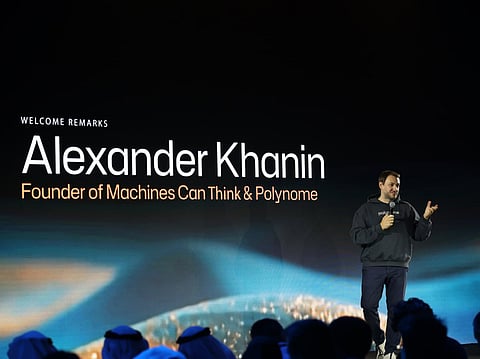
In his opening remarks, Alexander Khanin, Founder and Director of Polynome Group, positioned Machines Can Think as a strong platform for public and private sector leaders to address AI adoption at scale. He noted that the calibre of speakers and the depth of discussion were designed to move beyond vision-setting, enabling informed debate and actionable outcomes.
Alexander Khanin, Founder and Director of Polynome Group, commented: “Technology is a necessary foundation for AI adoption, but on its own, it is no longer enough to deliver real impact. As AI systems begin to influence core government and enterprise decisions, organisations must give equal attention to responsibility, governance, and the consequences of automated outcomes. Without this, leaders remain accountable for systems whose risks, limits, and behaviours are not fully understood."
"This gap is already visible, with 84% of GCC companies using AI, while 94% of UAE data leaders report limited visibility into AI decision-making processes. Responsible AI requires alignment with business processes, clarity on decision authority, and safeguards that ensure systems remain safe, non-toxic, and resilient against threats such as adversarial attacks and data poisoning. Machines Can Think addresses this reality by treating technical capability and responsibility as inseparable.”
Machines Can Think 2026 featured 50+ topics and 1,500 experts from 30+ countries across its two-day agenda. Day one features a dense program across its Co-Evolution and Tech tracks, with sessions on AI Factories: Enabling AI at State Scale, examining national AI infrastructure and large-scale deployment.
Keynotes explored advances in World Models, alongside technical perspectives on Three and a Half Generations of Video Generation Models, Gamification of Large Language Models, From Intelligence to Awareness: The Next Layer in Enterprise AI, A New Playbook for Drug Discovery and Development, and Foundation Models for Biology: From Structures to Systems explored advances in reasoning, generation, enterprise intelligence, and life sciences.
Practical deployment was addressed through workshops such as From AI Ambition to Delivery: Practical Insights from the UAE Public Sector, Your AI, Your Control: Sovereign AI, From Strategy to Practice, Trace & Proof First: Build Proof-Backed Search Agents with Evals and Live Observability, What C-levels Must Know About AI and Architecting an AI-First Culture: The AI Academy’s 2026 Roadmap.
Governance, investment, and societal impact were examined in Pilot to Policy: AI Safety, Why Unicorn Logic Breaks in AI, and The Future at the Crossroads of People, Business and the City. Sector-focused discussions examined drug discovery and development, foundation models for biology, personalised human phenotyping, and AI in education and the knowledge economy, setting a rigorous foundation for deeper exploration as the summit continues into day two.
Vladimir Razuvaev, Chief Executive of Yango Tech, commented, “Across the UAE, the conversation around AI is being shaped by the practical demands of public service delivery rather than technological ambition alone. As population growth and service expectations rise, institutions are under pressure to improve speed and accessibility while maintaining consistency, auditability, and trust. The UAE’s Digital Government Strategy reflects this shift by prioritising integrated, citizen-centric services that function reliably across channels and languages. We are also seeing organisations rethink how AI is introduced into complex environments. Instead of adopting generic tools, there is a clear move toward tailored implementations that reflect operational realities and regulatory frameworks. In 2026, success will be defined by how effectively AI strengthens service delivery, decision-making, and institutional resilience in everyday use.”
Machines Can Think sits within the wider Machines Can Summits series, which has become a global reference point for applied AI dialogue, bringing together 25,000 participants from the AI community. With previous editions generating over 6 million online engagements and attendees from 82+ countries, the event catalyses partnerships, research initiatives, and strategic MoUs. It continues to scale both in reach and influence as a forum where AI ambition is translated into action.
The summit is supported by a growing ecosystem of partners, including the Mohamed bin Zayed University of Artificial Intelligence, Abu Dhabi Convention and Exhibition Bureau, Yango Group, Mubadala, Abu Dhabi Police, DDN, e&, Tahaluf, aiphoria, Backwell Tech, Women in AI (global network and UAE chapter), Sandooq Al Watan, XPANCEO, MBuzz, Beco Capital, Hub71 Orbit, Jupiter E-Power, and VAST Data.


