Ostrich meat in the UAE? Al Ain farm produces 75 tonnes a year in food security push
High-protein, low-cholesterol meat joins eggs and by-products in a full-cycle farm model
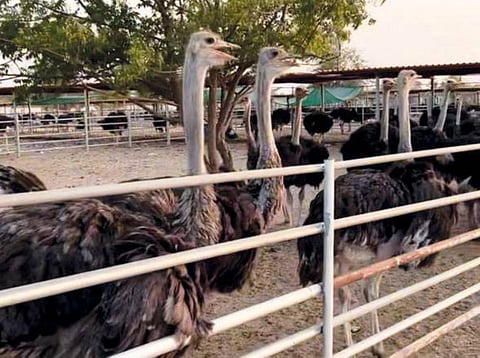
Al Ain: In an effort to diversify local meat production and strengthen food security, an Emirati farmer has turned to an unconventional source of protein: Ostrich farming.
Fahd Saeed Al Ketbi, owner of the Ostrich Oasis Farm in Al Ain, has launched a sustainable agricultural project aimed at supplying the UAE market with ostrich meat, alongside a range of by-products that support local industry and reduce waste. The venture aligns with national efforts to bolster food security and promote home-grown production.
According to Albayan newspaper, Al Ketbi began modestly, importing just 15 African ostriches. Today, his farm is home to nearly 2,000 birds.
Beyond meat, the farm produces ostrich eggs, leather, feathers and fat, creating what Mr Al Ketbi describes as a fully integrated production cycle.
Bones are repurposed into pet products for dogs and cats, while feathers and fats are used in cosmetic manufacturing, including products such as lipstick. Ostrich fat is also extracted for medical and nutritional uses, producing oil rich in vitamins and omega-3 fatty acids.
“Ostrich farming allows us to make use of almost every part of the animal,” Al Ketbi said, noting that this approach enhances both environmental and economic sustainability.
Nutritionally, ostrich meat is gaining attention for its high protein content and low cholesterol levels, offering a healthier alternative to traditional red meats. The farm currently produces around 2,000 ostriches annually, yielding approximately 75 tonnes of meat for the local market.
From an environmental perspective, ostriches are well suited to the UAE’s desert climate. They consume significantly less feed and water than cattle or camels and can produce up to 30 chicks a year, making them a resilient and efficient option for arid-region farming.


