UAE doubles down on saving lives with new global push for mothers, children and neglected diseases
Health workforce, neglected diseases and maternal care move to centre stage
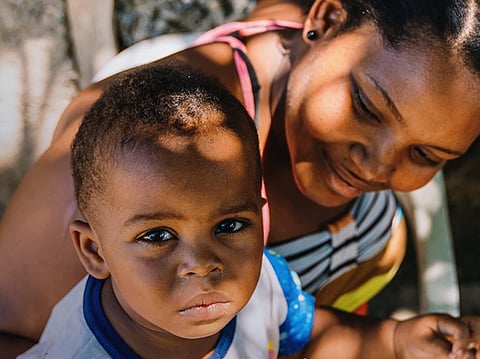
The UAE is sharpening its global health strategy, with a clear focus on long-term system-building aimed at saving millions of lives, particularly among mothers, children and communities affected by neglected diseases. While major funding pledges were announced in Abu Dhabi in December 2025, a top official at the Mohamed bin Zayed Foundation for Humanity has outlined what comes next: deeper investment in frontline health workers, expansion into high-burden countries and a renewed push to address underfunded health challenges that many donors continue to overlook.
Global leaders pledged $1.9b
In December, international leaders, philanthropists and global health partners announced a collective $1.9 billion to advance polio eradication at a global pledging event hosted by the Foundation in partnership with the Global Polio Eradication Initiative (GPEI). Of this, around $1.2 billion was newly pledged, shrinking the remaining funding gap for GPEI’s 2022–2029 strategy to $440 million. The Foundation contributed $140 million in new funding. The collective effort aims to vaccinate 370 million children every year, while strengthening health systems to protect against multiple preventable diseases.
According to Dr Shamma Khalifa Al Mazrouei, Acting Director General of the Mohamed bin Zayed Foundation for Humanity, the real work begins after the spotlight fades.
“The events in Abu Dhabi were a clear reflection of our core priorities: identifying challenges that are overlooked and underfunded, and where our investment, partnerships, and convening power can unlock outsized impact,” Dr Al Mazrouei told Gulf News.
Beyond polio: systems not silos
Polio eradication remains central, but the Foundation is increasingly targeting neglected tropical diseases, maternal and newborn health, and the health workforce crisis – areas Dr Al Mazrouei described as systemic, multi-country challenges that cannot be solved in isolation.
A major focus is expanding and strengthening the health workforce, particularly midwives, nurses, community health workers and doctors, who form the “backbone” of strong health systems.
“If we get that right, we can unlock huge progress in global health and inclusive development. We intend to deepen our investments and partnerships in this space,” she said.
Key initiatives in 2026
Several long-running initiatives are set to scale up in 2026. The Beginnings Fund, focused on maternal and newborn health, will expand into new countries including Ethiopia. The Reaching the Last Mile Fund will continue its fight against river blindness and lymphatic filariasis across Africa and Yemen. Disability inclusion programmes are also growing, with new collaboration planned with the Special Olympics’ Global Center for Inclusive Education.
A regional legacy, renewed
The growing momentum around these causes in the UAE and wider region is rooted in history. Dr Al Mazrouei pointed to the late Founding Father, Sheikh Zayed bin Sultan Al Nahyan, who backed efforts to eliminate diseases such as Guinea worm decades before they drew global attention.
“That legacy continues today, when only a handful of cases remain globally.”
Polio, too, reflects sustained regional leadership.
President His Highness Sheikh Mohamed bin Zayed Al Nahyan has committed $525 million to polio eradication since 2011, helping drive the disease to 99 per cent eradication, with wild poliovirus now confined to its smallest geographic footprint in history.
“New commitments across the region, including from Saudi Arabia, show a growing recognition that we have a once-in-a-lifetime opportunity to finish the job.”
The most overlooked threat
Despite progress, Dr Al Mazrouei said one urgent challenge remains dangerously underfunded: strong, resilient health systems capable of keeping mothers and children safe.
“With robust primary health care, up to 90 per cent of child deaths could be prevented for less than $100 per person per year. This is why the Foundation is focused on investing in the foundations of strong health systems.”
The polio programme itself offers a blueprint. Surveillance networks and immunisation systems built to fight polio have since been used to combat Ebola, Covid-19, and other health threats – proof that investing in systems creates “ripple effects” far beyond a single disease.
Disability inclusion: the next frontier
Looking ahead, the Foundation sees major potential in disability-inclusive health systems, an area that affects 16 per cent of the global population yet remains heavily under-resourced.
This year, the Foundation commissioned the ‘Lancet Commission on Disability and Health’, bringing together global experts to map where investments can deliver the greatest impact. The economic case is striking: every dollar invested in inclusive care can generate a “tenfold return” in social and economic value.
“The findings of the Lancet Commission will help to guide our investments and identify how we can contribute to transformative change most effectively,” Dr Al Mazrouei added.


