How Dubai doctors treated a complex gallbladder, bile duct case within 24 hours
Rising cases linked to obesity, high-fat diets, ageing, and delayed gallstone care
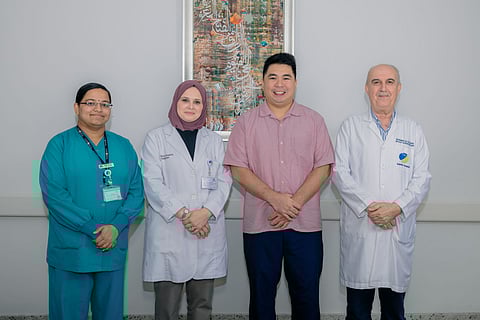
Dubai: Doctors at Zulekha Hospital Dubai have successfully treated a 33-year-old male patient suffering from a complex case of acute gallbladder inflammation combined with bile duct obstruction.
The patient, Jovan, has arrived at the emergency department with intense pain in the upper right abdomen, along with nausea and fever.
Initial assessments have confirmed acute inflammation of the gallbladder, while further clinical signs pointed to a blockage in the biliary tract.
Get updated faster and for FREE: Download the Gulf News app now - simply click here.
Why biliary tract obstruction can be dangerous
According to treating specialists, such cases are often caused by gallstones blocking the normal flow of bile.
"Jovan’s condition required immediate attention due to the risk of complications. When bile gets trapped, it leads to inflammation and sometimes infection, resulting in significant pain and systemic symptoms," explained Dr. Lina Kouachi, specialist general surgery.
The presence of obstruction increases the risk of complications such as infection spreading or damage to surrounding organs, making early intervention critical.
Treatment approach
Given those conditions, the gastroenterology team has acted quickly. The early treatment plan has involved a specialised endoscopic procedure known as Endoscopic Retrograde Cholangiopancreatography (ERCP).
"The patient showed signs of obstructive biliary disease, including jaundice and fever. It was important to perform an ERCP first to clear the bile duct from stones and place a stent," said Dr. Ghassan Kaddour, specialist gastroenterologist.
"This step helps relieve obstruction and reduces the risk of serious complications before surgery."
After performing a successful endoscopic management, the surgical team has moved on to a laparoscopic cholecystectomy, a minimally invasive procedure to remove the gallbladder.
Doctors have highlighted that inflammation can make such surgeries more complex by distorting normal anatomy.
"By using a careful, stepwise approach and adhering to key safety principles, we were able to complete the procedure safely while minimising trauma and supporting faster recovery," stated Kouachi.
Teamwork key to smooth recovery
The case has required close coordination between emergency, gastroenterology, surgery, radiology, anaesthesia, and nursing teams.
This collaborative approach has ensured that diagnosis, intervention, and surgery have been completed seamlessly and within a short time frame.
For his part, Jovan has reported a smooth recovery and returned to normal daily activities soon after the procedure.
"When I was admitted, I felt safe and comfortable. Within 24 hours, everything from tests to the procedure was completed. I came in with severe pain, but now I feel normal again. After the laparoscopy and ERCP, I have returned to my routine life," shared the patient.
Rising cases linked to lifestyle factors
Meanwhile, doctors have noted that such conditions are becoming more common, often linked to obesity, high-fat diets, ageing, and delayed treatment of gallstones.
They have stressed the importance of early diagnosis, timely surgical interventions, and lifestyle changes, including maintaining a healthy weight and adopting a balanced, low-fat diet.
At Zulekha Hospital Dubai, specialists have highlighted that such coordinated care pathways are key to improving outcomes and ensuring patients return to their normal lives as quickly as possible.
The case has also showcased the patient-centred care in the UAE, combining clinical expertise, advanced technology, and strong multidisciplinary teamwork to handle complex medical situations efficiently.