UAE launches AI Cabinet adviser as Sheikh Mohammed bin Rashid sets priorities for new government season
New system uses 32 AI assistants to analyse policies, legislation and strategies
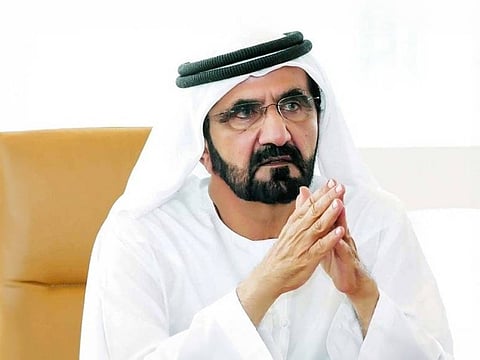
Abu Dhabi: His Highness Sheikh Mohammed bin Rashid Al Maktoum, Vice President and Prime Minister of the UAE and Ruler of Dubai, on Wednesday chaired the first Cabinet meeting of the new government season, unveiling an artificial intelligence system designed to help ministers make faster and more accurate decisions.
The meeting, held at Qasr Al Watan in Abu Dhabi, approved the launch and use of the Cabinet AI Adviser System, which will deploy 32 specialised AI assistants to analyse policies, legislation, strategies and government systems.
Get updated faster and for FREE: Download the Gulf News app now - simply click here.
The system will assess their potential impact, review international best practices and provide recommendations, while working with ministers around the clock to follow up on decisions and their implementation.
Sheikh Mohammed described the initiative as a new step in developing government decision-making, accelerating the assessment of policies, projects and initiatives and improving the quality of government outcomes.
“Our goal is a more efficient government, with faster and more accurate decisions,” he said. The project forms part of what Sheikh Mohammed described as the UAE’s largest transformational initiative for government services using AI assistants.
‘UAE does not stop’
Marking the start of the new government season, Sheikh Mohammed delivered three messages to government teams.
His first was that the UAE would not wait for ideal circumstances to continue delivering results.
“Our projects continue, our economy is growing, our markets are operating at full capacity and our events are welcoming the world,” he said. “The UAE does not stop, and will not stop.”
His second message focused on the government-wide AI transformation, describing it as a strategic, national and future-focused project capable of bringing about a fundamental shift in government operations. He urged all government teams to play a role in the transformation.
His third message centred on trust, which he described as an asset the UAE had built over decades through the development of legislation, regulations and policies, major investment in world-class infrastructure, a strong international reputation and global relationships.
National ecotourism policy
The Cabinet also approved the National Ecotourism Policy and reviewed progress in implementing the National Strategy to Combat Desertification 2022-2030.
Sheikh Mohammed said the strategy had made impactful progress in protecting ecosystems and ensuring the sustainability of natural resources.
The number of nature reserves in the UAE has risen to 55, while 4,900 hectares of land have been rehabilitated and more than 3.2 million square metres of green spaces added.
Authorities have also numbered and protected 341,000 native trees.
“Protecting our environment is a national responsibility, and investing in our natural resources is an investment in quality of life,” Sheikh Mohammed said.
Government completes 308 million digital transactions
The Cabinet also reviewed the results of the UAE government’s digital transformation over the past year, during which federal entities completed more than 308 million digital transactions through 1,633 digital services.
Government applications recorded 15.8 million downloads, while customer satisfaction with priority services reached 92 per cent.
The government also implemented 471 digital transformation projects during the year.
In global competitiveness rankings, the UAE ranked first worldwide in several indicators, including telecommunications infrastructure, digital skills and artificial intelligence adoption. It was also placed in the highest category of the Global Cybersecurity Index.
Sheikh Mohammed said the results demonstrated that the UAE’s digital transformation journey was continuing, adding that investment in technology and artificial intelligence was an investment in the quality and future of government services.
22,000 teachers to receive AI training
The Cabinet also reviewed a programme to equip teachers and education professionals with artificial intelligence skills, with 22,000 educators set to receive training.
The programme will train teachers to use AI assistants in education and assessment, curriculum analysis and lesson planning, as well as to foster innovation among students.
Sheikh Mohammed said major technological transformations would reshape education, its processes and its tools, requiring teachers themselves to become lifelong learners.
“If we teach our children today as we taught them yesterday, we rob them of tomorrow,” he said.
The UAE is among the first countries in the world to develop a comprehensive AI curriculum for students across all stages of education, Sheikh Mohammed said.
The Cabinet also approved a mechanism to make the curriculum available to education ministries around the world, allowing other countries to benefit from the UAE’s experience.
UAE Government Annual Meetings set for November 8-10
The Cabinet approved the agenda for the UAE Government Annual Meetings, which will be held from November 8 to 10.
Sheikh Mohammed described the meetings as a national platform to review achievements and map out the next phase of the government’s work.
This year’s edition will focus on readiness and resilience, including the readiness of the UAE’s economy, supplies, logistics services, resources and families.
The meetings will also review government entities’ progress in deploying AI assistants across their operations and services.
Winners of the inaugural UAE Years Award will also be honoured during the meetings, with Sheikh Mohammed inviting the public to share their stories.
“The UAE today is stronger through its teams and the determination of its people,” he said. “Our ambition, God willing, knows no limits.”