Sharjah's child safety body warns of AI-generated fake sexual images targeting children
Parents urged to protect children's photos online and report blackmail threats
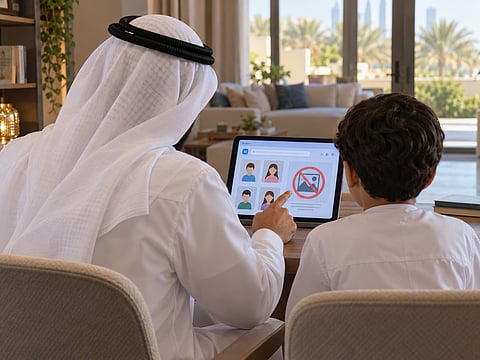
Sharjah: A photograph shared online or taken at school or a family gathering can be manipulated using artificial intelligence (AI) to create fake sexual images of a child. Although the images may be fabricated, the emotional, social and legal consequences can be serious and long-lasting.
The Child Safety Organisation, affiliated with the Sharjah Family and Community Council, has warned that AI image-manipulation tools and so-called ‘nudify’ apps are increasingly being misused to harass, bully and exploit children.
Get updated faster and for FREE: Download the Gulf News app now - simply click here.
Images created as a prank can spread among classmates and strangers, damage a child's reputation and expose victims to threats and blackmail. The organisation stressed that fabricating or sharing sexual images depicting children is not harmless behaviour and may amount to a criminal offence under UAE law.
Fake images, real consequences
Children targeted by manipulated images may experience humiliation, anxiety, social isolation and fear of returning to school. In some cases, offenders use the images to demand money, intimate photographs or other actions, threatening to circulate the material if victims refuse.
This form of sexual blackmail can affect children even if they have never shared an intimate photograph or knowingly engaged with the person threatening them.
Dr Hanadi Saleh Al Yafei, director-general of the Child Safety Organisation, said families and institutions had a growing responsibility to protect children as technology advances.
She said creating or sharing manipulated images to harm a child could not be excused as a joke, given the psychological and social damage it could cause.
Al Yafei stressed that protecting a child must come before blame or punishment. Children who experience harassment or blackmail should feel safe enough to tell a trusted adult what has happened, knowing that the responsibility lies with the perpetrator.
How parents can protect children
The organisation urged parents to review privacy settings on social media accounts, limit access to children's photographs and avoid sharing details about their schools, locations and daily routines publicly.
It also called on parents to take an active interest in their children's online activities, including the apps they use, the people they communicate with and the content they receive or share.
Changes in behaviour, such as withdrawing from family and friends, becoming anxious when receiving messages or expressing fear about attending school, may indicate that a child is experiencing difficulties online.
Parents should approach such signs calmly and encourage children to speak openly without fear of judgement or punishment.
Age-appropriate conversations about online safety, clear rules for using apps and parental controls can help reduce risks. However, the organisation said these measures should be supported by trust and regular communication between parents and children.
What to do if a child is targeted
The organisation advised parents to reassure the child, avoid complying with a blackmailer's demands and report the incident to the relevant authorities and online platform.
Families should safely retain useful evidence, including usernames, links and threatening messages. They should not download or forward sexual images depicting children, and should seek official advice on how to preserve evidence.
If classmates are involved, parents should work discreetly with the school to prevent further circulation of the material and protect the child's privacy. Psychological support should also be considered where needed.
Suspected child abuse or exploitation can be reported through the UAE's child protection hotline on 800700.
UAE law carries penalties for online abuse
The organisation warned that using AI to alter children's images to threaten, defame or blackmail them may constitute a criminal offence.
Article 44(2) of Federal Decree-Law No. 34 of 2021 on Countering Rumours and Cybercrimes provides for at least one year in prison, a fine of Dh250,000 to Dh500,000, or either penalty, for specified online acts involving the alteration or processing of images to defame or harm another person.
Article 42 prescribes up to two years in prison and a fine of Dh250,000 to Dh500,000, or either penalty, for online blackmail or threats intended to force someone to act or refrain from acting. The prison term can rise to 10 years in aggravated cases specified by law.
The law also criminalises certain acts involving the production, publication and circulation of pornographic material featuring children, depending on the circumstances and applicable legal provisions.
The organisation called on families, schools and the wider community to raise awareness of emerging digital risks and help children use technology safely, while ensuring that those targeted by online abuse receive support rather than blame.


