UAE approves unified licensing framework for universities
Sheikh Mohammed’s resolution sets national standards for higher education institutions
Dubai: The UAE has introduced a unified national framework to regulate the licensing of universities and colleges, a move aimed at raising academic standards, strengthening governance and simplifying oversight across the country’s higher education sector, including institutions in free zones.
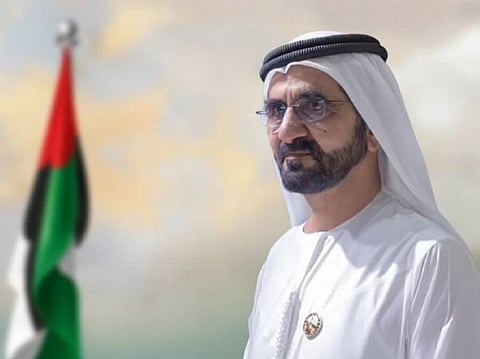
Approved by His Highness Sheikh Mohammed bin Rashid Al Maktoum, Vice President and Prime Minister of the UAE and Ruler of Dubai, the framework introduces a data-driven oversight system and sets common standards for institutions operating both on the mainland and in free zones.
The framework, issued under the Federal Decree-Law on Higher Education and Scientific Research, establishes a single national reference for licensing higher education institutions (HEIs). It aims to ensure compliance with national standards while respecting the mandates of local authorities responsible for regulating institutions in their respective jurisdictions.
Quality
The move is designed to strengthen institutional governance, simplify licensing procedures, improve the student experience and foster stronger partnerships between universities and key economic sectors. It also seeks to enhance the quality and efficiency of higher education, supporting the UAE’s ambition to become a global hub for education and scientific research.
A key feature of the framework is the introduction of a data-driven monitoring system through electronic integration between higher education institutions and national records maintained by the Ministry of Higher Education and Scientific Research (MoHESR). The system will provide regulators with accurate, up-to-date information to support evidence-based oversight while ensuring coordination with local authorities overseeing institutions in free zones.
The framework is also aligned with the National Higher Education Institutions Classification Framework and other national quality, performance and regulatory standards.
Integrated licensing system
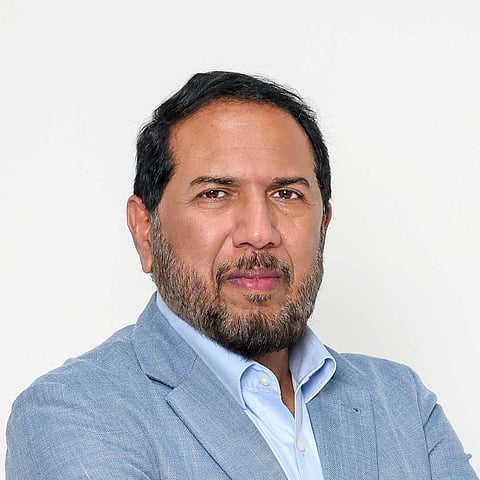
Dr Abdulrahman Al Awar, Minister of Human Resources and Emiratisation and Acting Minister of Higher Education and Scientific Research, said the approval reflects the UAE’s commitment to creating an integrated licensing system involving the ministry, local authorities and higher education institutions.
“The approval of the National Framework for Licensing Higher Education Institutions by His Highness Sheikh Mohammed bin Rashid Al Maktoum reflects the UAE’s commitment to building an integrated licensing system involving the Ministry of Higher Education and Scientific Research, local authorities and higher education institutions,” Al Awar said.
“It provides greater clarity and consistency in licensing and oversight, reduces procedural duplication and facilitates access to services,” he added.
What has changed
The framework sets out comprehensive regulatory requirements covering every stage of institutional licensing. These include provisions for establishing new institutions, risk assessment and compliance mechanisms, sustainability requirements, licence renewals for existing institutions and measures to ensure continuity of education.
It also defines governance and ownership structures, clarifying the roles of owners, executive management and academic leadership while requiring a clear separation between ownership, administration and academic decision-making. The measures are intended to strengthen accountability, transparency and balanced governance across the sector.
In addition, the framework introduces financial and operational sustainability requirements, including financial guarantees, audited financial statements, student protection measures and academic continuity plans to safeguard institutions under different operational scenarios.
The Ministry of Higher Education and Scientific Research said the framework will enhance the readiness of higher education institutions to meet future challenges, strengthen coordination with local authorities and help develop a skilled national talent pipeline that meets labour market needs while reinforcing the UAE’s global competitiveness in higher education.